I was in the upper bunk and I recall a young woman travelling to Halifax in the bunk below mine. In a voice of doom she said, “I just know I’m going to be seasick,” climbed into her bunk and remained there for the entire voyage!
Not me! I was determined to enjoy the crossing, and I did. The food was fabulous. After war-time rationing, it was wonderful to get white bread and butter, lots of fresh fruit, and bacon and eggs for breakfast. Aboard the Samaria were also several hundred armed forces returning home. We were warned not to fraternize with the troops!
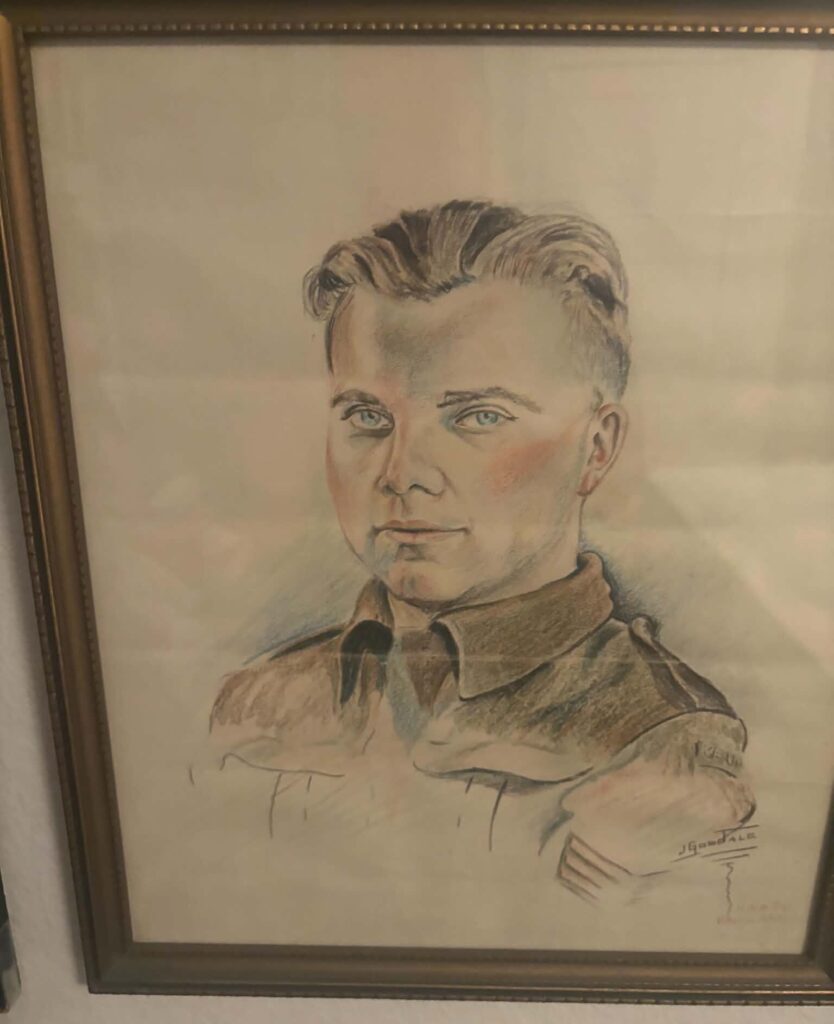
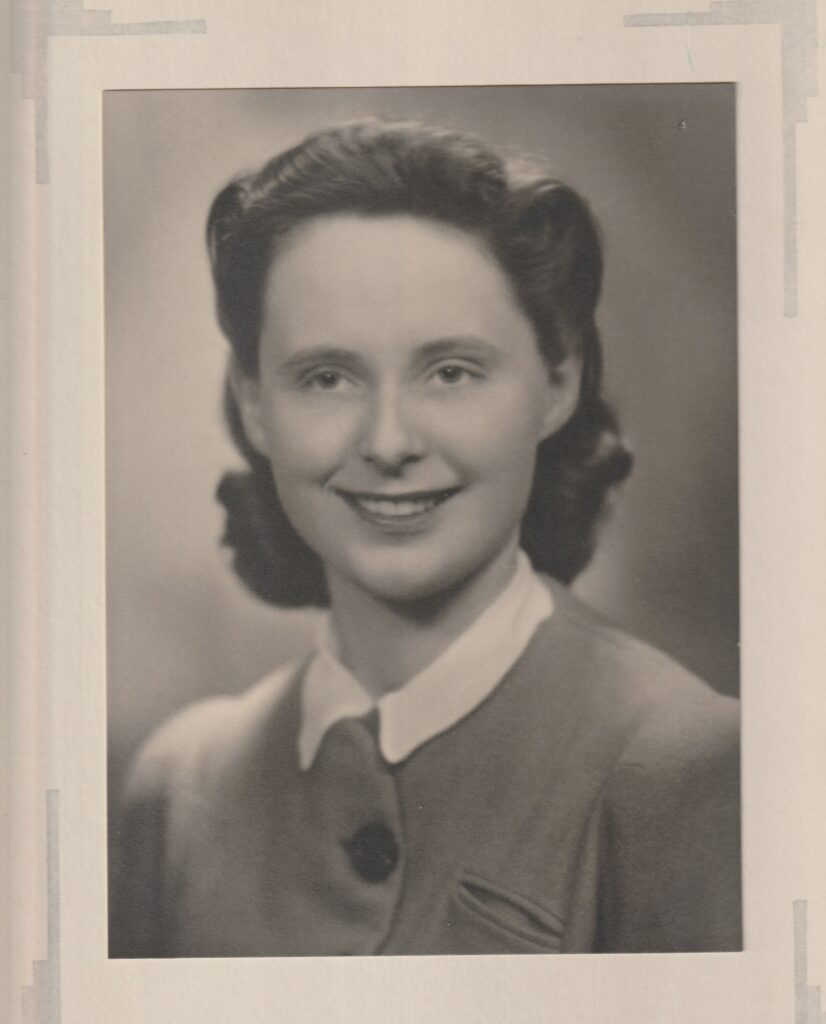
Portrait of Art Webster, done during his time as a soldier.
A few weeks before my departure Art and I were walking down The Strand in London and met a couple of officers Art knew. One was Major Warren from Calgary, a dentist by profession. The day after we sailed, “Boat Drill” took place and we all had to get up on deck and head for our assigned place wearing our life jackets. The officer in charge of our section was Major Warren. Of course he didn’t see me, just one of some fifty gals, but following the drill I walked up to him and reminded him of our meeting in London. He was delighted to see me again and told me that there were several of Art’s old friends on board. They were boys of the 8th Field Ambulance who had joined up in Calgary in 1940. Their travels had taken them to England and on to the landings in Italy and eventually through Europe when the war ended in May, 1945. Art would have remained with them had he not been recommended for a commission by his CO, Colonel Hazard. He chose to go through British OCTU – Officer Cadet Training Unit – rather than return to Canada for his commission.
So Major Warren took me off to meet several of Art’s old army friends. One I remember well was Paul Pelletier, who came up from the bowels of the ship clad only in t-shirt and pants. He was so dark he looked as though he was covered in oil and grease. I discovered he was naturally dark, being of French Canadian ancestry. A great fellow, and tickled pink to meet “Mrs. Art”.
The voyage across the Atlantic took seven days, and when we finally docked at Halifax it was a great relief to see land again. I remember standing on deck with a group of girls, all of us staring at our new homeland. A young soldier came up to us offering a shopping bag filled with fresh fruit. Thus it was I tasted my first piece of watermelon while looking at this new country.
******
JENN – November 18, 2026
Betty remembered the white bread and butter. The fresh fruit. The bacon and eggs.
It’s starting to dawn on me why food deserves so much space in a family memoir, or a story of any kind, really. When the everyday business of feeding yourself becomes complicated, you remember what you ate – and what it took to get it on the table.
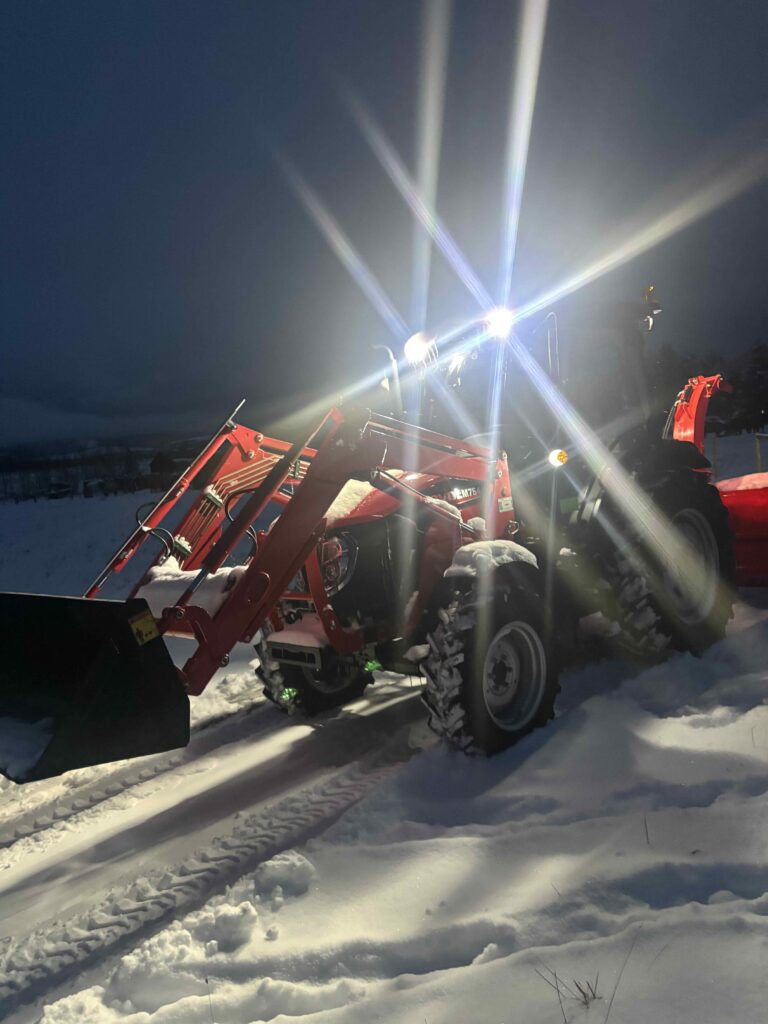
Tonight, Clay was in pursuit of a trophy buck. That meat would help fill our freezer and feed our family for the winter. He had recently purchased new walkie-talkies with a 20-mile radius, so we figured it was a great opportunity to test them out.
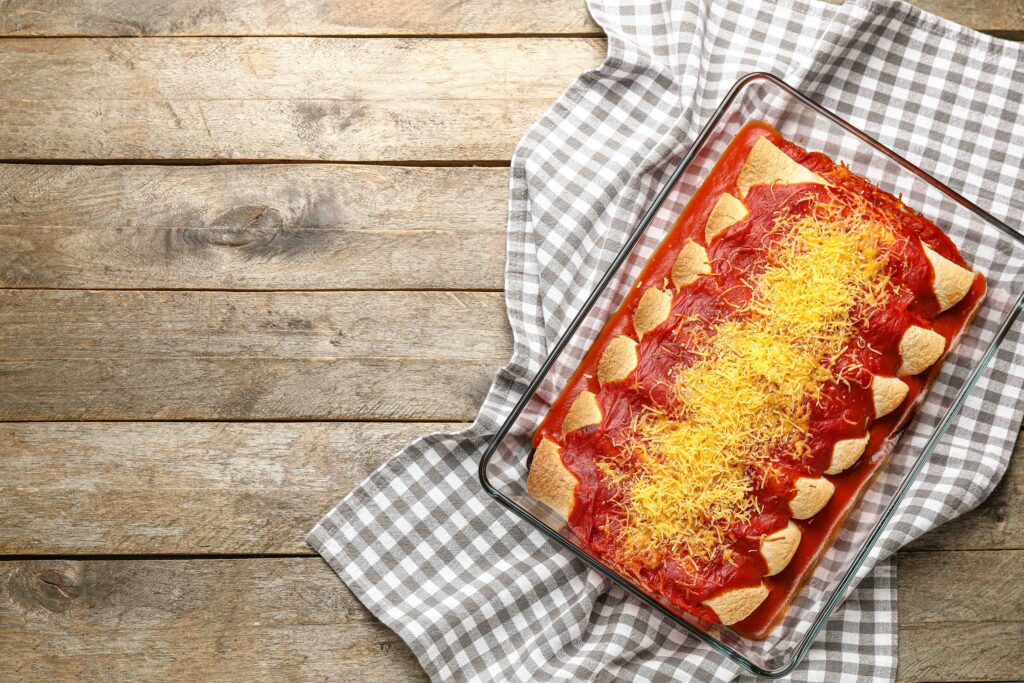
As I was preparing enchiladas in the family cabin that was originally purchased from a Sears catalogue (I’ll tell you about that eventually…), Clay kept me posted on his travels.
Just as it was getting dark – and I was about to start the guacamole – I heard, “Jenn, are you there?” come fairly clearly over the two-way. Of course, I was in another room and had to run for the small black and red box.
“Yeah, I’m here. What’s up?” I replied.
Oh wait – I forgot to hit the button before I spoke. Let me try that again…
“Yeah, what’s going on?”
“I’m stuck,” was Clay’s audio-textured response.
“What?” I tried to say. But it’s easy to clip your first syllable with a walkie-talkie. Which is unfortunate when your entire sentence is one word.
“What?” I asked again, being careful to pause for a second after hitting the stupid, side button and then speaking.
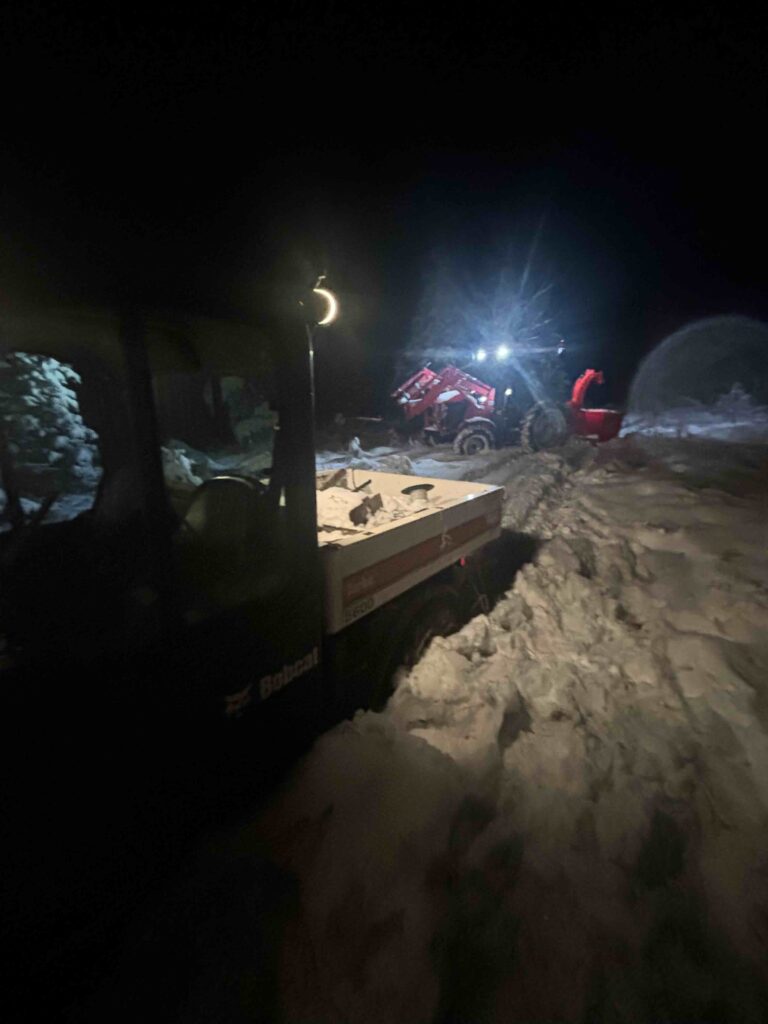
“I’m stuck. You need to get in the tractor and come to the Diviny Quarter so I can pull my machine out.”
Oh Lordy.
Enchiladas, interrupted.
I had never driven the tractor.
Dinner would obviously have to wait. Apparently, tonight’s lesson was how to retrieve my husband from four feet of snow at the furthest end of the property. (Let’s just say, I’m glad my first car was a standard.) I was also glad for the help of our son, Brax, on my cell phone coaching me through. At least, until I lost the signal.
Tonight, I got a crash course on the UHI Lovol 754.
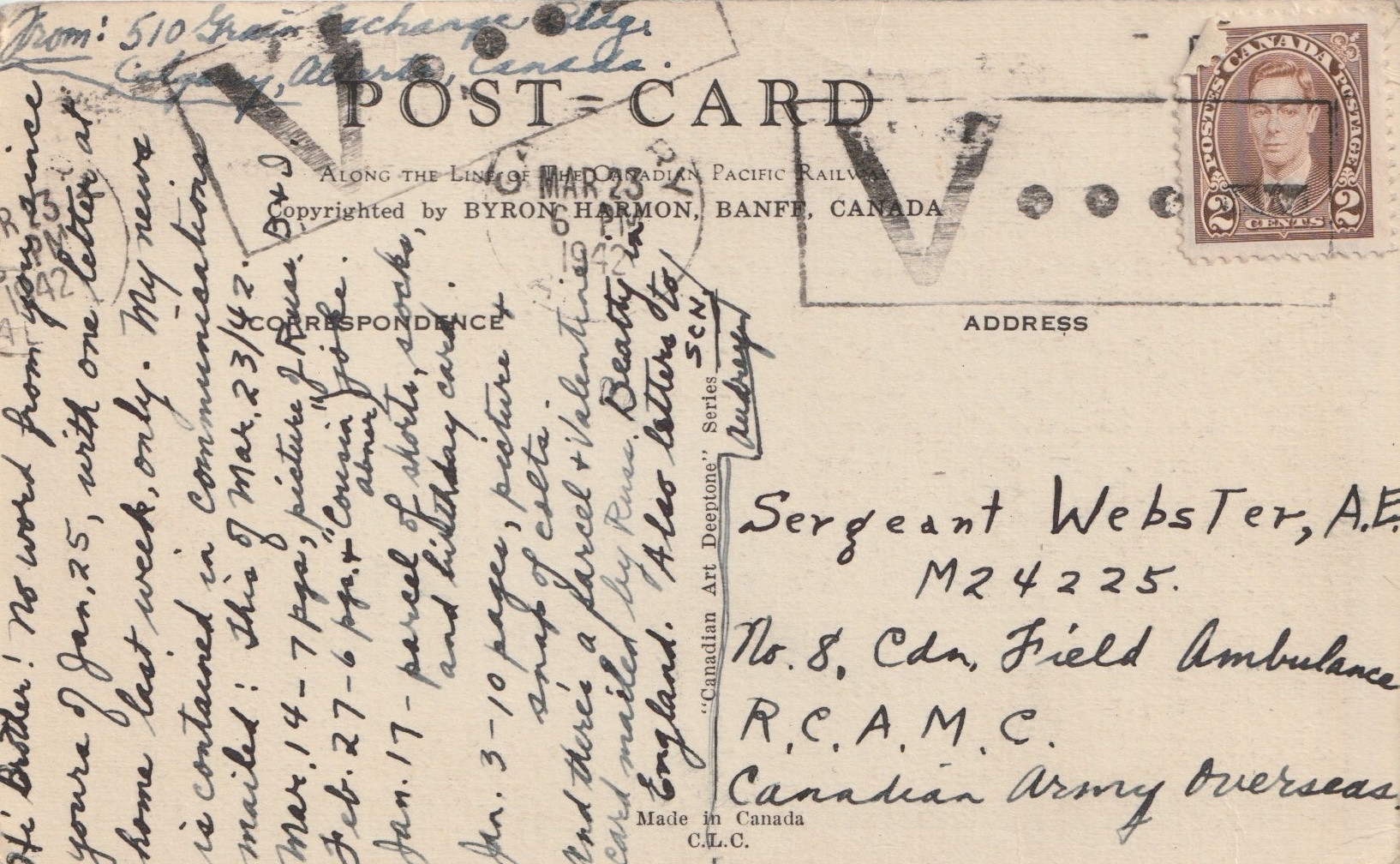
Betty’s voyage introduced her to several of her husband’s army friends. Mine is introducing me to heavy equipment.
Some chapters of the Webster family story are more glamorous than others.
But it makes me wonder if Betty had moments like this, too. Moments when the unfamiliar became something she could manage. When she surprised herself.
Tonight, I was proud of myself. Although next time, I’d prefer to finish the guacamole first.
I’m happy to report, Clay and both machines returned home safely.
A symbol of Calgarian history, victory and tradition – capturing moments of time in porcelain.
On June 27, 1860, a horse race took place at the Carleton racetrack in Toronto; Don Juan was the winner. It was known as the Queen’s Plate.
One hundred sixty-five years later, Mansetti, an 18-1 longshot, captured the 166th running of the $1-million King’s Plate on August 16, 2025, at Woodbine Racetrack, delivering a stunning victory for trainer Kevin Attard and 20-year-old apprentice jockey Pietro Moran.
In a remarkable performance, Moran guided the bay colt to a near wire-to-wire win, finishing 2 1/2 lengths ahead of Tom’s Magic in a time of 2:03.68, with Notorious Gangster finishing third.
This victory marked the first Plate win for owners Al and Bill Ulwelling and for Moran, who made history by competing against his father, David Moran, in the historic Canadian classic.
Horse racing evolved into a regulated industry in the late 19th century.
Eyes on the Prize
The early roots of horse racing in Canada date back to the 1700s where horses and competition were integral to the culture and life of the Indigenous.
Western lifestyle stimulated ranch-based competitions, which then grew to more organized competitions in larger centres. Competitors often held matches on public roads, and as enthusiasm grew, racing evolved into a regulated industry in the late 19th century.
Eight years after the defeat of French General Joseph-Louis Montcalm by British General James Wolfe on the Plains of Abraham in old Quebec, (a battle during which both generals would be mortally wounded), the very first recorded racing event in Canada was held.
Participants who had registered their horses with Mr. Wilcox at the Market Place for a sum of two dollars, at least two days prior to starting, would be granted the opportunity to compete for a purse of $40.00.
Racing on the pasture owned by Martin Abraham, a fisherman and river pilot on the St. Lawrence, the race took place at precisely 5:00 p.m. on July 1, 1767, exactly 100 years before the establishment of the Dominion of Canada. The victor was a mare by the name of Modesty, owned and ridden by Captain Prescott. Modesty would be inducted into Canada’s Racing Hall of Fame in 2017.
So What’s With the Plate?
As early as the 17th century, (1660-1685), King Charles II began awarding valuable silver plates as racing trophies at Newmarket, the global headquarters of horse racing. Newmarket lies on the border of Suffolk and Cambridgeshire, England, and is home to the Jockey Club where horse racing has been celebrated since the reign of King James I (1603-25). The size of the plate awarded had a direct correlation to the value of the race.
When George I was the King of Great Britain and Ireland between 1714 to 1727, he introduced a racing prize of 50 gold coins, known as guineas. Although the minting of guineas was discontinued in 1813, the tradition of “galloping for the guineas” continues.
As “the eyes on the prize” sought more variety and creativity, prizes evolved; from the early rewards of bridles, and cash purses, to silver plates and gold guineas, other valuable metals were instituted, and the prize took varying forms. The reward was more than the monetary gain. It was an ornamental symbol of victory and prestige over utilitarian function – and the tradition had the more imposing stature due to its link with Royalty.
Introducing the Queen’s Plate
After the historic race on the Plains of Abraham, more races would be organized at that location by the soldiers in the garrisons.
Owning a race horse, even at the expense of economic ruin, was a status symbol many could not ignore, especially among the French Canadian population. The sport of horse racing seemed to take precedence over all over sports, and newspapers thrived on it.
The Quebec Turf Club was initialized in 1789. By the 1830s racing was popular in both Upper (Quebec) and Lower Canada (Ontario), often arranged by officers in the military. In order to gain better horses, both for the purposes of racing and soldiering, better breeding was fundamental.
What better way to encourage the development of horse breeding in Canada, than to offer a Royal Prize to the winner of a prestigious horse race? However, in order to do, one would require the sponsorship and endorsement of the reigning monarchy.
The first Royal race to be held was in honour of King William IV, the reigning monarch between 1830 and 1837. It was the inaugural running of a royal sponsored purse of 100 guineas. The race was restricted to horses bred in LowerCanada (Quebec) and pre-dated the continuous running of the Queen’s Plate in Upper Canada. In 1859 horses from Upper Canada were eligible to complete, and the rivalry was intense.
Consistent with that rivalry, the same year, Casimir Gzowski, President of the Toronto Turf Club, petitioned Sir Edmund Walker Head, then the Governor General of the Province of Canada, for a racing prize to be awarded by the monarchy to horses bred and raised, in what was then Upper Canada.
In agreement with the opportunity to encourage better breeding, Queen Victoria graciously awarded a prize of 50 guineas (21 shillings sterling,) to be awarded annually in a race to be known as the Queen’s Plate. The race was open to any horses reared in Upper Canada which had never won public money.
On June 27, 1860, a five-year old horse by the name of Don Juan, owned by Mr. White, and ridden by Charles Littlefield, would become the first recipient of the Queen’s Plate, competing in three heats over a one-mile track with his best time of 1 minute 58 seconds.
Over the years, that event would evolve to a maximum of 17 three-year-old horses racing in a single heat over 1.25 miles in the oldest continuously-run horse race in America. (Horse racing in Canada continued even through WWI, as the Red Cross held the 59th and 60th runnings of the Queen’s Plate as features of a Red Cross Horse Show to ensure the perpetuity of the race.)
East meets West
Horse racing between eastern and western Canada began to converge in the 1930s, driven by the establishment of major western racing circuits and the expansion of the Canadian Derby.
In 1930, R. James Speers established major racing in the west with the development of the Manitoba Stakes, which would become the Canadian Derby at Polo Park in Winnipeg. By 1936, that event was opened to three-year-olds foaled anywhere in the Dominion of Canada. When Goldlure, the King’s Plate winner in Toronto, traveled 1,300 miles by rail to win the Canadian Derby in Winnipeg in 1937, the two racing worlds converged. While racing had existed in both regions for centuries, regular competition of horses in both areas was primarily facilitated by the high-stake or “plate” races like the Canadian Derby.
Moving further west, informal horse racing already had its roots in Indigenous culture and ranch-based culture. The first formally organized race available to the general public is believed to have taken place in 1884, in the vicinity of Fort Calgary (Calgary, AB). With deep roots in agricultural fair tradition, racing competitions and demonstrations were often the highlight.
The Millarville Fair and Races (Millarville, AB), initiated by early settlers in a nod to the racing traditions in England and Ireland, was first held in June of 1905, making them the oldest in the province. Local ranchers raced their best horses on land donated by a local resident, Raymond DeMalherbe, rent-free for the first 35 years. Steeplechases were added in 1910.
The Calgary Stampede was in its infancy in 1912 and featured various rodeo events and horse races. By 1923, Guy Weadick introduced the chuckwagon races as a means of raising Stampede attendance. They too, incorporated the Thoroughbred, as an integral part of the running. In 1925, legendary Alberta jockey George Woolf of Seabiscuit fame, rode in his first major organized race at the Calgary Stampede.
With the advent of chuckwagon racing, the horse racing histories of the Millarville Fair and the chuckwagons of the Stampede represented two distinct, yet solidly connected, pillars of western heritage. While the Calgary Stampede evolved into a world-renowned commercial venue centered on high-stakes chuckwagon racing, the Millarville Races remained an historical community racing event, rooted in tradition, and remains the oldest in the province. Both events offered significant “purse money” to the winner.
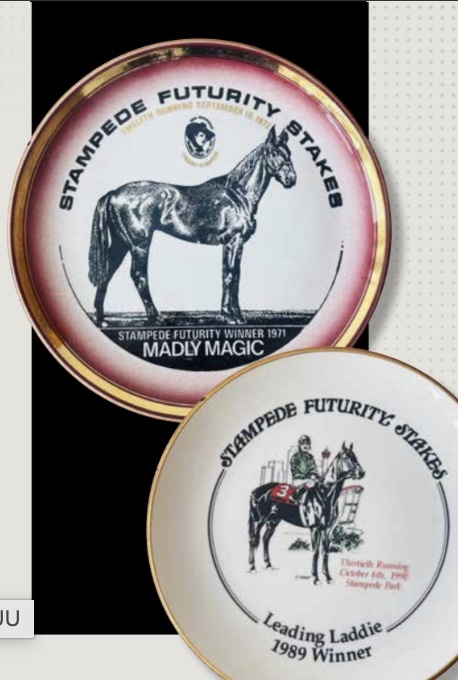
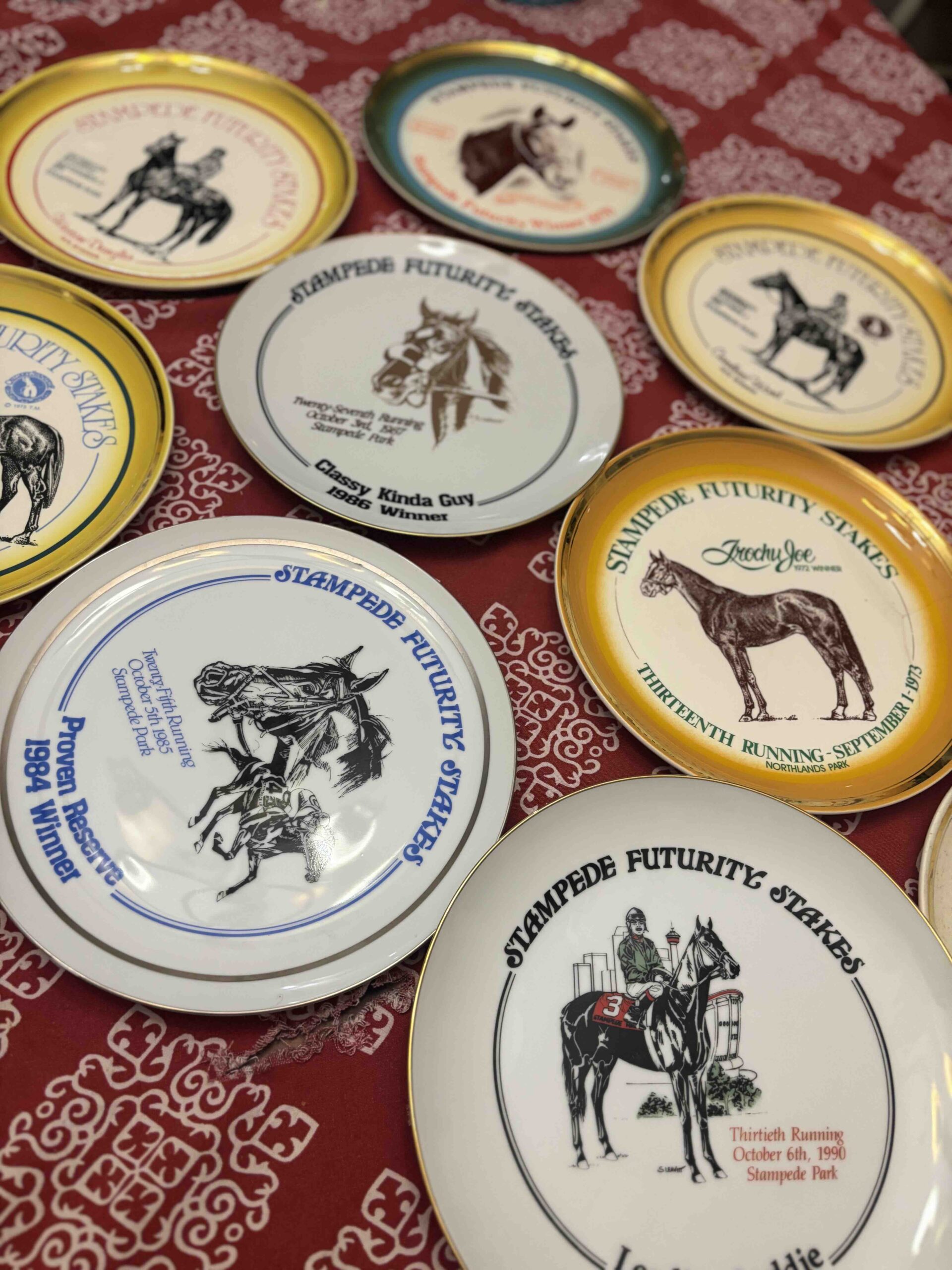
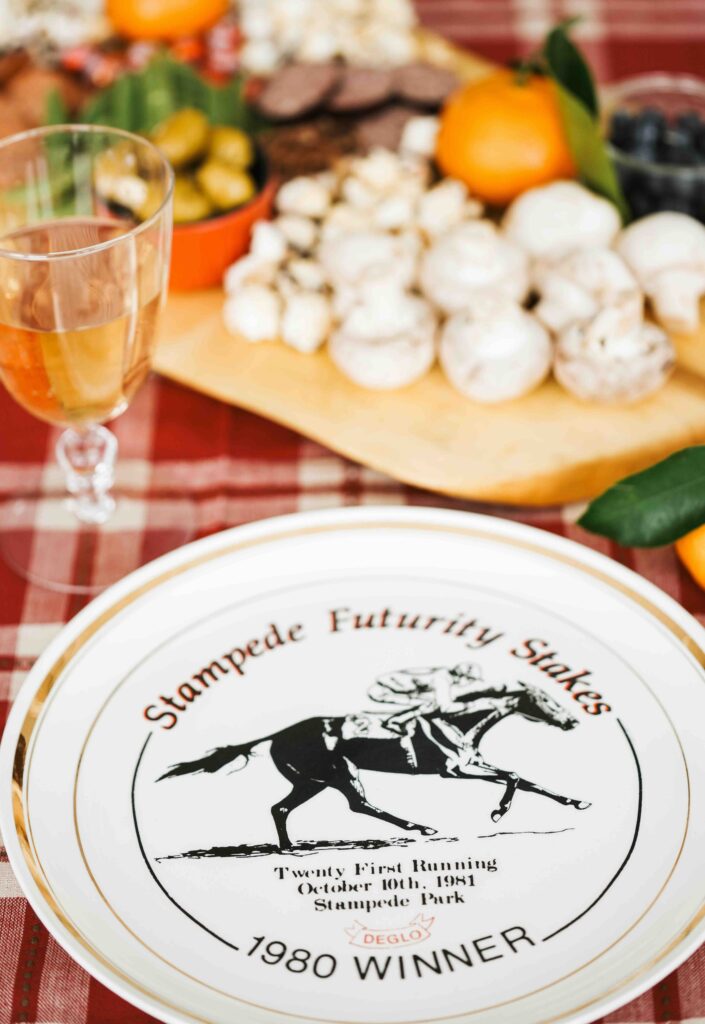
The only way to obtain yhese limited edition Hycroft China Company plates was to attend the brunch held on race day, or buy it at the gift shop. Attending the brunch ensured you had both a good start to race day and included the plate for the sum of $35.
The Calgary Stampede Futurity Stakes
In the fall of 1961, The Calgary Stampede and Exhibition inaugurated the Calgary Stampede Futurity Stakes, as a premier fall event for two-year-old Thoroughbreds. With a sizeable purse of $100,000, it attracted young horses across the country to compete annually from 1961 through to 1996.
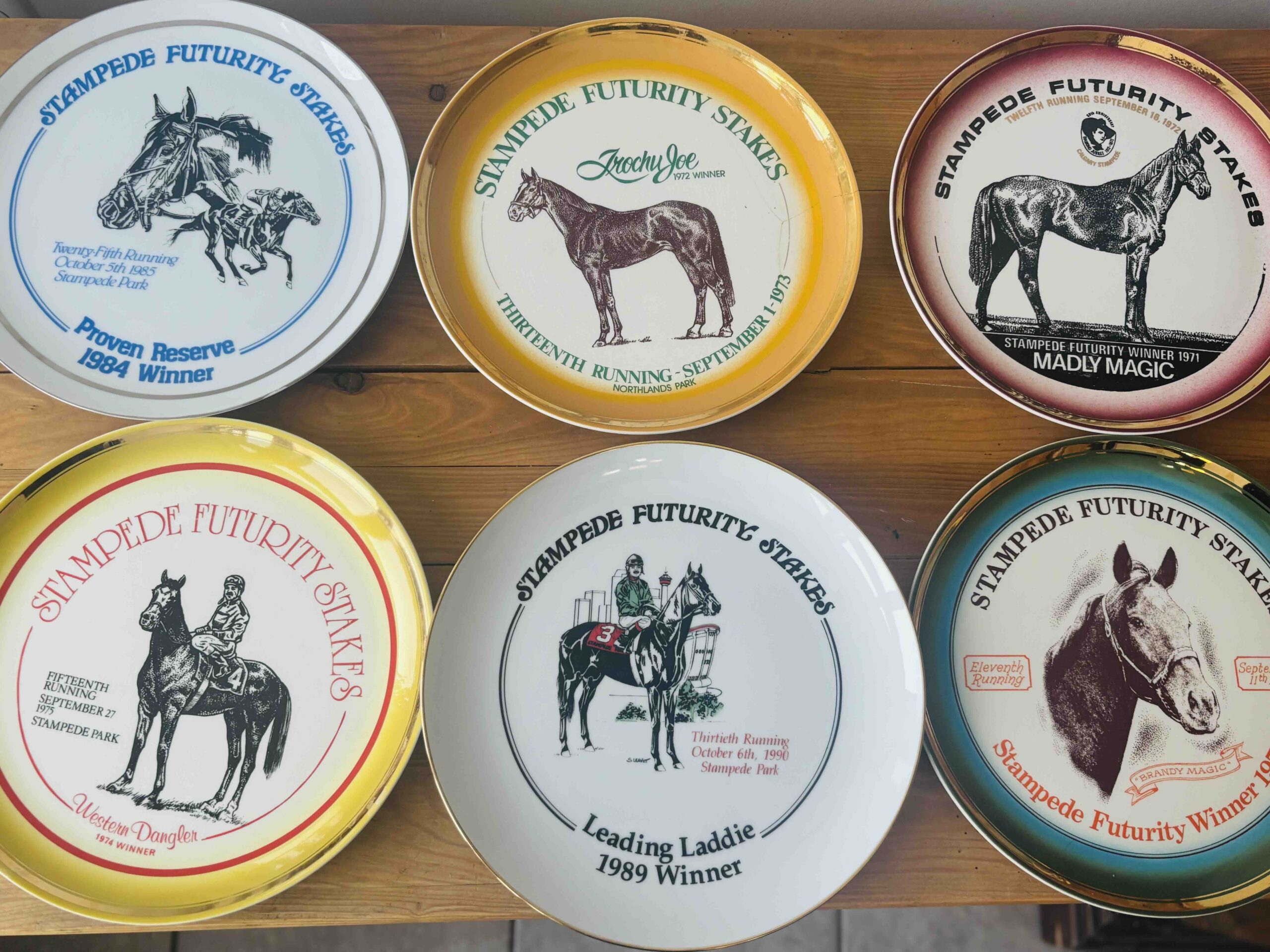
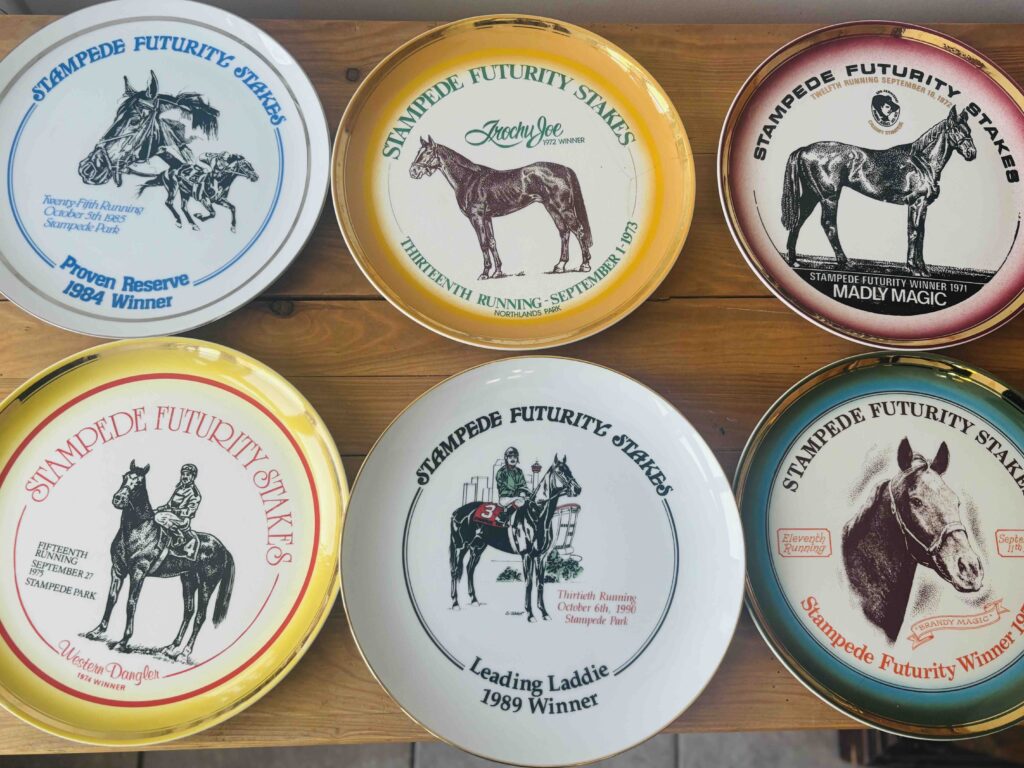
In keeping with the tradition of Royal heritage, commemorative plates were introduced and produced by the Hycroft China Company out of Medicine Hat, Alberta. The factory, initially founded as Medicine Hat Potteries Ltd. was established in 1937-1938 and in itself, was a significant part of western Canadian industrial heritage. The evolution of the Hycroft China Company offered more refined and decorated products than its competitor Medalta Potteries, and was a compelling choice to supply the limited-edition mementos celebrating the annual Stampede Futurity Stakes horse race.
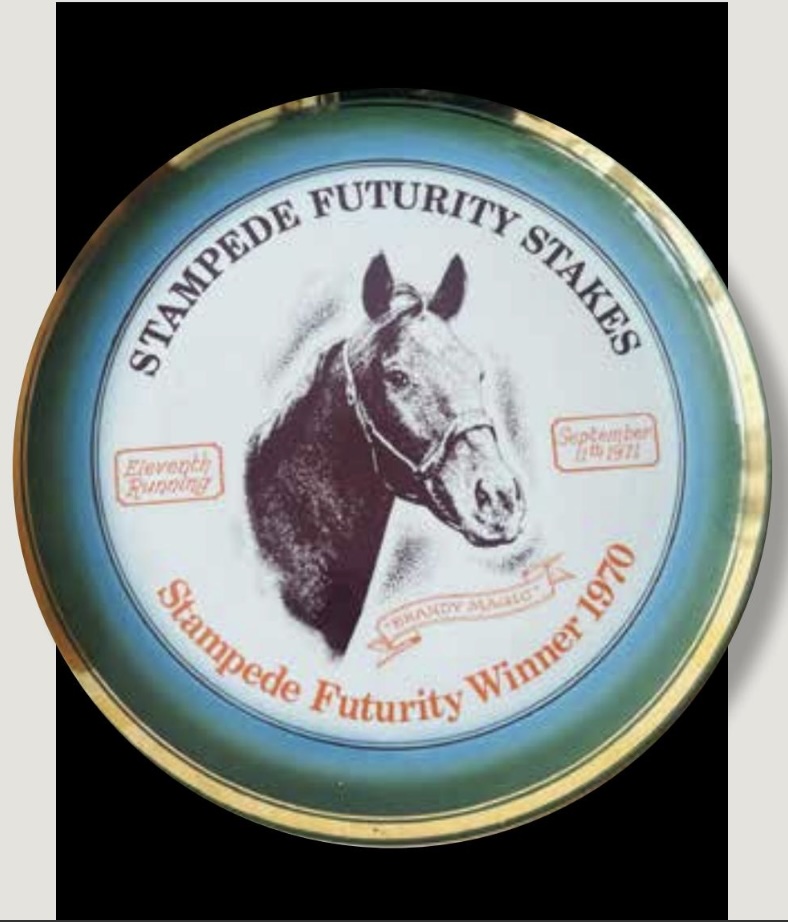
Recognized for their affiliation with Alberta-bred Thoroughbreds, all of the Hycroft plates were produced on a 10.5 inch, flat, rimless concave plate with a distinctive 22K gold trim. Each plate was intended to feature the winning horse and jockey from the prior year, however, in the inaugural running, there was, of course no winner, so the plate featured a green wreath in the shape of a horseshoe.
Subsequent plates depicted the name and image of the winning horse sometimes with the jockey, from the previous year, with the number and dates of the running. The plate was generally white with a shaded band around the perimeter, and the horse was imaged in black or brown.
The only way to obtain a plate was to attend the brunch held on race day, or buy it at the gift shop. Attending the brunch ensured you had both a good start to race day and included the plate for the sum of $35.
Although the plates were limited-edition, Hycroft maintained the original silk-screen patterns on hand to ensure they could reproduce them in the case of breakage.
Before producing the actual plate, the Hycroft China Company designed and arranged five or six different layouts to allow the Calgary Stampede to review them to make their selection. Over the years it has been noted that there are few samples of multiple plates for a given year, suggesting perhaps that some may have been part of the unofficial samples submitted, which simply were not returned to Hycroft during production.
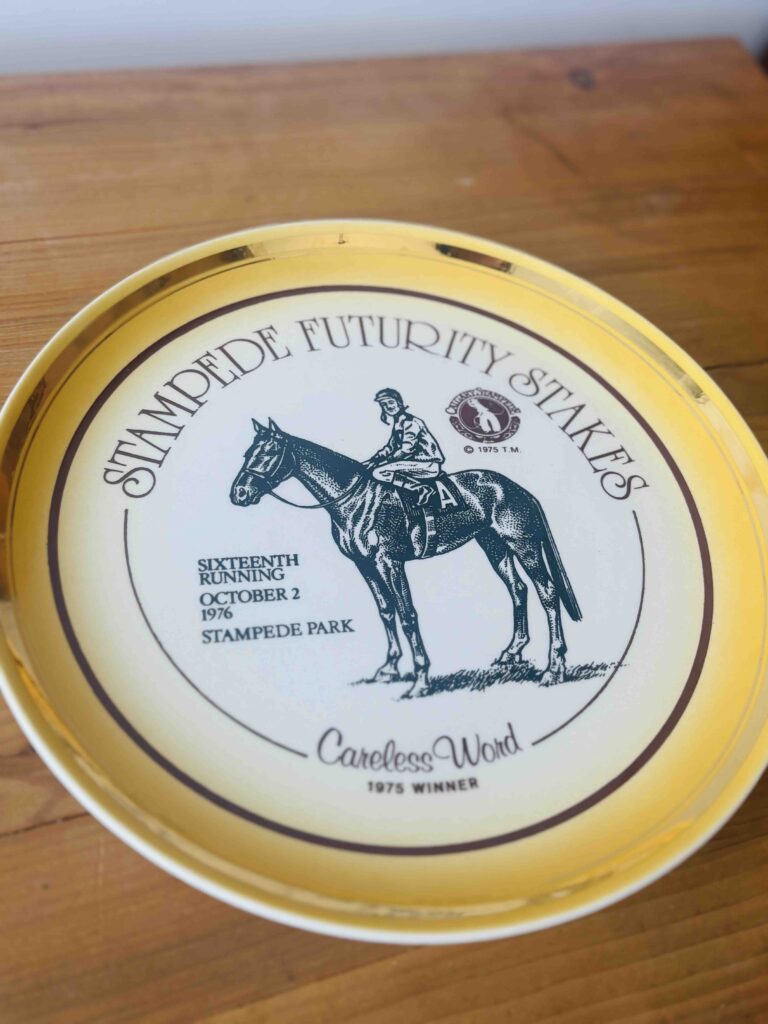
Bred by Mrs. Katherine Durrand, owned by H. Buechler and trained by L.D. White the multiple stakes winner, CARELESS WORD had 100 starts winning the Western Handicap and the Teeworth Plate Handicap twice along with the Birdcatcher, the Klondike Handicap, and the Strathcona Handicap to mention a few.
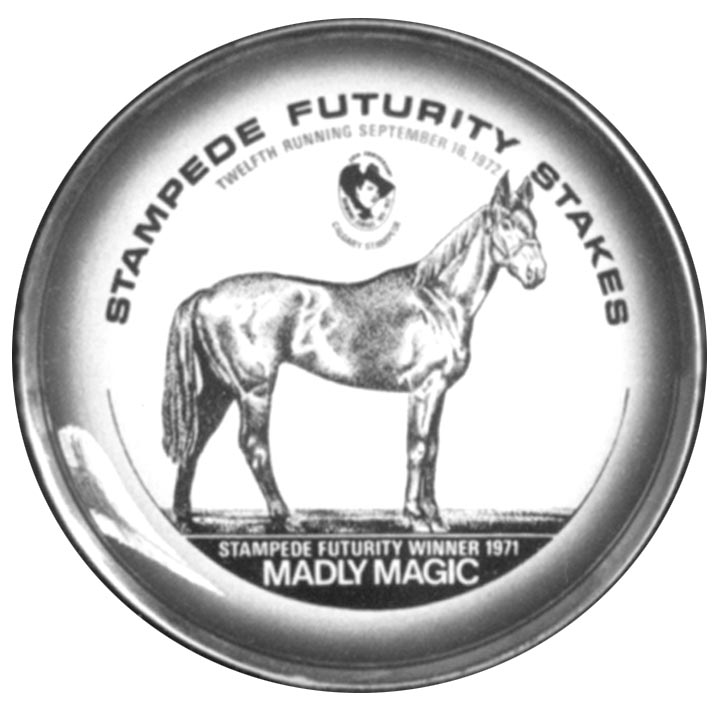
Depending on the popularity of the Futurity Stakes at the time, Hycroft produced numbers ranging from 250 to 500 plates on average. Numbers increased substantially in 1971, featuring Brandy Magic and 1972 depicting Madly Magic, this being the 60th Anniversary – Diamond Jubilee of the Calgary Stampede. Based on sales of $24,500 in 2971, today’s equivalent would be almost $200,000 in plate merchandising!
Over the first 24 years during which Hycroft produced the plates, a number of artists were commissioned, including an Alberta/Arizona artist by the name of Sandra (Leavitt) Hayes. Well-loved for her warm and caring personality, Hayes designed several of the Stampede Futurity plates.
Passing in 2024, Hayes has left a legacy of her art and friendships in the racing world.
Several of the plates feature two images, some of the horse, and the horse and jockey, and some with the First and Second Division winners.
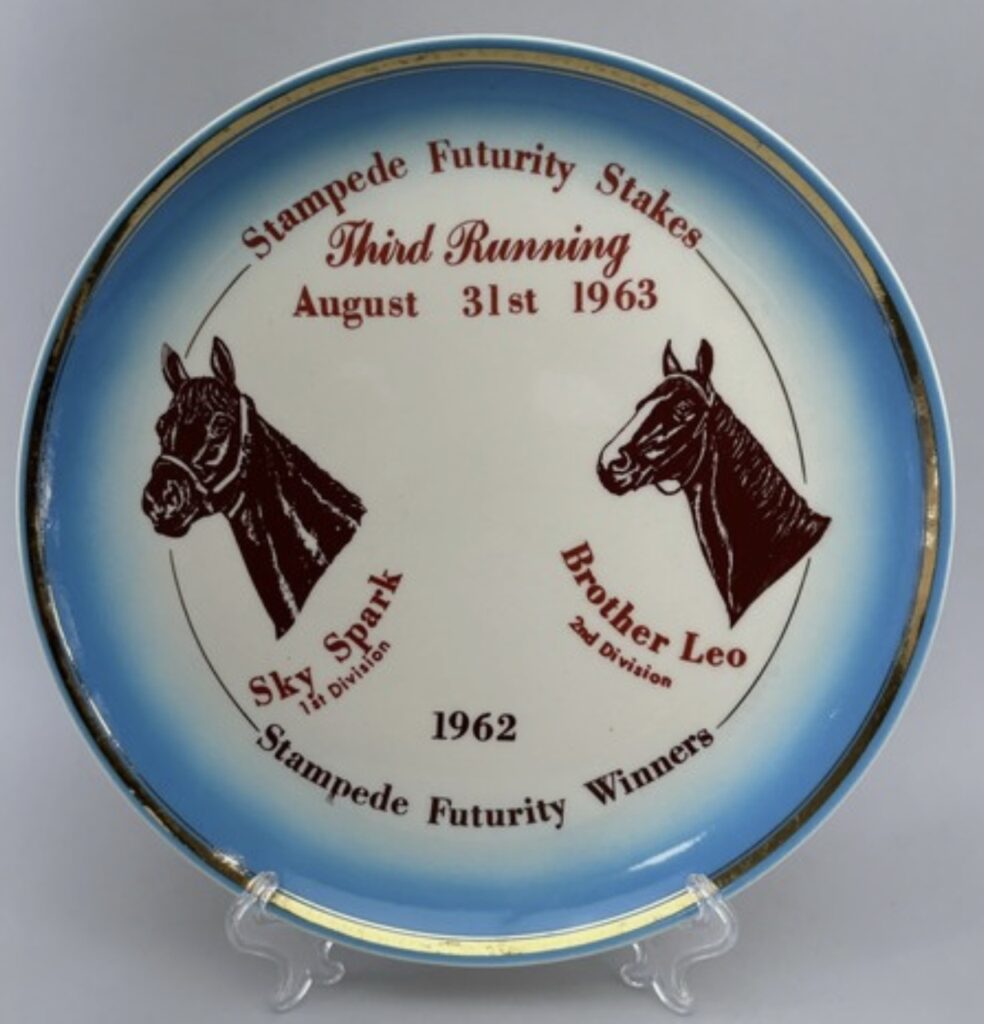
The 1963 Futurity Plate, Third Running, depicts two winners from 1962, Sky Spark in the First Division and Brother Leo (Second Division). Based on records from Hycroft, between 1961 and 1975, at least three of the races listed two horses, noting first and second division winners.
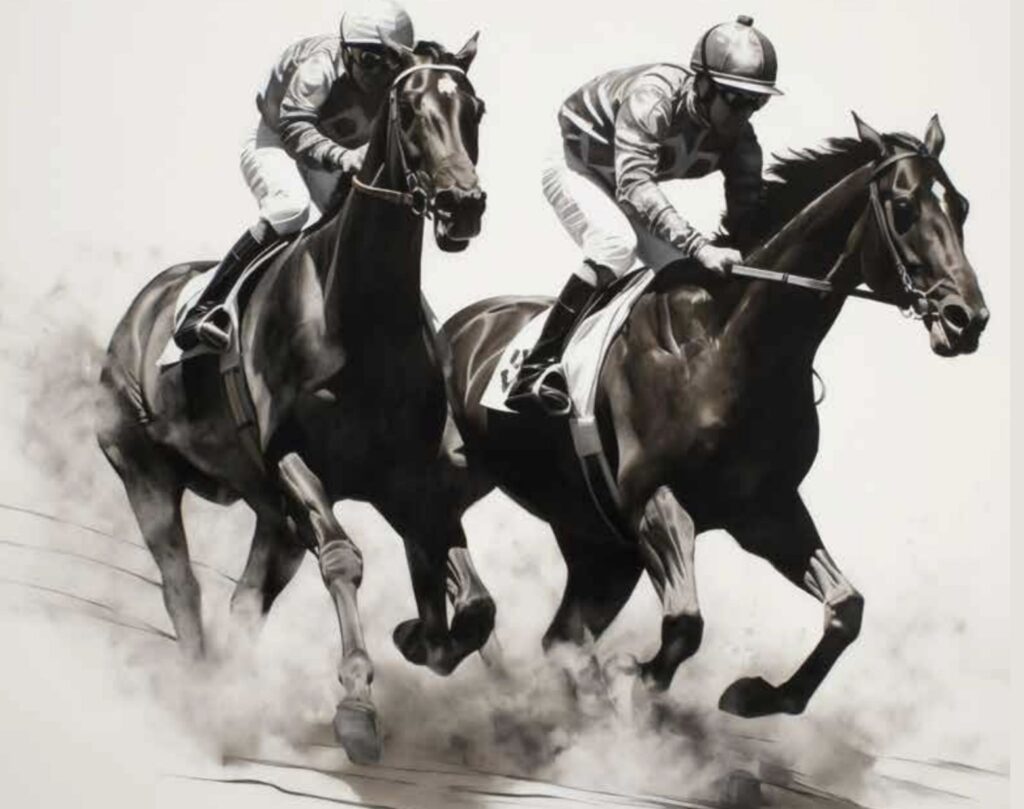
Ultimately, the plate is the symbol of victory, the race to the finish line, and the glory of the win.
Anyone who lived during the war years of 1939 through 1945 will remember June 6, 1944.
Exactly one year later it was my own D Day, when I said farewell to family and friends, and to my familiar routine of life in a London suburb. I was heading for a new life in a new country, on my way to the wide open spaces of Alberta, Canada.
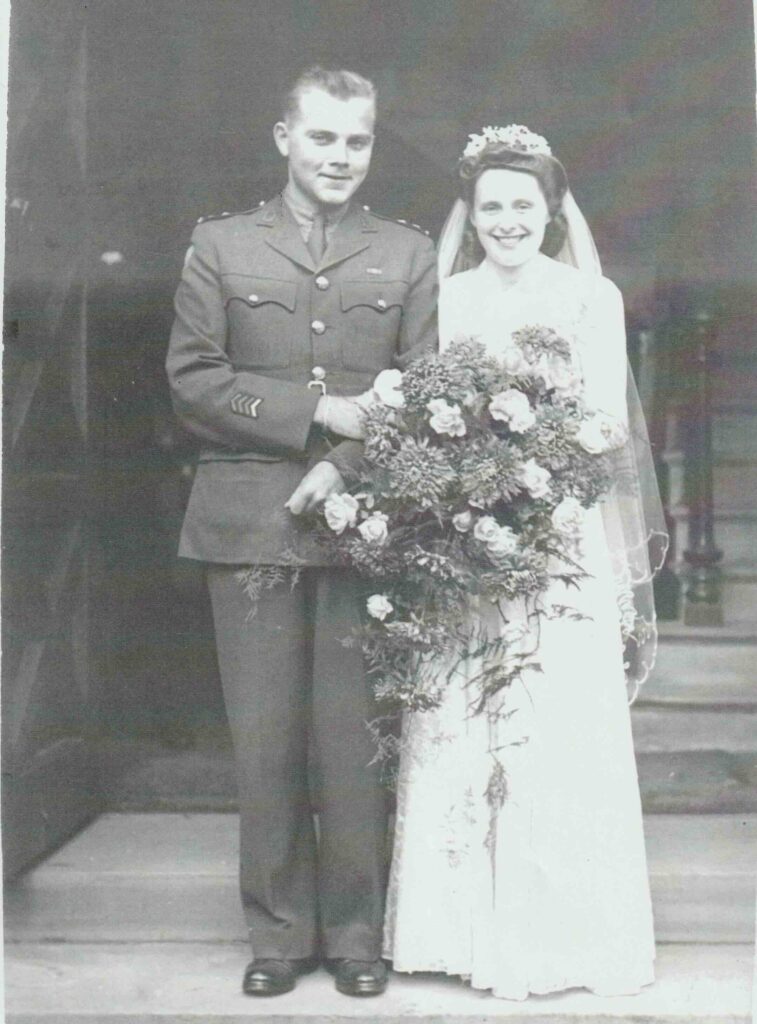
I was twenty-two, a young bride of only nine months, when I said good-bye to my husband, Art Webster. He was to remain in England to close up the hospitals used by the Canadian armed forces during over five years of war, and would join me in his native Alberta soon. Little did we know it would be six months before he finally returned to his home.
Art and my father escorted me to the receiving centre in London where I joined hundreds of other young women, some with children. They, like me, were off to a strange country, to meet their in-laws. Many I talked to would have their husbands meeting them on the other side of the Atlantic, but I would truly be on my own.
We left London late in the evening travelling by train to Liverpool where we boarded our ship, the R.M.S. Samaria. I well remember Art telling me of his journey to England aboard the Empress of Australia in 1940. Practically First Class – white sheets, four to a cabin, and a steward waking them in the morning with cups of tea!
Well, our accommodations on the R.M.S. Sumaria were a little different. Something like 24 to a cabin in two tiers of bunks. I was in the upper bunk and I recall a young woman travelling to Halifax in the bunk below mine.
****
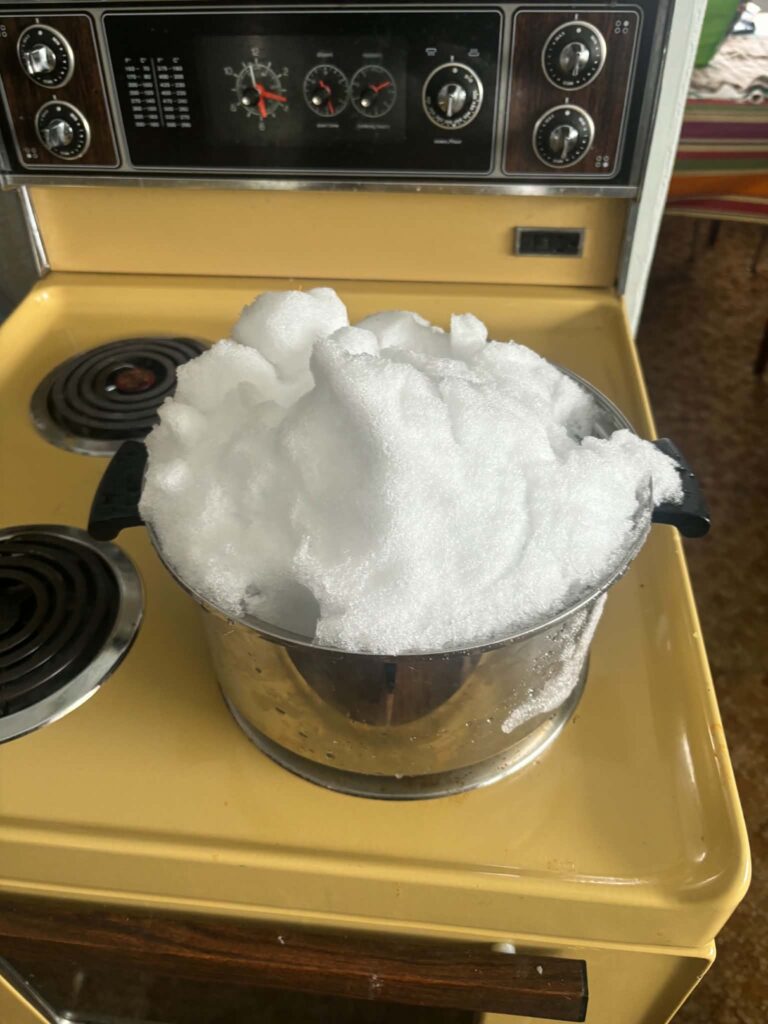
We discovered an “upgrade” for the boiling-of-snow system…
JENN – November 2026
I had to say goodbye to my husband, Clay, today too.
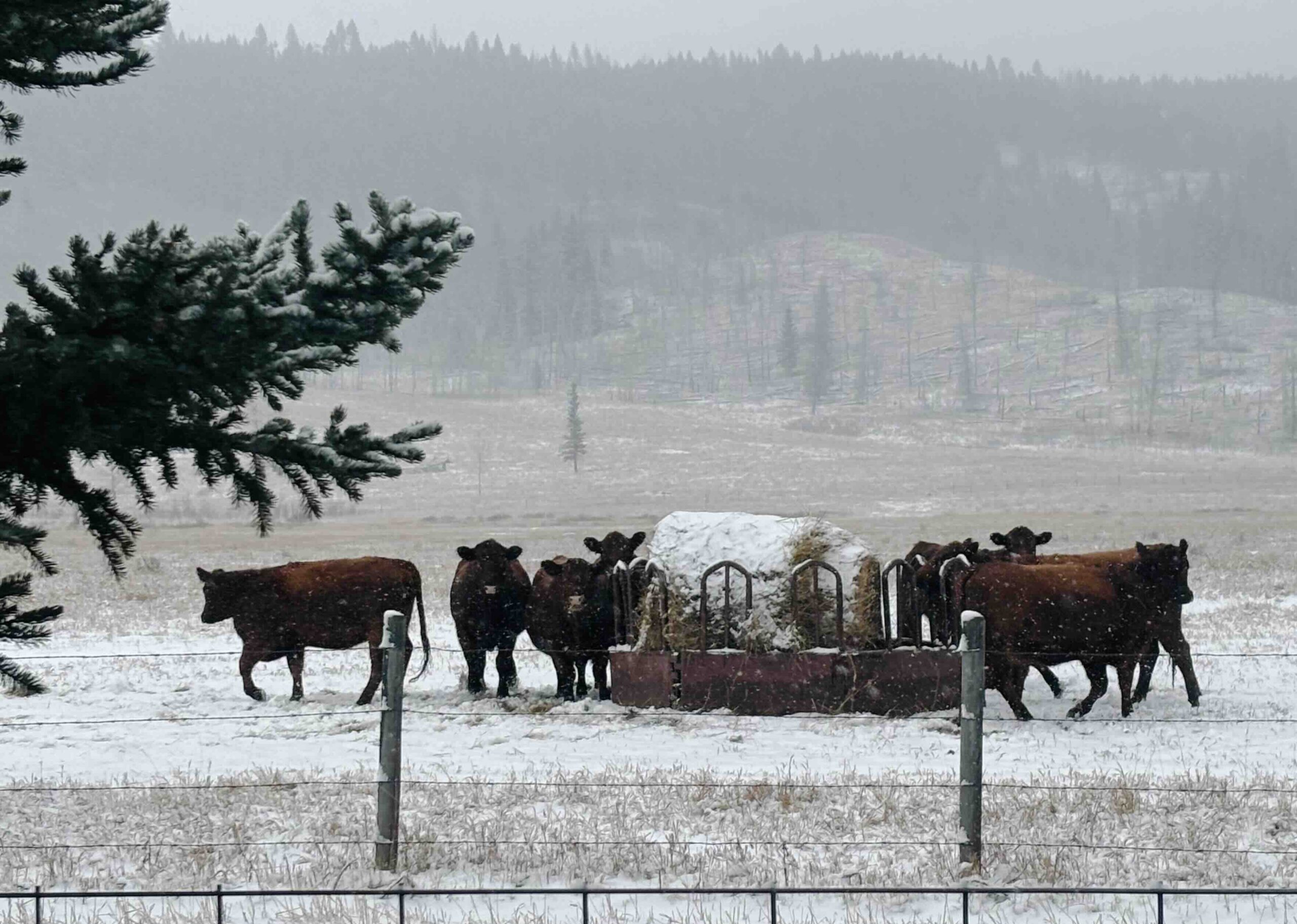
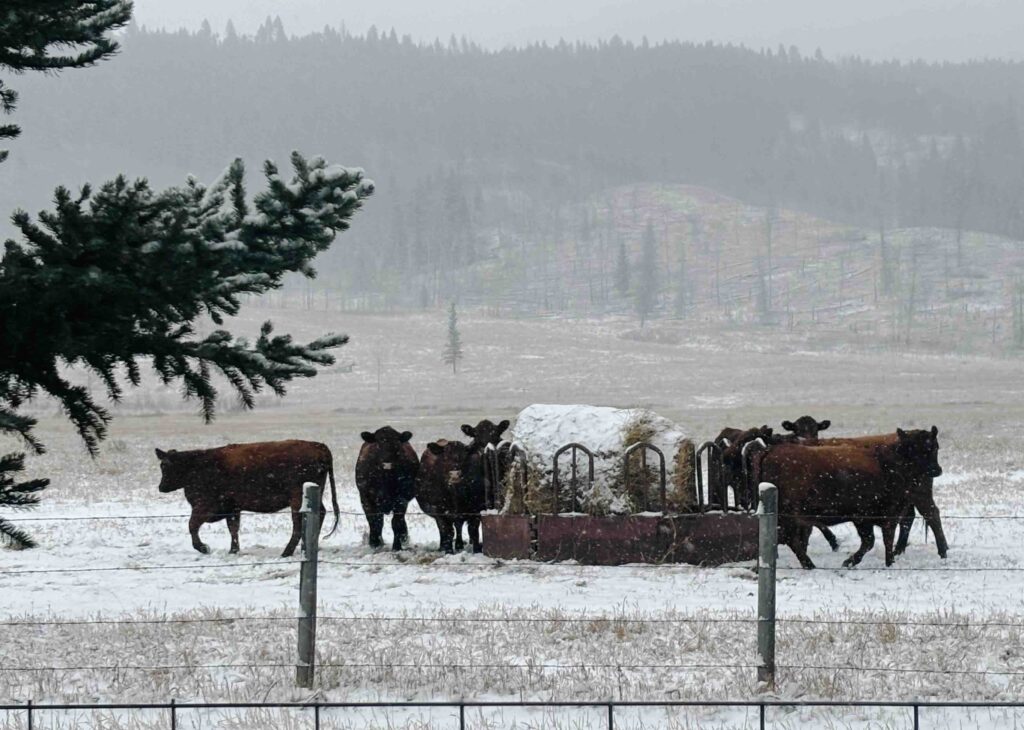
His departure involves a stock trailer and a change of plans at the old barn. Our cattle need moving. Immediately. This means hooking up the rig, moving round bales and driving 124 kms today times two, to make the switch.
(Update, text just came in – the bred-heifers are too heavy for one trailer load. So, that’s what…? 496 kms at today’s diesel prices.)
Said heifers.
I have a filly here who hit the barbed wire fence in the dark last night. The vets don’t make house calls out this far and Clay can’t help me with her.
I’m not happy about it.
It’s blizzarding. I have water to haul up from the spring, by hand. To wash dishes again, by hand. Forget designer clothes – these days I’d jump up and down for insulated coveralls…
That’s when I think of Betty.
Betty was Clay’s grandmother. Great-grandmother to my children. And a war bride.
At 22-years-old, she made a life-changing journey to cross the Atlantic entirely on her own. Leaving her family behind and everyone she had ever known, for a husband and a life on a different continent.
Clay will be back soon, heifers in tow. The notion doesn’t stitch up the filly, nor does it fix whatever fence might need mending. But, 81 years after Betty first set out for Alberta – I’m starting to understand how much a new life can ask of you.
A true tale of hope, toil and at times, comic-relief… because the chores still need doing, and there’s no use in crying anymore.
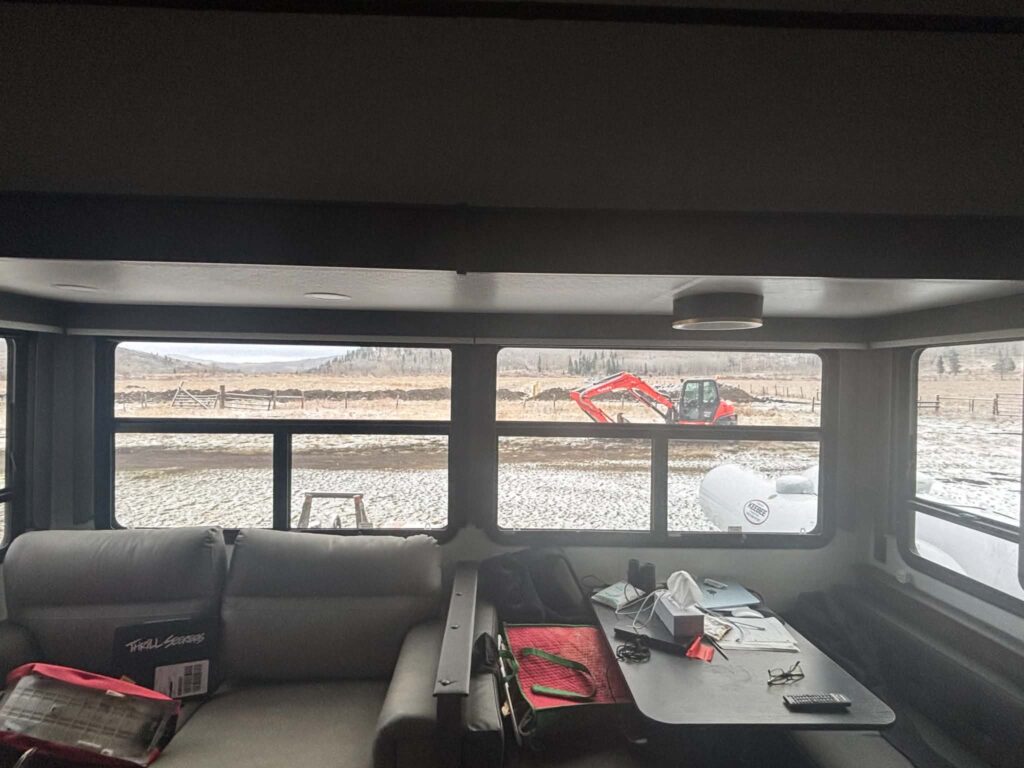
We live in an RV now.
BY JENN WEBSTER, with excerpts from JOY WEBSTER
Alright, I’m back. It’s been a year… I had to put Western Horse Review on the back-burner for several months now, because my family and I have gone through a huge change. We sold our barn and arena near Mossleigh, AB – our home for the last 15 years – and relocated to my husband, Clay’s family ranch south of the Chain Lakes in Alberta.
The land is incredibly wild.
We are starting over from scratch. In the meantime, we’re trying to maintain some normalcy of life for our children as we navigate this process. There is no insulated house, no indoor washroom and no running water in the winter. And the coldest months of the year are fast approaching.
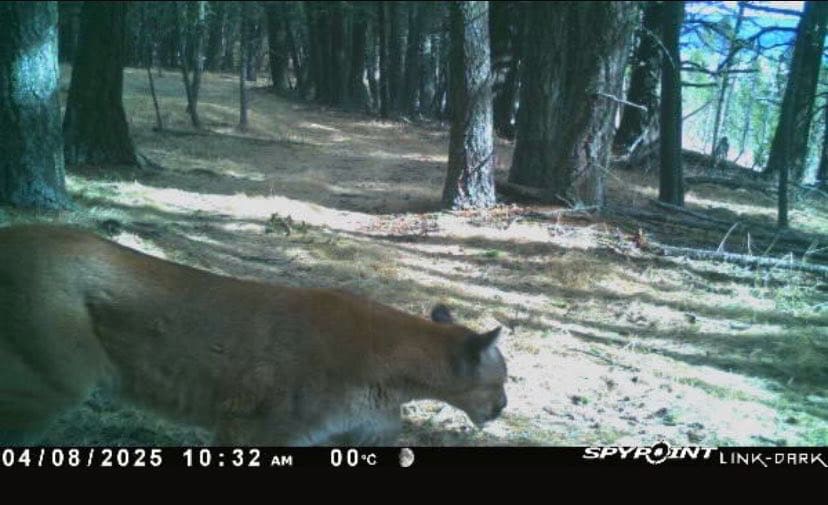
The Trail Cams are forever keeping me on my toes…
This change has come because of my husband’s desire to return to Webster Ranch full-time and bring his horse training operation to the land of his family roots. It was also necessary because Clay’s father, Tony Webster, contracted Guillain-Barre Syndrome three years ago, as a result of a COVID19 “Vaccine Injury.”
Today, Tony requires round-the-clock care to function.
What began as some numbness and lack of strength, progressed into a nightmare of paralysis, required assistance for breathing, core strength, eating and other bodily requirements. Although Tony never lost movement of his neck and head, he has no voice because he requires a full-time tracheostomy (which creates an alternate airway for breathing and sometimes helps clear mucus from the lungs). However doctors have given him a ‘speaking valve’ which is an appliance that allows him to speak.
Tony has lived the last three years in a bed.
Three years, two months and a little more than a week ago today, to be precise.
It’s unreal.
He circulates back and forth to ICUs when he garners the smallest infection, or a lung collapses or the doctors fear he has contracted pneumonia…
It’s been a roller coaster for Tony’s entire family. (And let me tell you – up until he was first admitted into the ICU back in 2023, he was a fit, healthy rancher who already survived a career as a Calgary city police officer, a quad roll-over and a bear attack… Yes, you read that correctly.)
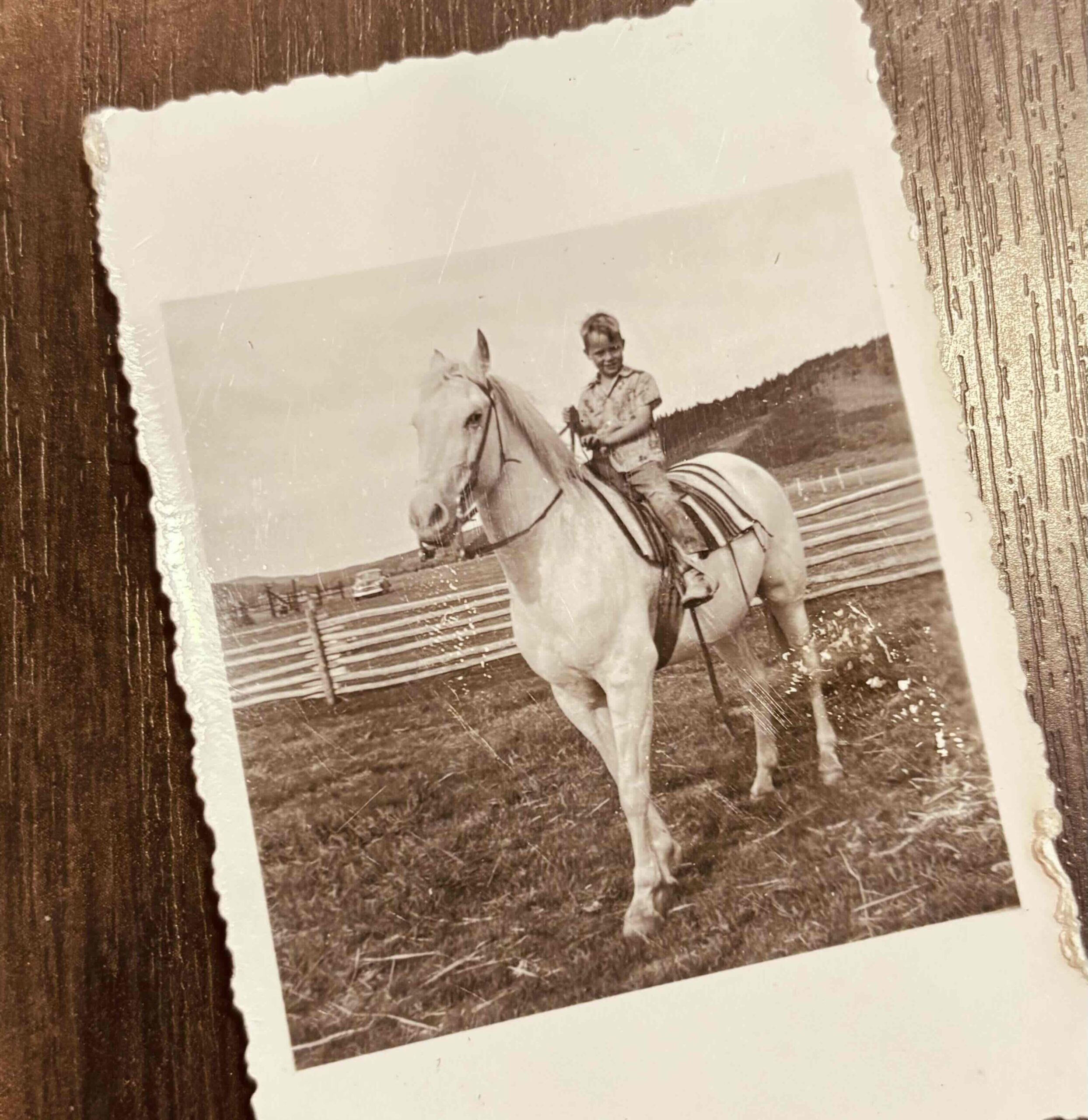
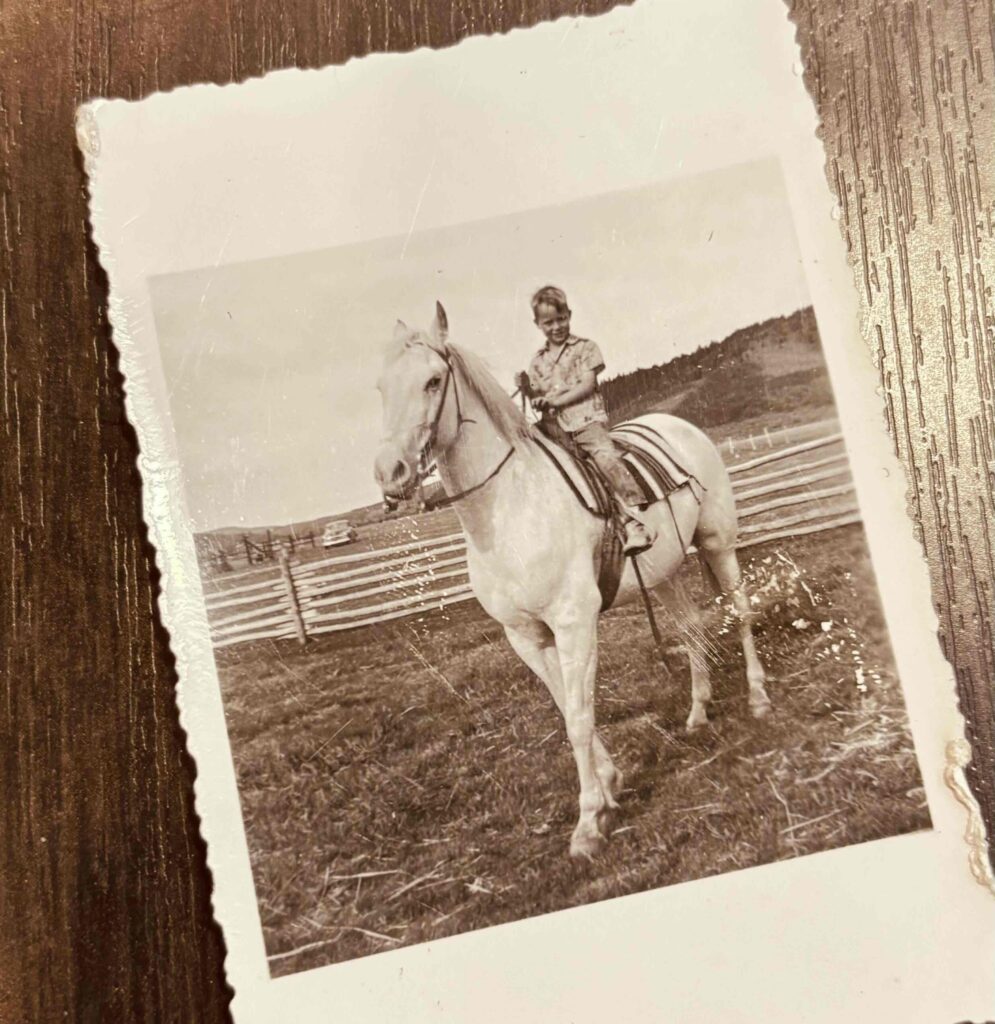
Tony Webster as a young boy, aboard his mother’s horse “Whitey.”
Thus, Clay and I made the decision to begin a new life at Webster Ranch – a piece of land that has served as a family legacy since 1946. There is so much beauty here. There’s also a great deal of work between where we are and where we need to be before the snow flies.
Over the next few instalments, I’ll tell you how we’re making a home here and share the story of Clay’s grandmother, who made one on this same piece of land generations ago. I think about her a lot these days, especially when I’m washing dishes by hand. I wonder what she’d make of the way we’re doing things. I’m pretty sure she’d have a few pointers!
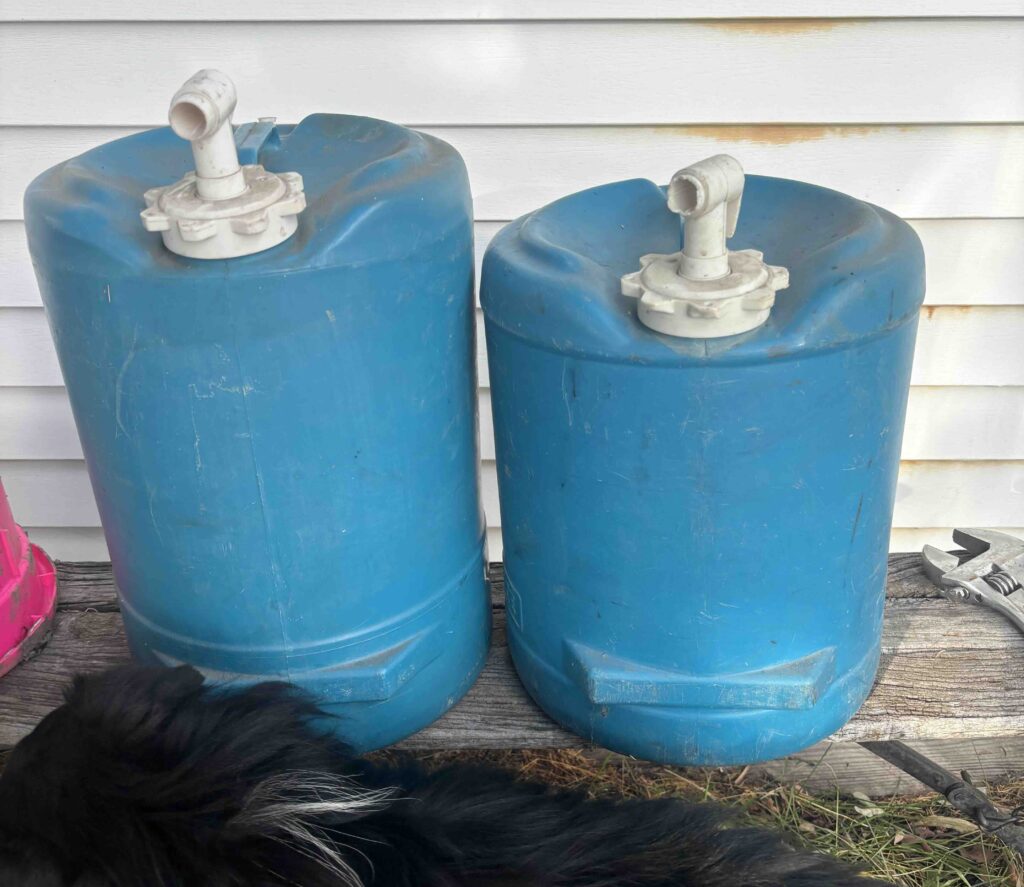
Without running water, I’ve literally had to boil snow to wash dishes. (Like I said – if I didn’t laugh about it, I’d probably cry!)
I could’ve waited until we’re settled to tell you all this, but judging by the list on the 1940s draw-leaf kitchen table in front of me, it’s possible you might not hear from me for a while again. So I’m writing to you now – from right in the heart of it all.
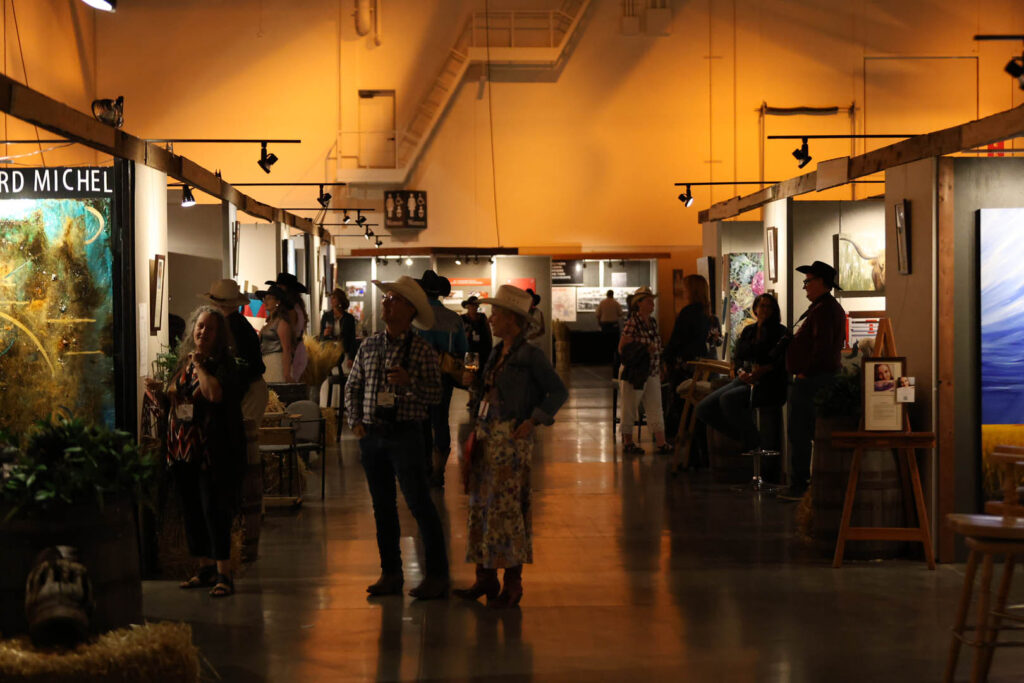
If you’re heading to Stampede this year, be sure to make time to wander through the Calgary Stampede Art Show! Located in the Western Oasis inside the BMO Centre at Stampede Park, visitors can enjoy fine art, sculpture, photography, mixed media, a craft and creative arts competition and of course, live music on the Window to the West Stage.
Much of the art in the space is for sale, so it’s a chance to snap up one-of-a-kind pieces straight from the Artist’s themselves. There are also historical exhibits, crafting demonstrations, one-on-one talks with professional photographers and live painting happening daily.
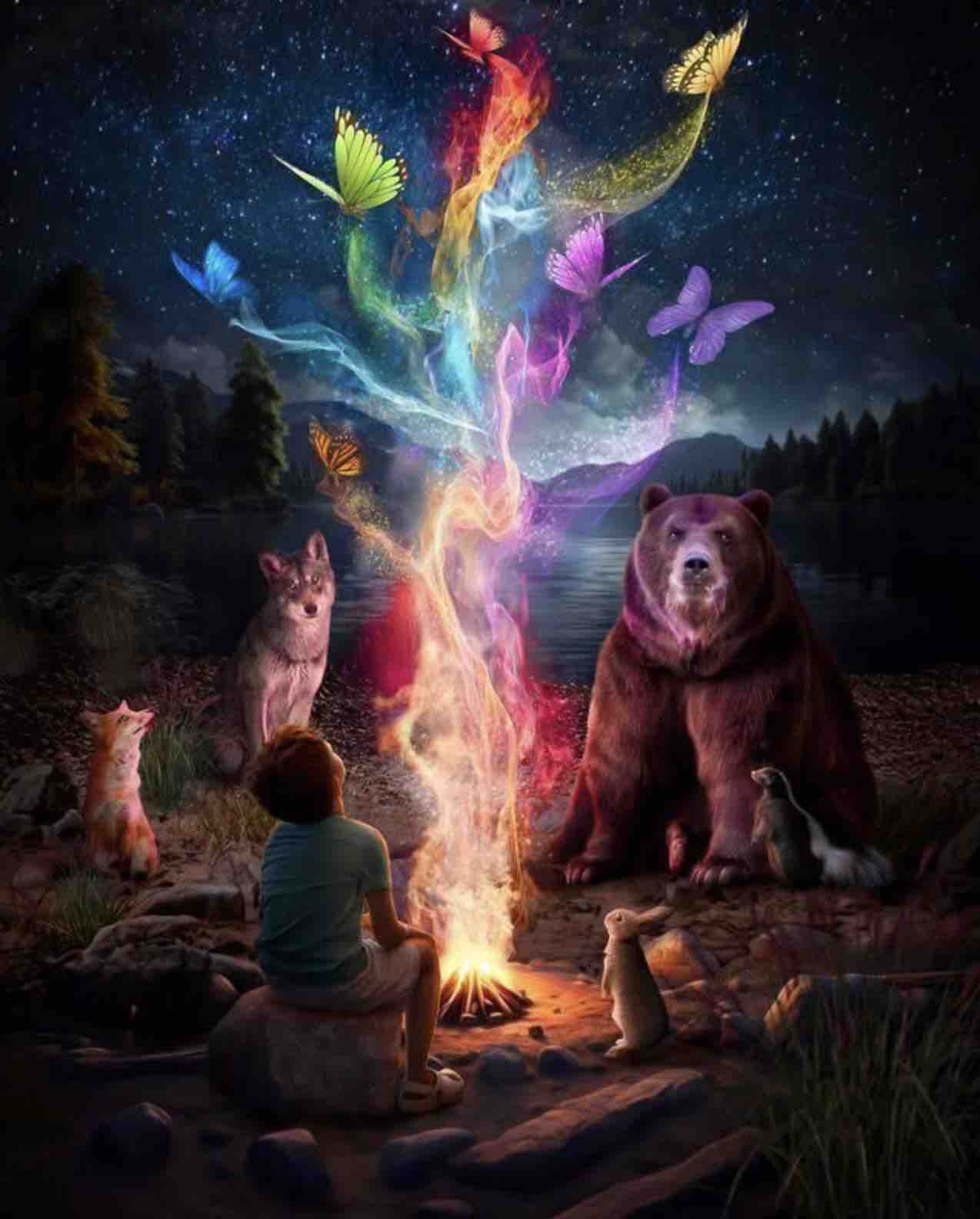
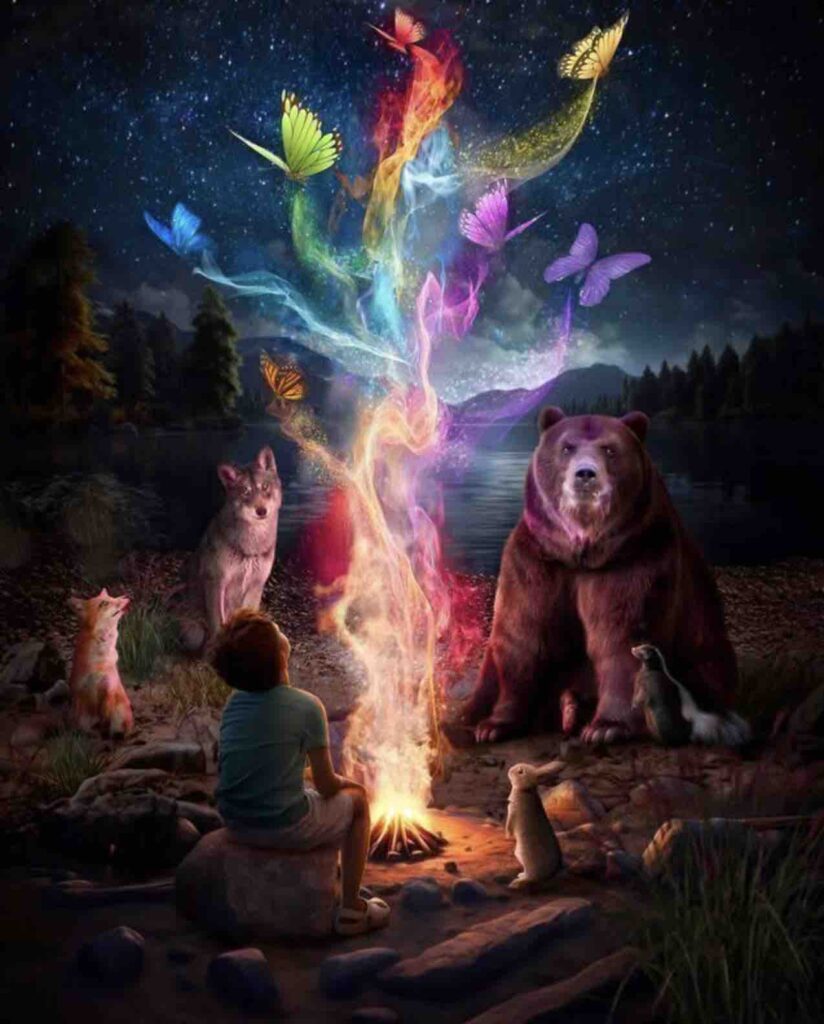
“Magic Campfire” by Heather Getzlaf, winner of the Creative award in the 2026 Calgary Stampede Photography Competition.
As a true Calgary Stampede fan, I am always happy to share tips for making the most of the 10-day festival, from the best new foods (and those irresistible deep-fried favourites on a stick) to the top rodeo seats, chuckwagon picks, and when is the perfect time to line up for the Westjet Sky Ride. But this time, it’s time to share one of the Calgary Stampede’s true gems with those who aren’t in the know – or are visiting Stampede for the first time.
Let’s talk about the Calgary Stampede Art Show!
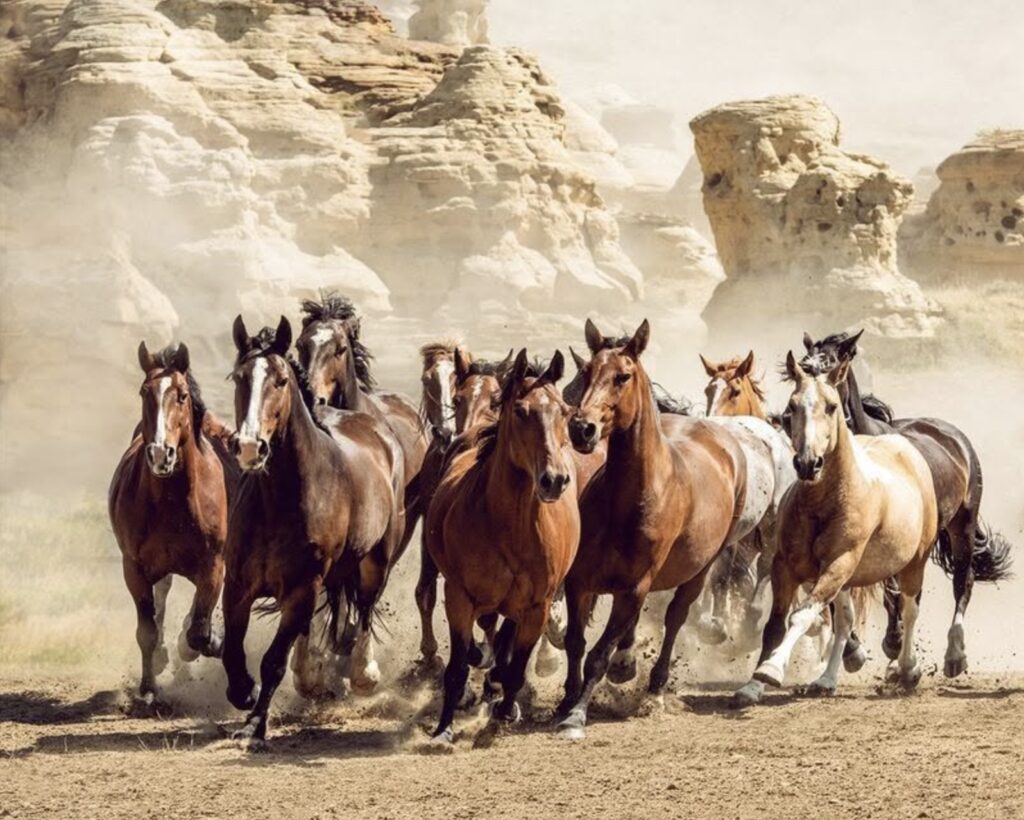
Photo by Western Lifestyle & Architecture Runner Up Category Runner-Up: Susan Rex with “Running Free” @thebuckinphotographer
Located in the “Western Oasis” within the BMO Centre, visitors will find a beautiful, cool, and calming break from the energy of the Midway. The Oasis is filled with fine art, sculpture, photography, mixed media, and craft and creative arts.
Much of the art is for sale, and ranges from traditional Western styles to contemporary offerings. Back this year is the fan-favourite Artist Ranch project which showcases work inspired by selected Artists after a stay at the OH Ranch.
Enjoy a coffee or a glass of wine as you stroll through various exhibits, galleries and displays where you can talk directly to the Artists, or just sit back and take in one of the many daily music performances on the Window to the West Stage.
My recommendation? Visit the Western Oasis in the late afternoon or early evening, when you’re ready for a break before heading into the BMO Market. If you can, plan your visit around one of the live painting demonstrations, artist talks, or hands-on creative demonstrations. They offer a chance to connect with the artists and gain a deeper appreciation for the work on Display.
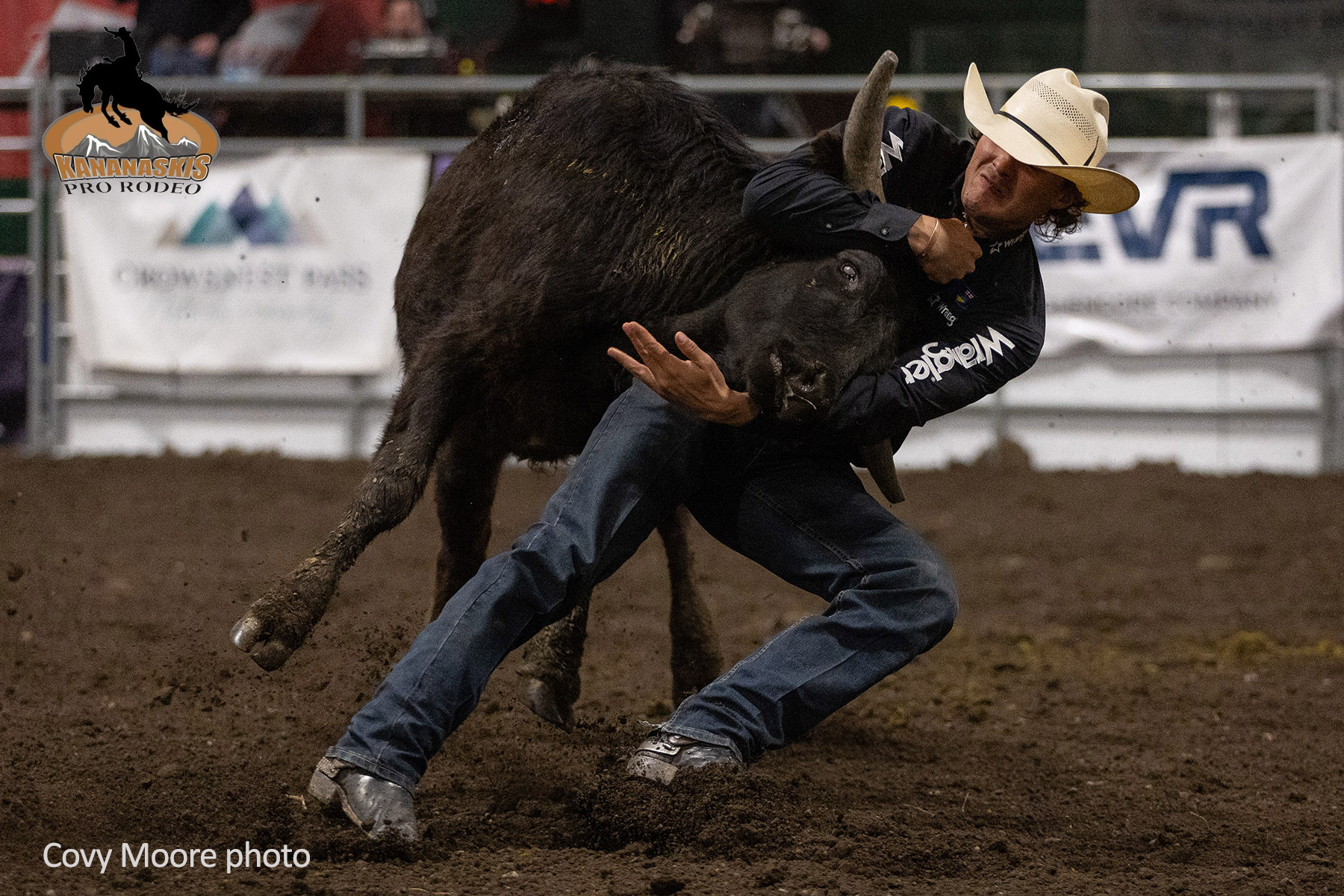
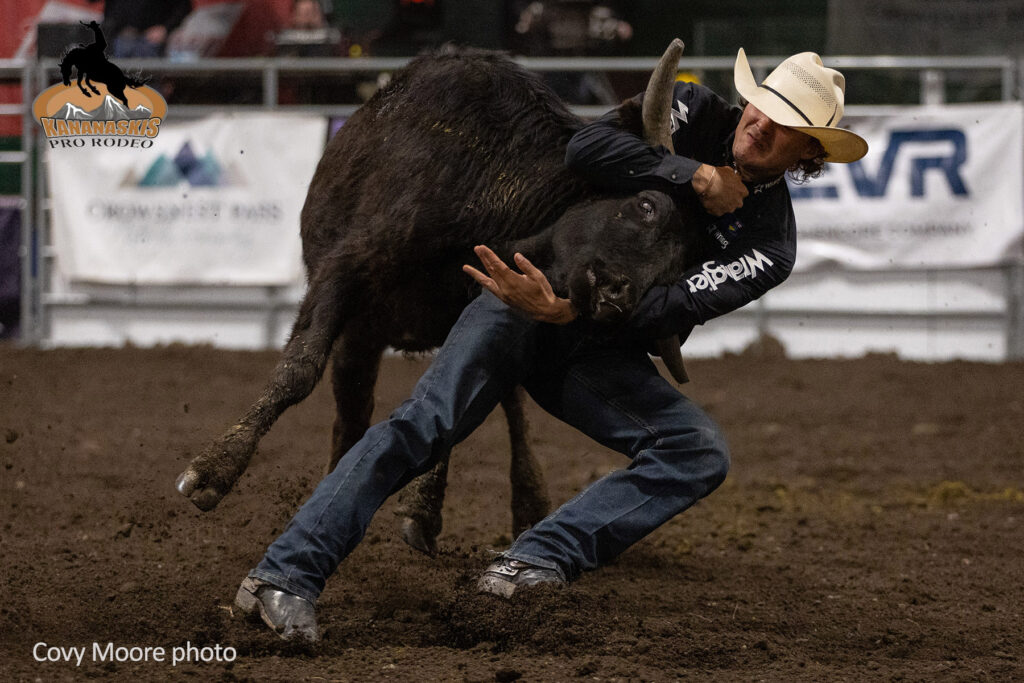
Ryan Shuckburgh. Kananaskis Pro Rodeo photo by Covy Moore.
Canadian steer wrestler Ryan Shuckburgh is enjoying early season success.
The Innisfail, Alberta bulldogger who finished second in Canada behind Scott Guenthner and 26th in the world in 2025 has a couple of boxes he’d like to check. A Canadian title and a National Finals Rodeo qualification are the top priorities.
And the productive start to his season has him nicely placed to close the deal on both of those goals. A couple of weekend wins on this side of the 49th parallel will help in both areas. Shuckburgh’s 4.7 second run at the Kananaskis Pro Rodeo in Coleman netted the eight year pro $2,334 and he split top honours at the Taber Spring Classic where he and Ben Mitchell turned in 4.0 second runs – giving each a $2,253 payday.
For Shuckburgh the double victories moved him to second place in the Canadian standings snapping at the heels of the early season leader – Pacean Deleeuw. And on the south side of the Medicine line, the five-time CFR qualifier entered the weekend in 16th place in the world standings. Depending on what some of the other contenders did on the weekend, Shuckburgh could head into this week in the all-important top 15 in the world.
It’s the best beginning to a season of his career, eclipsing the solid start he had one year ago when he finished up second in Canada and in 26th spot on the world stage. The 28-year-old points to a few changes he has made for the 2026 season.
“I’m trying to put less pressure on myself and that seems to be helping,” Shuckburgh noted. “I’m just trying not to think about things, just go out there and do it, treat it like it’s just another part of my day.”
In addition to the mental side of the game, Shuckburgh is also on a different mount for the 2026 campaign. “I’d been riding Eddie, Tanner Milan’s great horse, but Eddie was a little sore after the NFR and didn’t come down south this winter. I’ve been riding Matt Richardson’s good horse, “Miner,” everywhere and it’s been going really well. He scores great, he runs a good pattern and he’s fast. He just does all the things you want a good steer wrestling horse to do, and he gives you a chance to win every single time. When you’re getting horns every time, it’s up to you. You just gotta throw them down and hopefully you get paid.”
Miner came to Matt Richardson from the Wilsons in Cardston, Alberta – he’s a Ninety Nine Goldmine bred horse out of the Beierbach program at Maple Creek, Saskatchewan. As for his double-win weekend, the veteran bulldogger was philosophical.
“It’s kind of boom or bust in the spring up here in Canada. The steers are older and a lot of them are good but there’s dang sure ones you want and ones you don’t want. I drew a couple of good ones and it worked out great.”
As for those goals he referenced earlier, that part hasn’t changed a lot. “Obviously, it’s good to go to the CFR every year and that’s a huge deal and the NFR has been a goal of mine for a long time. I’ve got a lot of confidence in Matt’s horse and I’ve got a pretty high batting average on him, so we’ll see how it goes. But as I said before, I don’t want to put too much pressure on myself. Everywhere you go it’s the same blue chute with a steer in the chute and a barrier strung in front of you and away you go. We’ll see where we’re at in October.”
And while it’s only April, the start Ryan Shuckburgh has to his season is certainly reason for big-time optimism as the 2026 rodeo season rolls on.
And the Canadian saddle bronc riding machine that keeps producing talented young riders year after year hasn’t, apparently, slowed down. Latest off the assembly line is the third-generation cowboy – Blain Pengelly. And like Shuckburgh, the talented rookie collected a pair of wins, riding Big Stone Rodeo’s Rubels to 83 points and a split of the win at Taber, good for $1342, then making the trip over to Coleman for a big-time 86.5 point ride on Duane Kesler Championship Rodeo’s Double Red to pocket another $1,237. The $2,579 weekend will allow the Caroline, Alberta product to forge a commanding presence in both the rookie and permit standings.
Look for all weekend winners and unofficial results at rodeocanada.com
Next up on the CPRA spring schedule is the Drayton Valley Pro Rodeo May 1-3 and the Brule Xtreme Broncs event May 2 at the Hinton Rodeo Grounds.
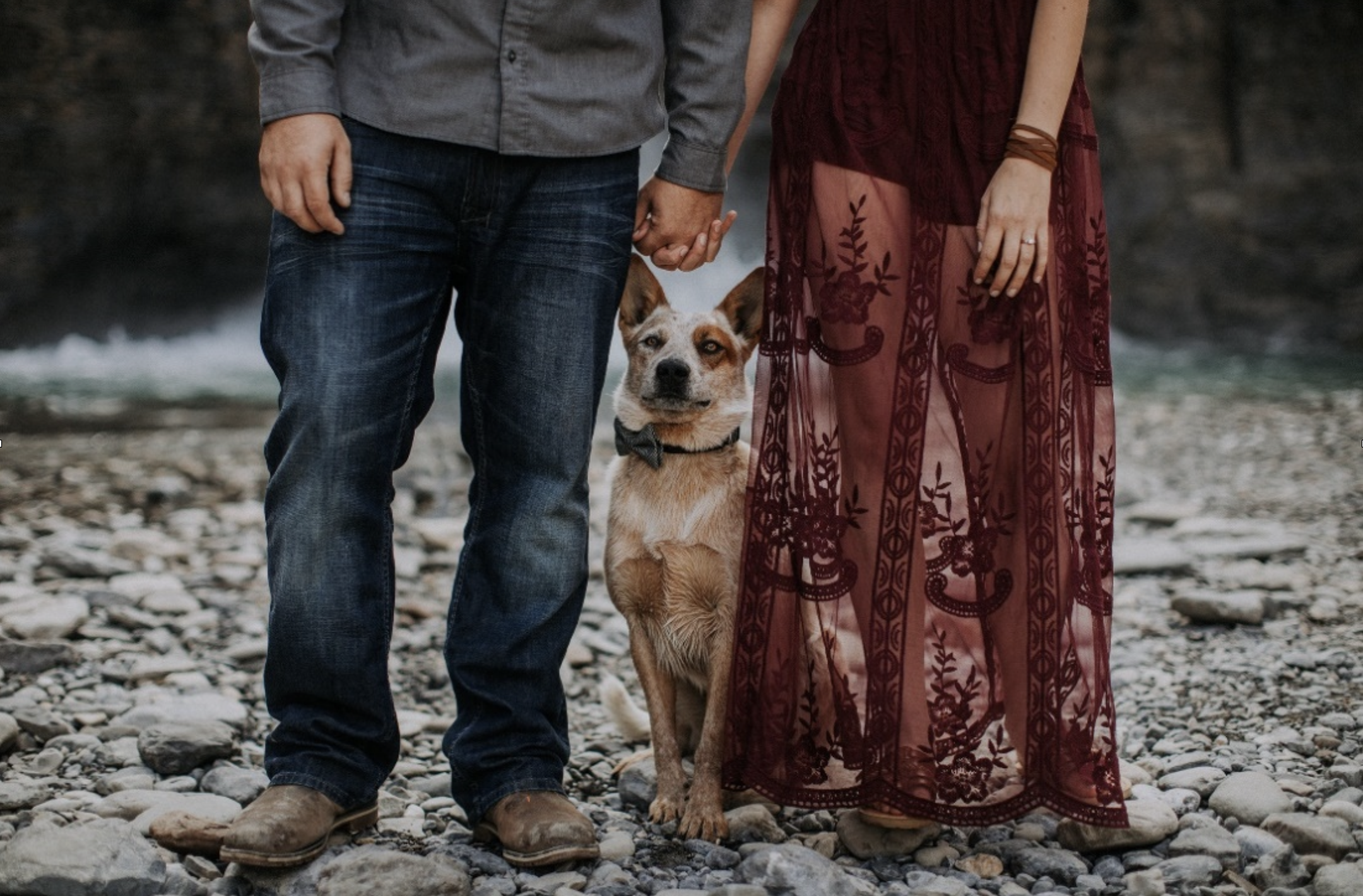
Google says there are 900 million dogs in this world. Now, I’m sure you would agree that not all of them are truly GOOD dogs. Fewer still are GREAT dogs.
This got me thinking. What makes a dog better than most? This is what I came up with:
A great dog is…
Intelligent. Smart enough to understand your commands, while willing enough to learn and obey them.
Reliable. He’s there when you need him – both physically and emotionally. In the literal sense, he stays home; he can be counted on to be there morning & night. He’s also there when you’ve been cooped up and need to go for a walk, or are in a bad mood and need a distraction. Or when you find yourself crying on the front step, his fur soaks up those tears.
Forgiving. He doesn’t hold it against you if you get busy. If you had a long day, and can’t play with him, he’ll just try again tomorrow. Toddlers and small kids lean on him or pull his fur, he doesn’t mind, he knows they’ll throw him the ball later.
Adaptive. He’s ready to do whatever you feel like. Going to check cows – you got it. It’s raining and we’ve got to stay inside and read all day – that’s good too. He’s just happy to be included.
Intuitive. He knows how to read the room. Your friends are his friends – you don’t have to worry about him being aggressive to people he shouldn’t be. You come home with a new baby, once or twice, or three times, and he knows they are his now as much as yours.
Honest. He’s going to screw up now and then; get into something he shouldn’t – but he’ll understand his mistake in the tone of your voice, and you’ll see it in his actions and eyes that he’s sorry. He wants to please, so you won’t catch him making the same mistake often.
Loyal. He trusts you completely, and would follow you anywhere.
The thing about a great dog is, THAT becomes your standard. Yes, they are all individuals, but once you have loved and been loved by a truly GREAT dog, you understand something that special is a combination of luck, work, and commitment.
They have earned their way into your heart. Even when they’re gone, you will always remember that you were lucky enough to call that truly GREAT dog yours.
Here’s how anyone can bring the western culture into your life, without ever owning a horse.
The North American West is synonymous with the cowboy and the culture of the cowboy, but you don’t need to own a horse to embrace its rich heritage. According to renowned western photographer Nadine Levin, one doesn’t even have to call the West home. “If you can’t live in the West, you can surround yourself with the West. The West is in your heart, a code you live by. It’s not where you hang your hat.”
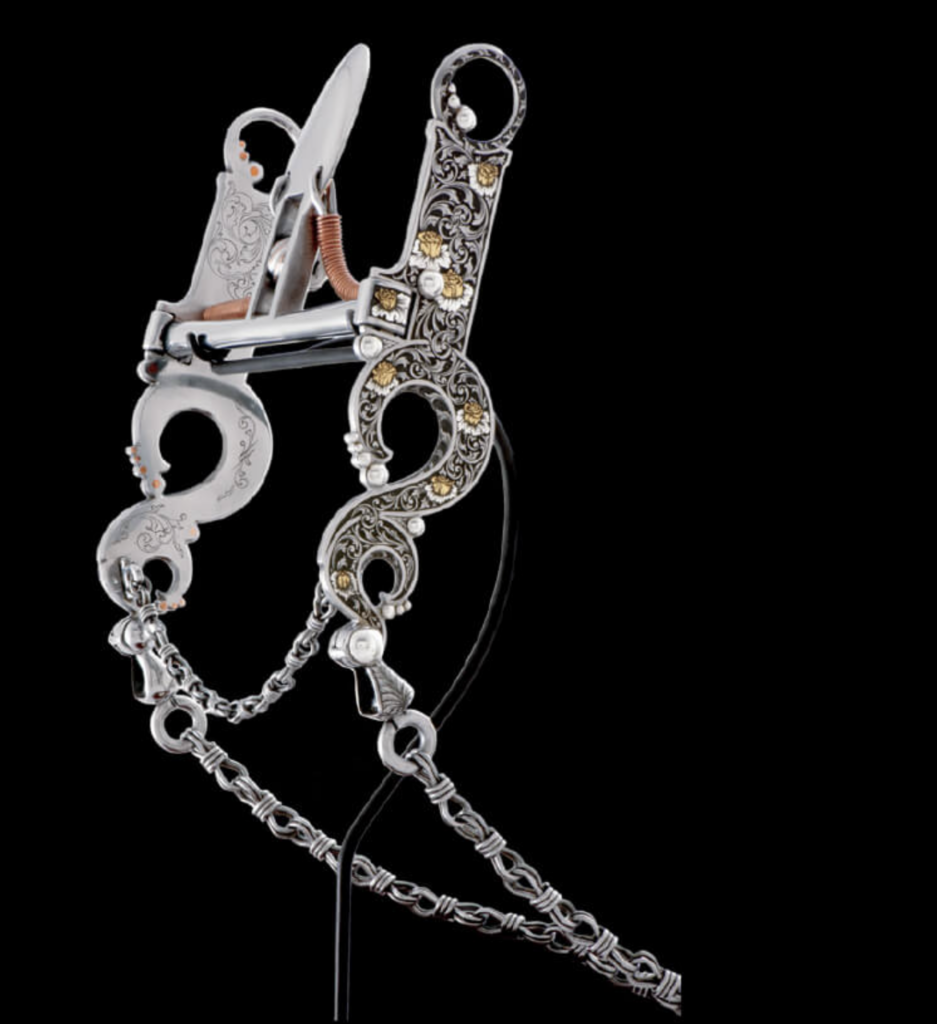
The Poolesville, Maryland, USA, home of Nadine and her husband, Alan is filled with great Western art. The couple are especially enamored with the functional works of art crafted by the members of the Traditional Cowboy Arts Association (TCAA). The TCAA offers an authentic connection to the West through the traditional cowboy crafts. In this way, the Levins are living the West. Like the Levins, people throughout the world want a part of the culture in their lives. Living the West is about embodying values such as honesty, integrity and hard work. The TCAA exemplifies these principles while preserving the traditional Cowboy arts and educating future generations.
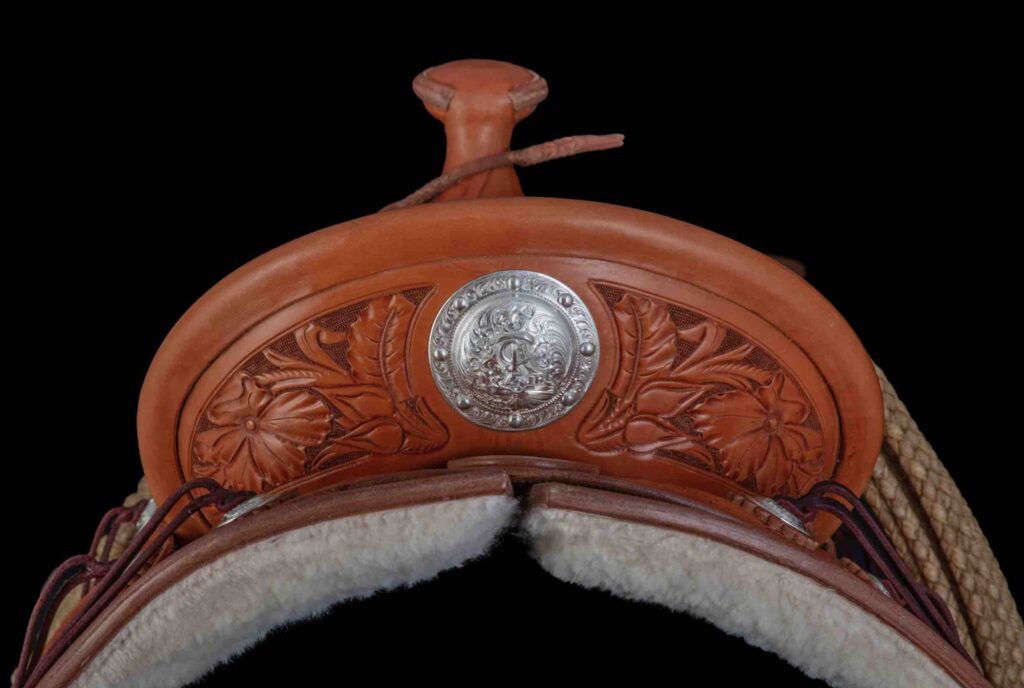
The TCAA focuses on four main disciplines: saddle making, bit and spur making, silversmithing, and rawhide braiding. These crafts are not just about creating functional items for horseback riding and work; they are also about preserving a way of life –embracing the values, culture, and traditions of the cowboy way.
“The California Rose.” In celebration of the 25th anniversary of the TCAA’s first exhibition held at the National Cowboy Museum in 1999, the group auctioned a project called “The California Rose” in which all 13 active TCAA members, plus one emeritus member, took part.
Twenty-seven years ago, a core group of celebrated cowboy craftsmen – concerned that the traditional cowboy crafts were fading into oblivion, only to be replaced by soulless objects of mass production – came together. Ken Townsend, President of the National Cowboy and Western Heritage Museum, and Curator Don Reeves believed in their mission and facilitated their annual sale and exhibition starting in 1999. The partnership with the museum, gave the TCAA members the opportunity to raise the level of their craft to art each year. After a quarter of a century, the TCAA has continued year in and year out to astonish the public with their artistic works.
Thus, the journey of helping all of us live the West began through working gear as art in museums and our homes. Each piece created by the TCAA artisans tells a story of dedication, skill, and a deep connection to the land and its history. After all, each member of the TCAA is also a working cowboy.
“I feel fortunate to have spent my life in the rural areas of the West,” says Ernie Marsh, a TCAA bit and spur maker. “It’s been the vast open country, combined with our horse and cattle culture that have provided many years of inspiration. I hope that patrons acquiring my work can enjoy living the West knowing that my art truly depicts the working cowboy.”
Through their work, the TCAA embodies the code of the West, and this code is based not on myth, but on the reality of life on the open range. Granted, most folks who don’t physically live in the West may not know of the code, but they are drawn to it through great writings and art.
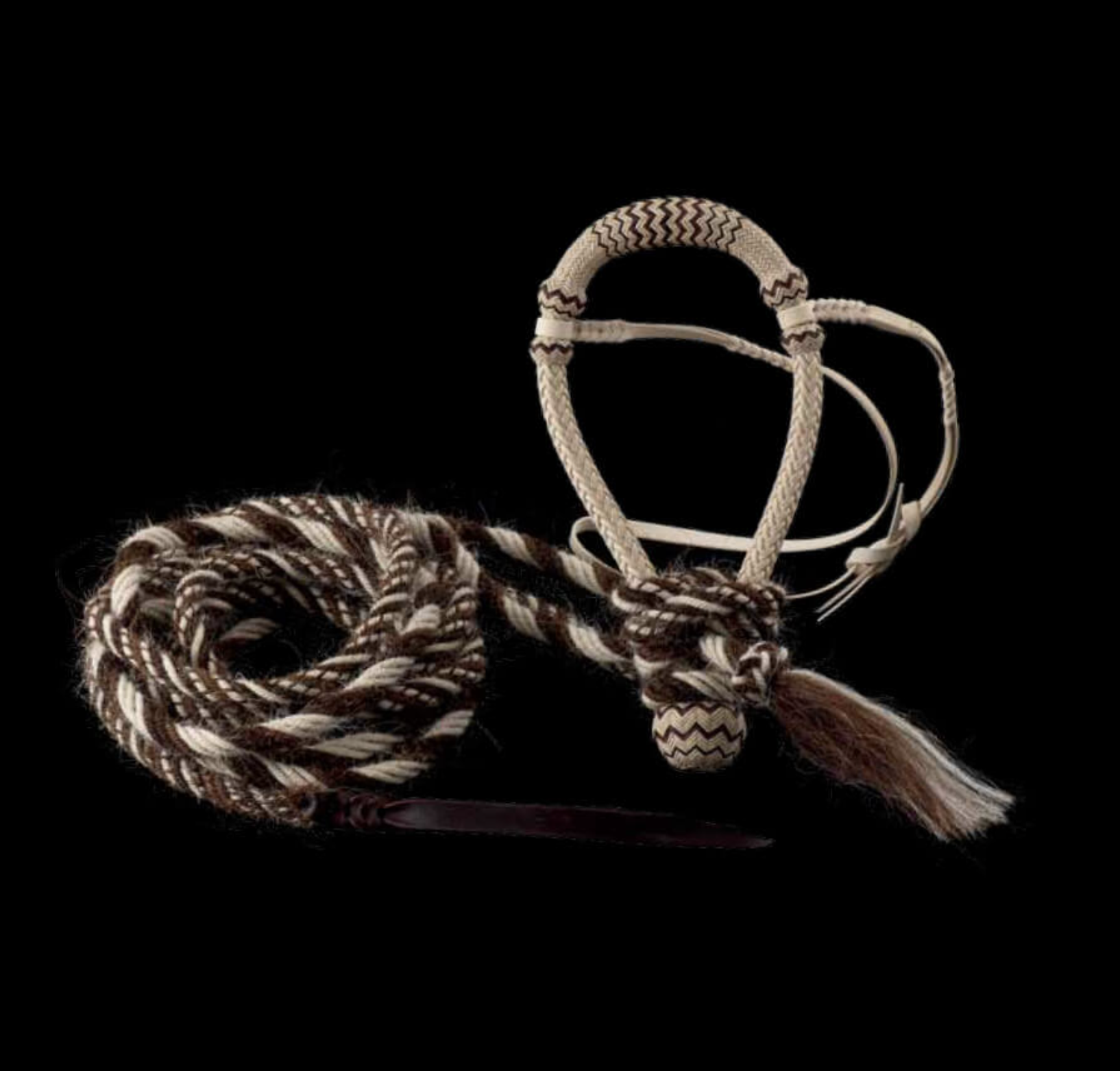
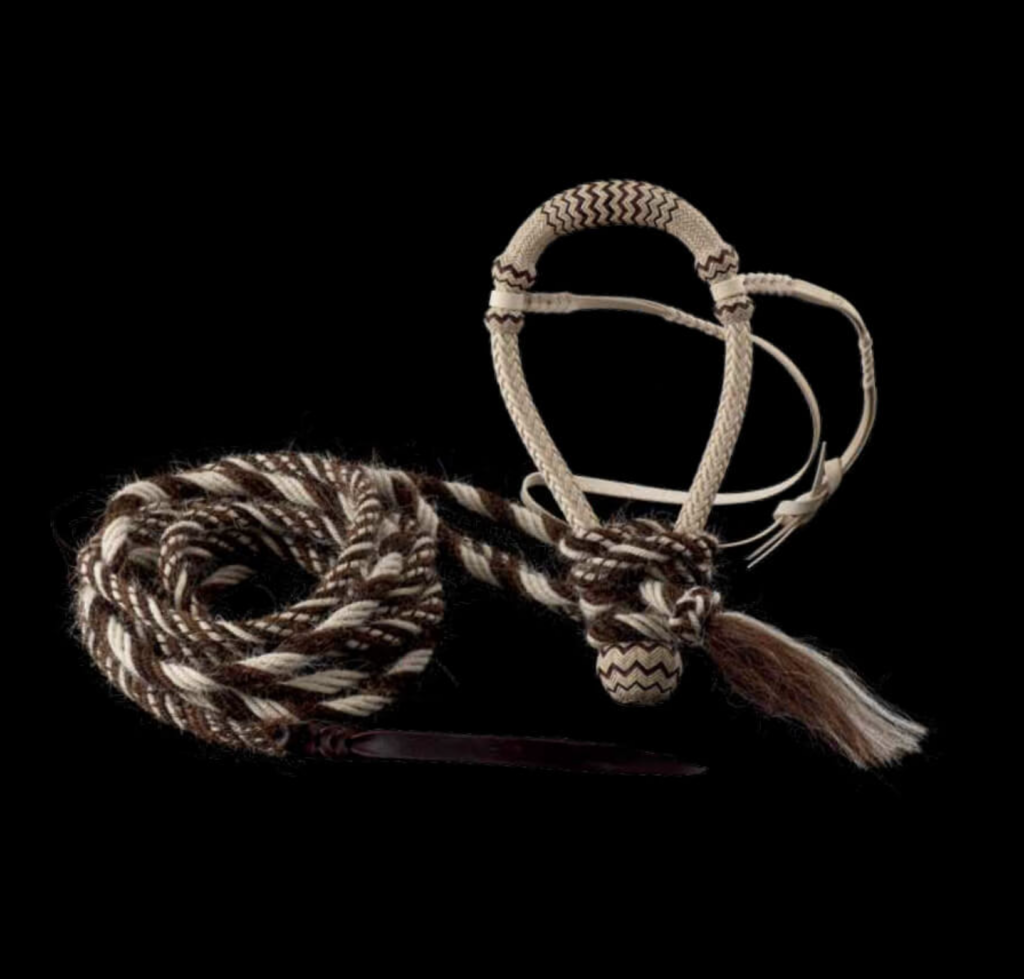
“Mecate” – By Nate Wald.
Lance Benham, a friend and Western art collector, has witnessed firsthand, the way the TCAA works impacts others.
“Over the years and having attended many of the TCAA exhibitions and sales, [my wife] Linda and I have a number of pieces that are quite meaningful to our family. When we began our purchases, we did so because the work was so stunning and we couldn’t say ‘no!’” he states.
“As our collection grew and we began to arrange pieces alongside our other western artwork, we noticed that our family and visitors saw something we hadn’t intended. Many told us our collection is more than art… that the pieces spoke to the real West. As folks experience our paintings and sculptures many are stunned to see hand-braided reins, hand-made saddles, and hand-stamped silver work that complement the rooms. When we explain the TCAA organization and speak to the small number of artisans from the ‘Americas’ who comprise it, people are stunned to learn how the pieces are actually made,” Benham relays.
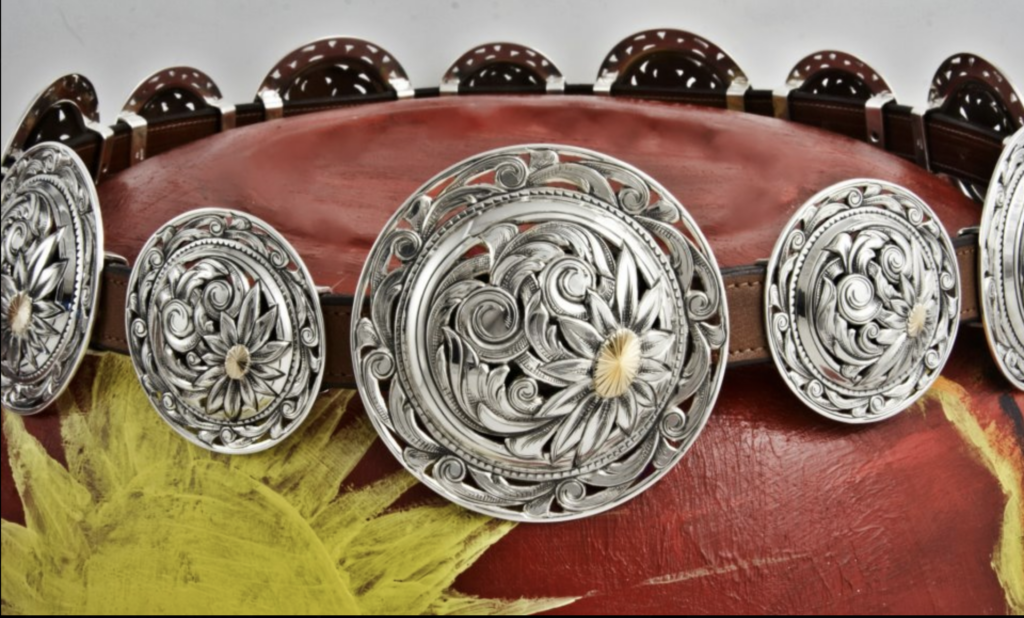
Belt by Alberta artisan, Scott Hardy.
“By honoring the methods of the past in their creative efforts, the TCAA artists bring not only mastery of their western craftsmanship to our home, but also provide a celebration of the West through the simple, elegant, and practical presentation of pieces that fit naturally among our paintings and sculptures.”
Indeed, seeing a pair of spurs on the mantle above a fireplace or a saddle in a board room makes the West come alive immediately. Simply touching these pieces ignites an excitement. The energy of the artist is transfused in all of us. Stories of survival and endurance and courage are no longer just on the movie screen, but come to life with their presence.
“These pieces transcend their functional origins, becoming art forms that deserve appreciation and a place of prominence. It is a true art to display them in a way that honours their craftsmanship while enriching the surrounding space,” says San Diego, CA, USA interior designer Rebecca Welch.
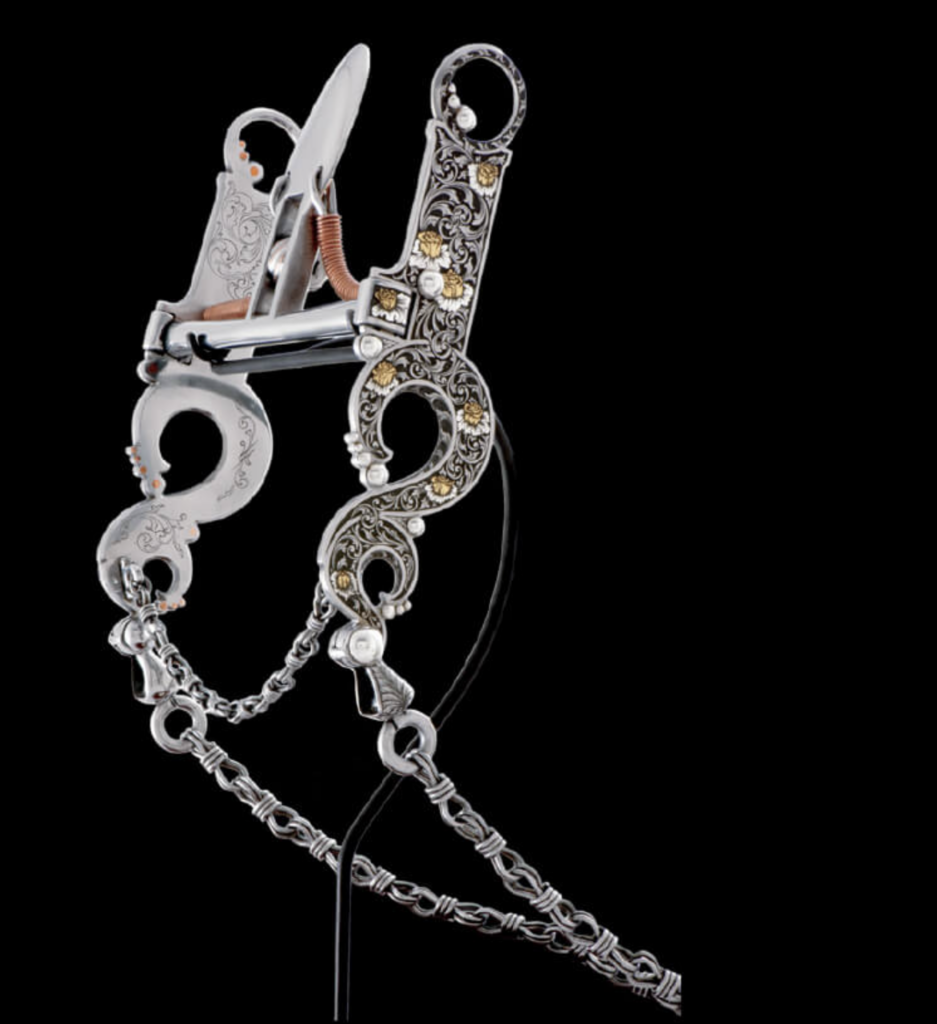
Bit by Wilson Capron.
“Educating clients about how these extraordinary works of art – whether handcrafted leather goods, saddles, or other heritage pieces – can seamlessly integrate into any style of home, is essential. Supporting the talented western artisans of the Traditional Cowboy Arts Association is a cause close to my heart.”
At the TCAA Exhibit and Sale every year, each of the artists work to exceed their efforts of the previous year. There is a two-fold reason for this. Firstly, they don’t want to disappoint or let down their fellow artists. For instance, Wilson Capron, a renowned bit and spur maker, will certainly be looking at the quality of the silver work Canadian artisan Scott Hardy creates. Secondly, these artists take personal, deep-down pride in their work.
Living the West doesn’t require owning a horse. Through the Traditional Cowboy Arts Association, individuals and families can immerse themselves in cowboy culture. By embracing this functional cowboy art, anyone can bring the spirit of the West into their life, no matter where you live.
The 26th annual sale and exhibit returns to the National Cowboy and Western Heritage Museum in Oklahoma City, OK, USA on September 26-27, 2025. For more information, visit: www.tcowboyarts.org
From performance support to pasture problems (and a little Western charm in between,) this great gear blog is built for real life in and around the barn.
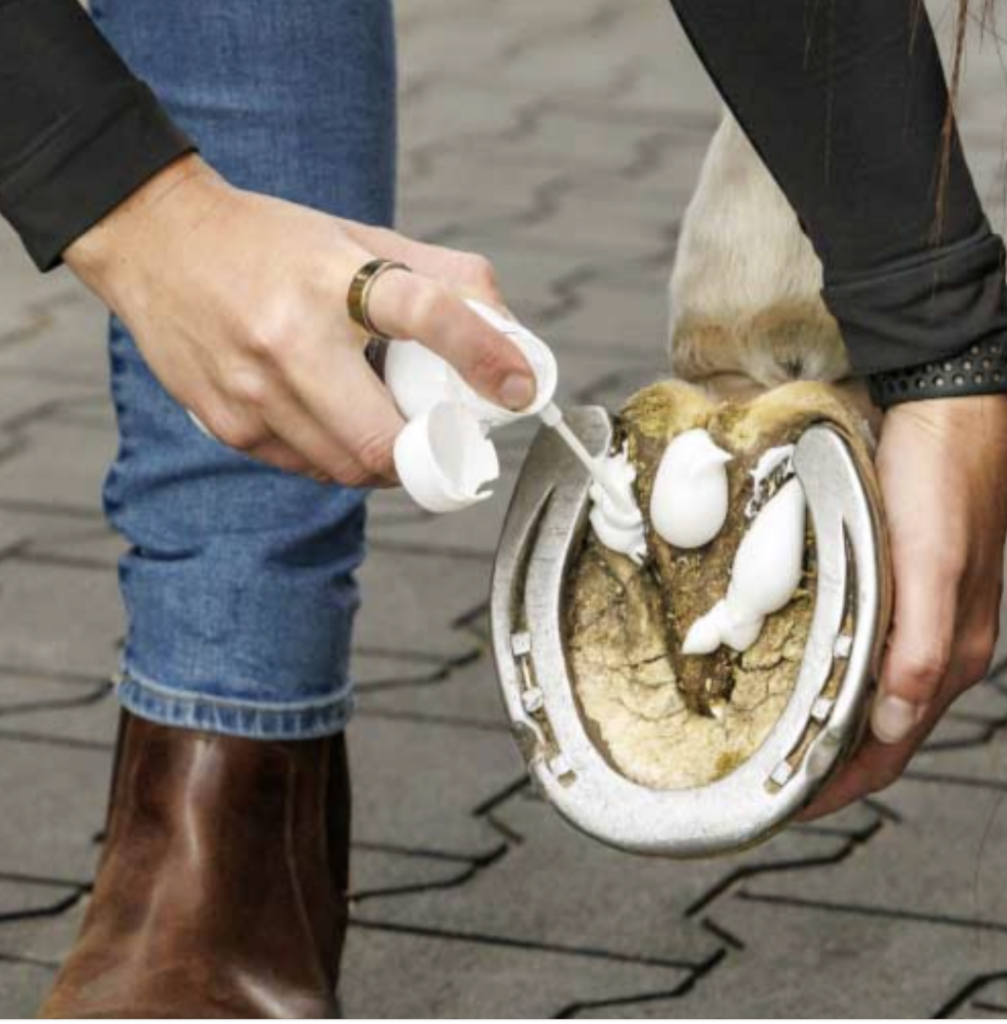
Silver Honey® Rapid Hoof Care Thrush Foam
This product is brought to you by the trusted folks at ABSORBINE and is the only thrush treatment with Manuka Honey and MicroSilver® BG for powerful, natural antimicrobial relief. It’s expanding foam penetrates deep into frog and hoof crevices for complete, even coverage and its straw applicator ensures precise, mess-free application in tight, hard-to-reach areas. This unique formula stays in place to actively fight infection without runoff or staining and treats thrush without caustic chemicals.
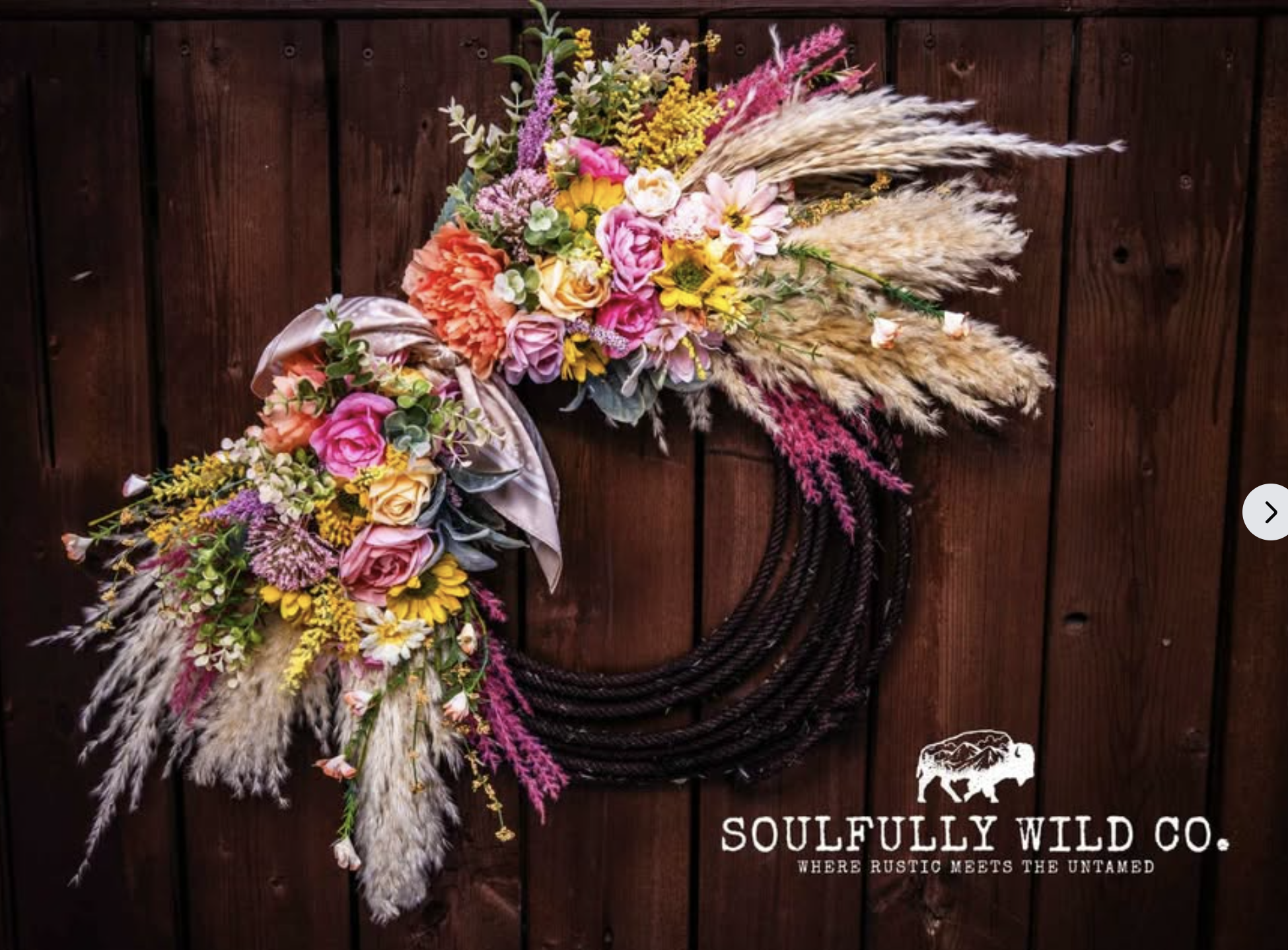
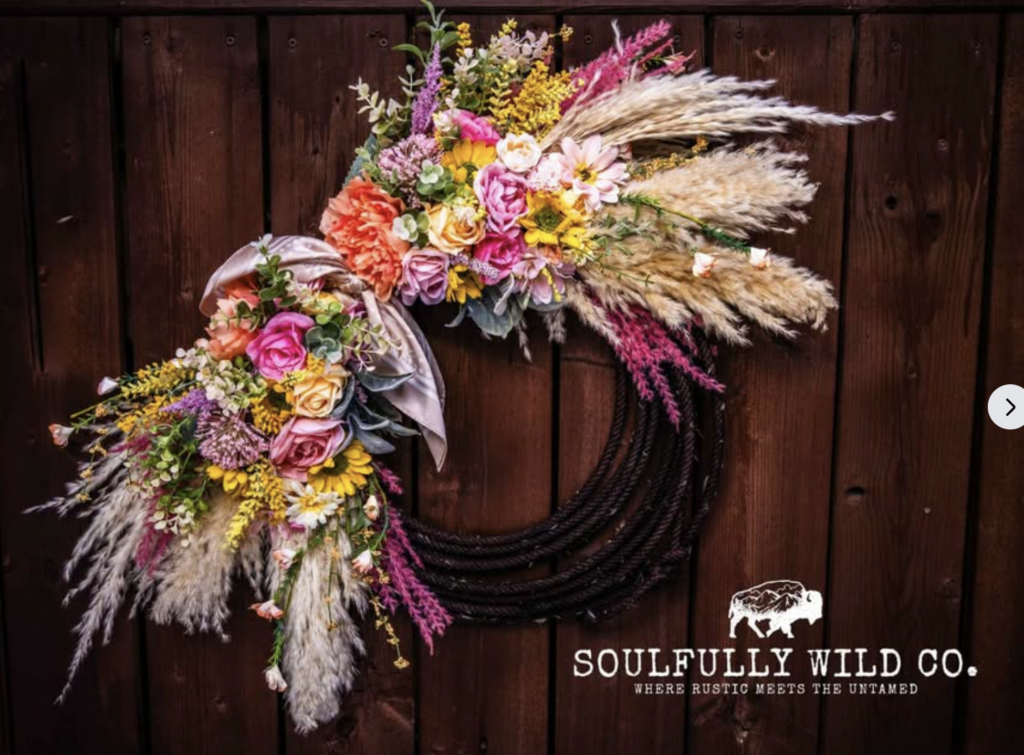
Need a thoughtful western gift for someone? Each of these one-of-a-kind wreaths begins with a rope once held by Alberta cowgirls and cowboys and is handcrafted by Soulfully Wild Co. into a luxurious wall hanging. Adorned with high-end faux florals, western-inspired décor, and silk scarves, no two pieces are alike.
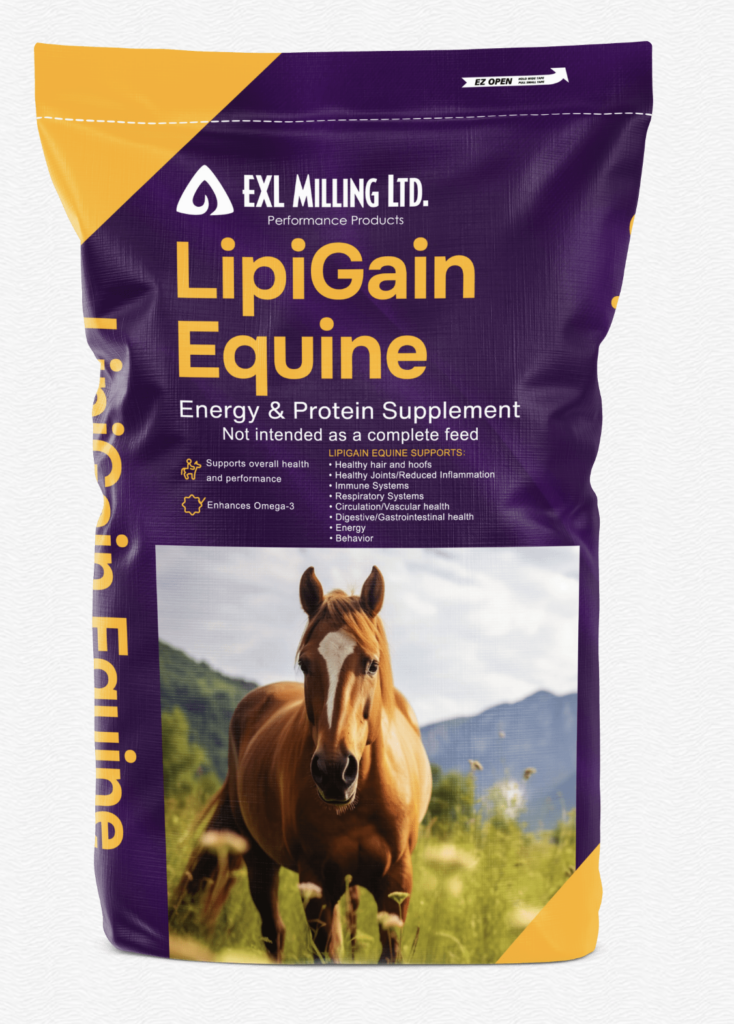
Improve your horse’s health with this expertly formulated, rich blend of Omega-3 fatty acids, essential proteins and natural vitamins. With its stable, free-flowing granular form, LipiGain Equine is highly palatable and suitable for all types of feed applications – making it an ideal choice for young and adult horses alike.
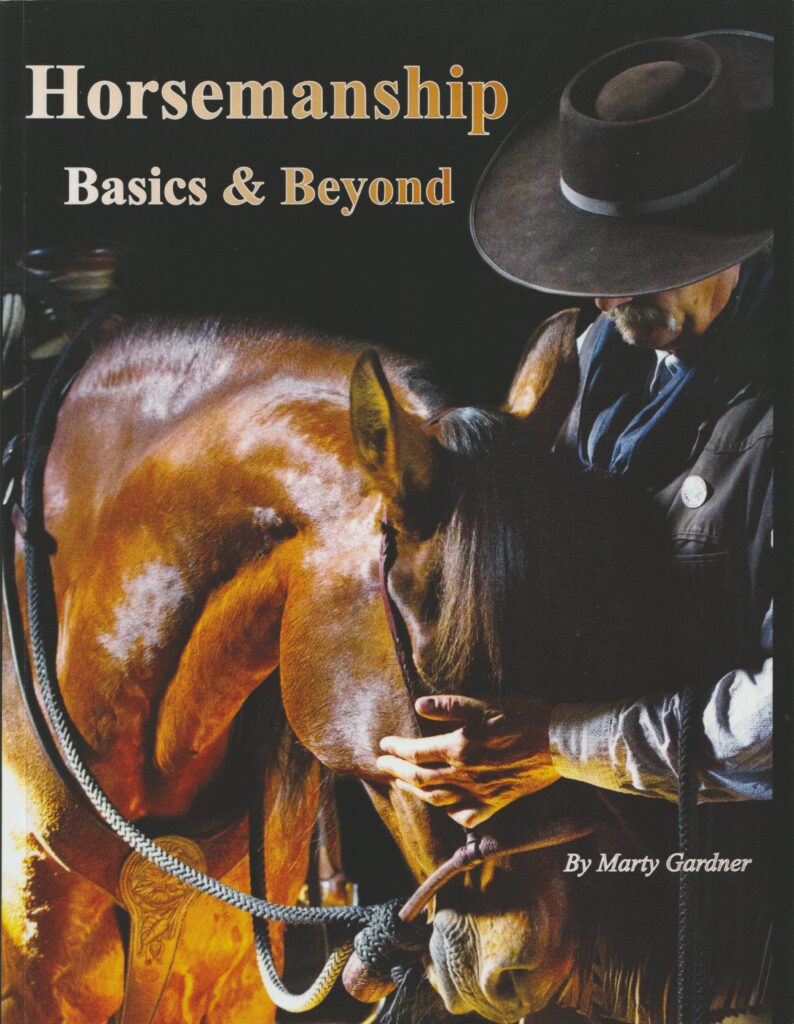
First-time author and respected Alberta horseman, Marty Gardner, is proud to release his debut book, Horsemanship Basics and Beyond. This essential new guide offers a fresh and thoughtful perspective on foundational horsemanship – rooted in real-world experience and taught in a way that’s easy to grasp, yet deeply insightful.
This liquid supplement is designed to maximize reproductive efficiency and sperm production in breeding stallions. Its key ingredients include high levels of L-Carnitine (for sperm energy metabolism) and Omega-3 fatty acids (to protect sperm membranes, especially against low temperatures). Recommended for supporting sperm motility and protecting against oxidative stress during the breeding season.
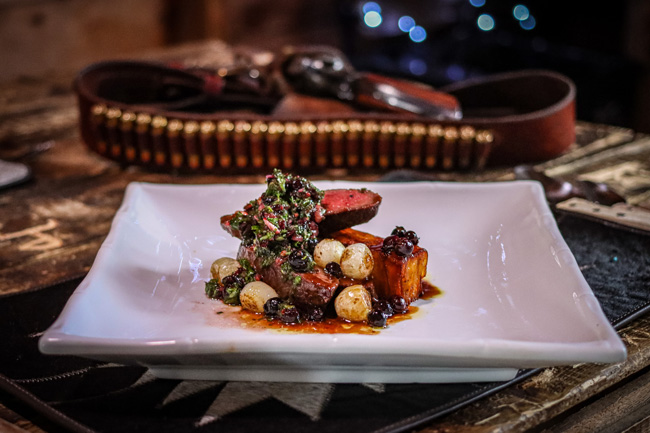
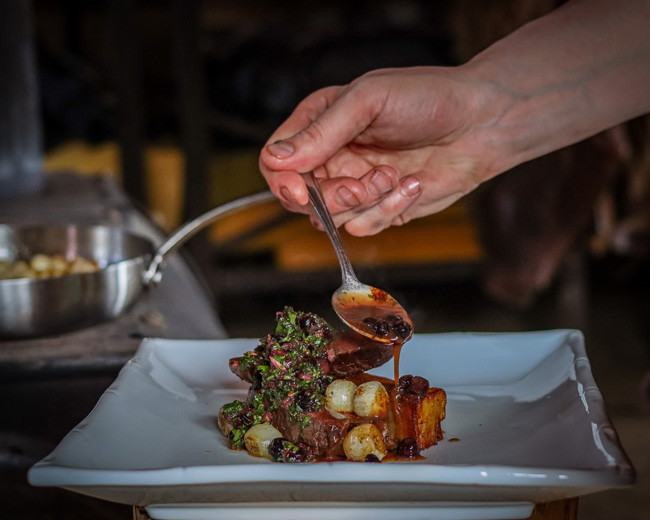
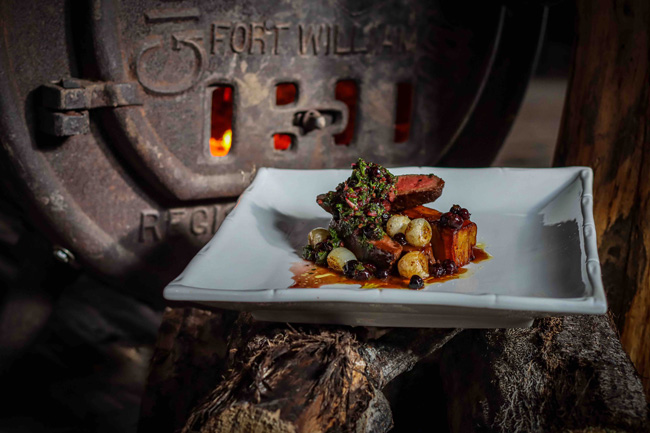
Served with crispy potato pavé, roasted pearl onions, and Saskatoon berry chimichurri – this melt-in-your-mouth dish is hearty and will allow you to savour the hunt, long after the season has ended.
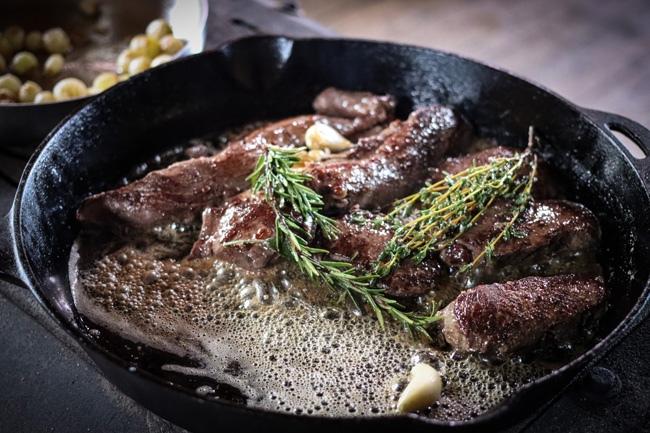
Venison is one of the leanest, high in protein and most economical meats available – especially if you live with an avid hunter. This exquisite dish takes venison tenderloin to a new level and plated atop the most elegant scalloped potatoes (although not exactly, we’ll get into that later…) this meal will leave everyone satisfied and asking for more.
Potato Pavé
Pavé, is a French word for “paving stones” and as the potatoes are prepared for this dish and sliced into rectangular portions, thus the recipe name Potato Pavé. This side dish is similar to a refined version of scalloped potatoes and requires two days to complete. As such, this part of the meal is the first component to make.
Ingredients:
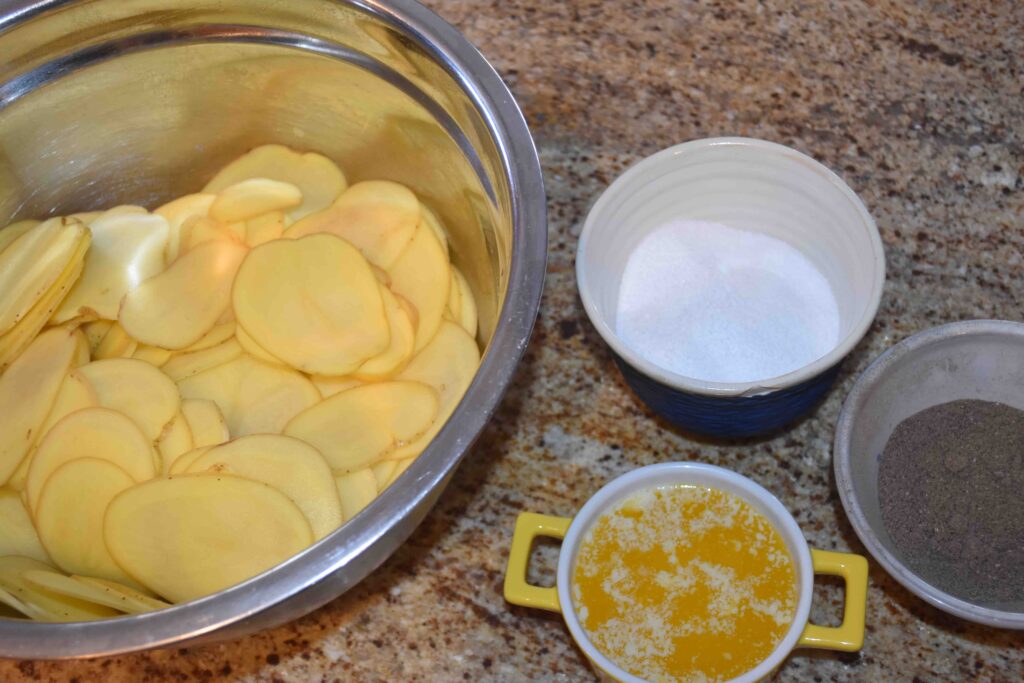
3 lbs. Yukon Gold Potatoes
2 Tsp Kosher Salt
2 Tsp Ground Black Pepper
4 oz. Fat of Your Choosing (Duck, Goose, Beef, Olive Oil, or Butter) and Melted
Canola Oil for Frying
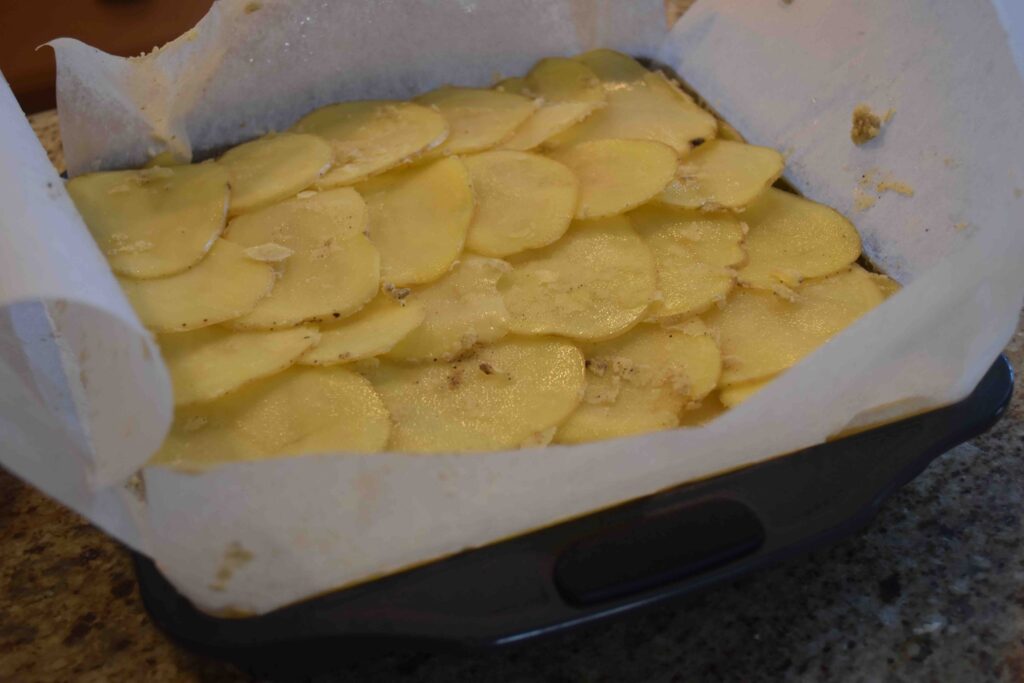
Once the potatoes are layered, bake them for three hours.
METHOD
1) Wash and peel potatoes.
2) Using a mandolin, slice the potatoes lengthwise to about 1/16th of an inch.
3) Place the potatoes in a bowl. Toss with fat, salt, and pepper.
4) In a loaf pan, lay down the potato piece by piece. Evenly layer until all the potatoes are used.
5) Preheat oven to 250-degrees Fahrenheit.
6) Bake the potatoes for three hours.
7) Remove from oven, cover with parchment paper, place another loaf pan on top and place weight onto the top of the loaf pan. The weight can be anything – canned vegetables, actual weights, or even rocks.
8) Place the weighted potato dish in the fridge overnight.
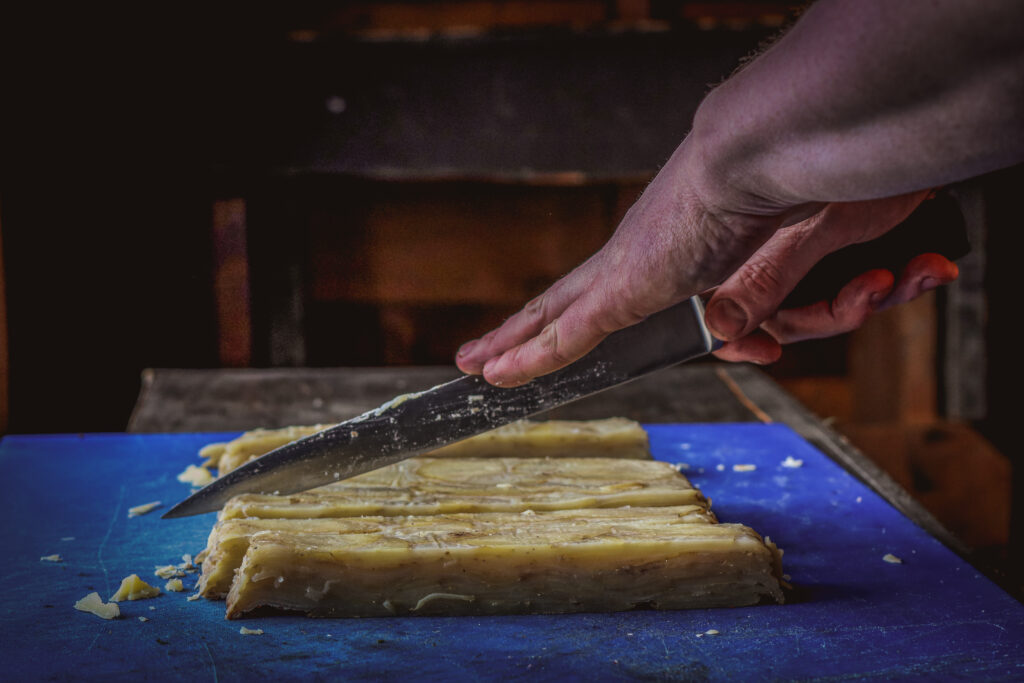
9) The next day, cut the potato side dish into desired portions. For this recipe, we did a two-inch length with a 1-inch width slice of potatoes.
10) Heat oil to 350-degrees Fahrenheit. Fry the potato slices for three to five minutes each.
11) Remove from oil and season with a pinch of salt.
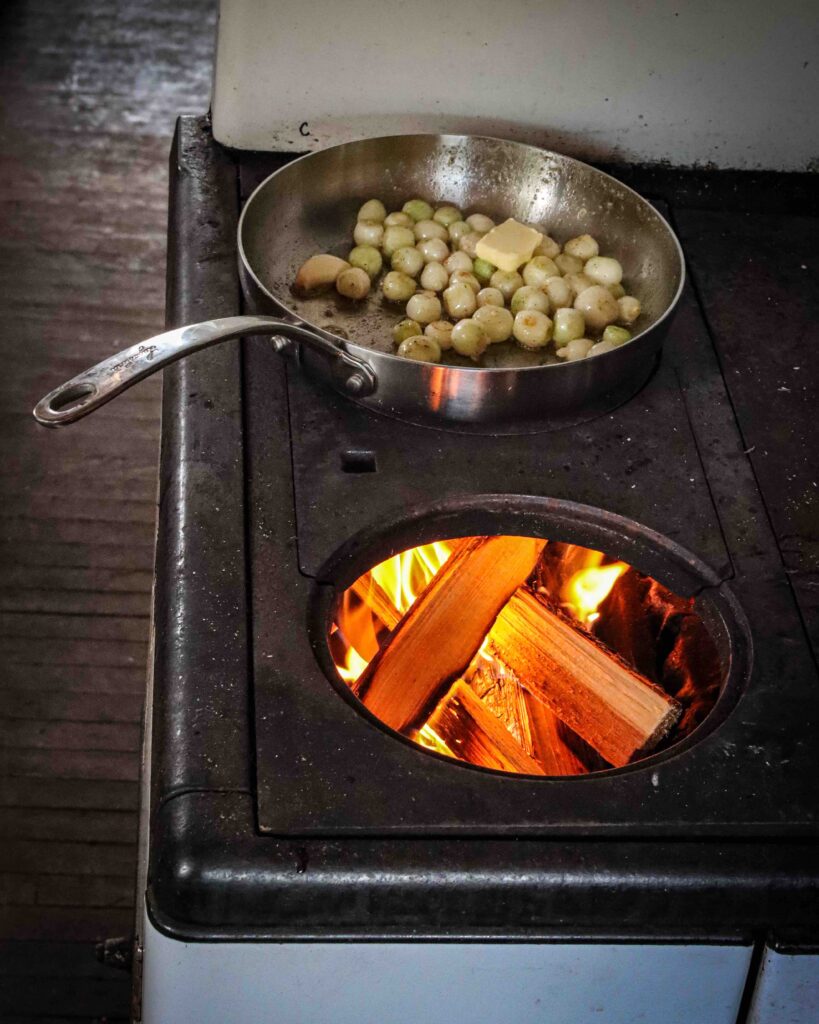
After they are prepared, cut your Potato Pavé into slices.Pearl onions, cooking on a wood stovetop.
Pearl Onions
Ingredients:
8 oz. Pearl Onions, Peeled
1 Tbsp Olive Oil
1 Tsp Fresh Thyme Leaves
1 Pinch of Salt
1 Pinch of Ground Black Pepper
METHOD
1) Toss onions with oil, thyme, salt, pepper.
2) Pre heat oven to 400-degrees Fahrenheit.
3) Place onions in oven and roast for 15 minutes or until soft and golden, or fry until soft and golden.
Saskatoon Berry Chimichurri:
Ingredients:
1 Bunch Chopped Parsley
1 Bunch Chopped Cilantro
1 Cup Chopped Chives
1 Cup Chopped Oregano
1 Cup Chopped Saskatoon Berries
4 Cloves of Garlic Minced
Juice of 3 Lemons
3 Tbsp Raspberry Vinegar
1/2 Cup Extra Virgin Olive Oil
1 Tbsp Kosher Salt
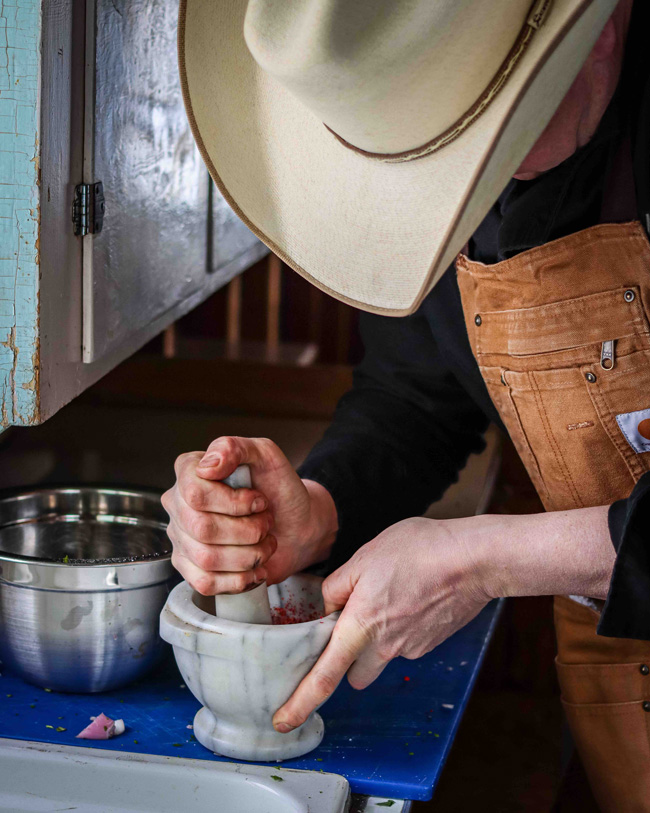
1 Tbsp Crushed Pink Peppercorns
1 Tsp Crushed Chilli Flakes
Crushing up the pink peppercorns.
METHOD
Combine all ingredients in a mixing bowl. Cover and let it sit for at least 30 minutes. Taste and adjust seasoning if needed.
Cook the venison to your preferred doneness.
Plating:
Cook the venison via your preferred method and to your preferred doneness. For this dish we used the tenderloin and seared it at high heat to an internal temperature of 125-degrees Fahrenheit (rare). Then we allowed the meat to rest, covered for 15 minutes.
In the middle of the plate, place your crispy potato pavé, slice your meat to expose its beautiful color and arrange around the potato. Carefully place the roasted onions wherever you feel they should go. Top with a huge spoonful of the chimichurri and enjoy!