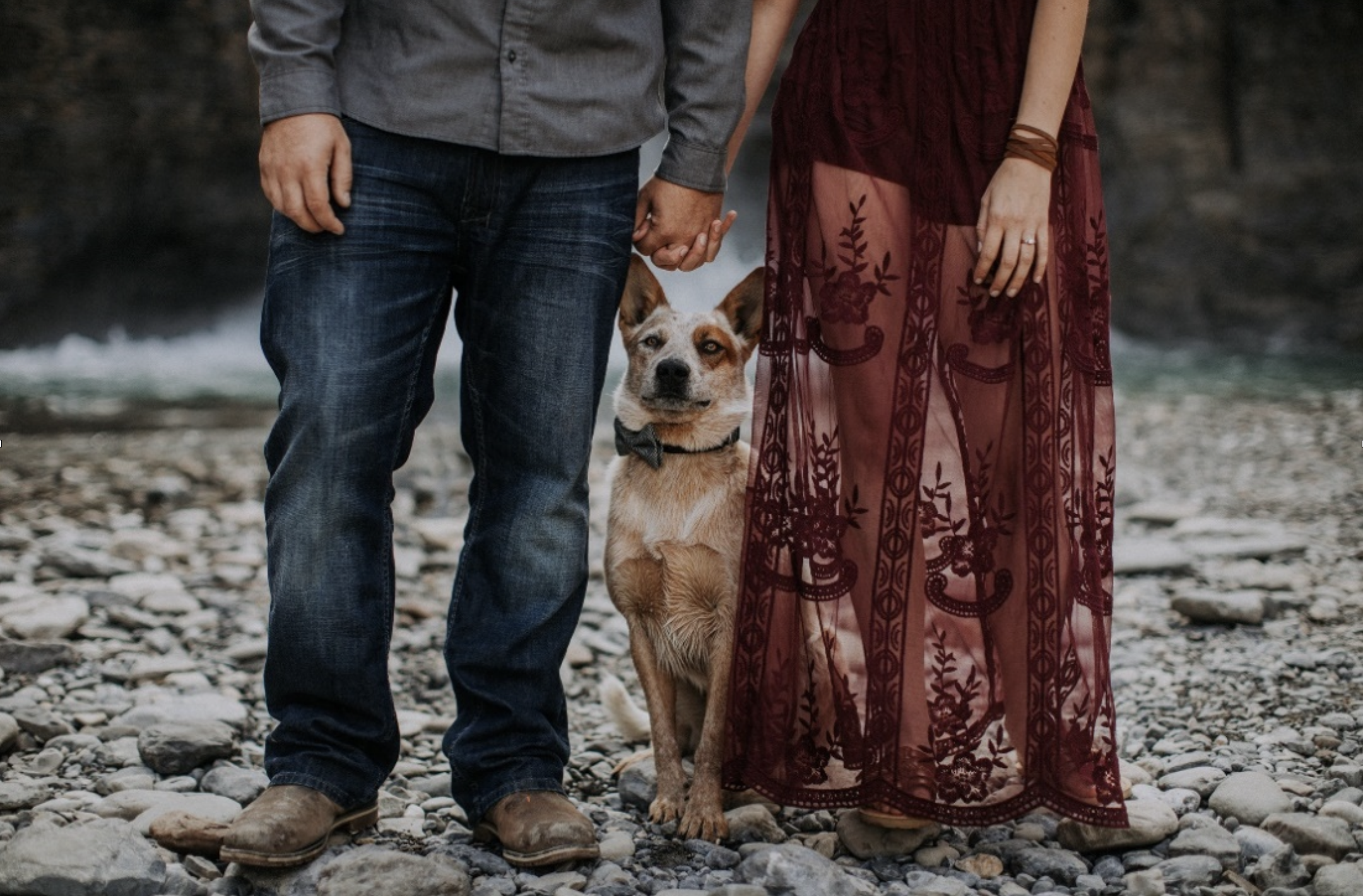
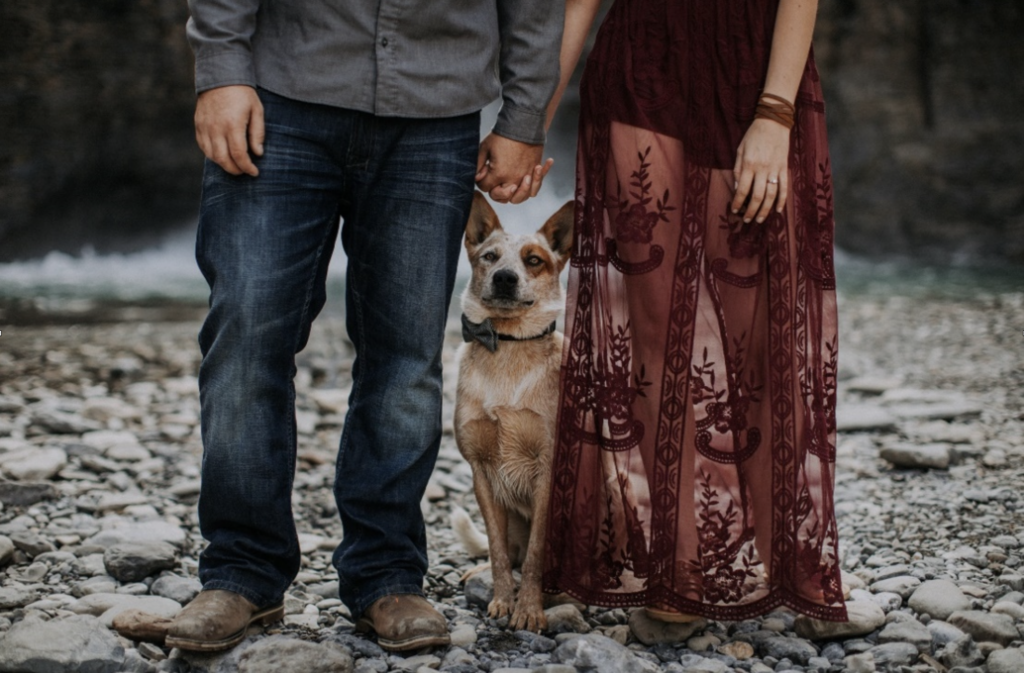
Google says there are 900 million dogs in this world. Now, I’m sure you would agree that not all of them are truly GOOD dogs. Fewer still are GREAT dogs.
This got me thinking. What makes a dog better than most? This is what I came up with:
A great dog is…
Intelligent. Smart enough to understand your commands, while willing enough to learn and obey them.
Reliable. He’s there when you need him – both physically and emotionally. In the literal sense, he stays home; he can be counted on to be there morning & night. He’s also there when you’ve been cooped up and need to go for a walk, or are in a bad mood and need a distraction. Or when you find yourself crying on the front step, his fur soaks up those tears.
Forgiving. He doesn’t hold it against you if you get busy. If you had a long day, and can’t play with him, he’ll just try again tomorrow. Toddlers and small kids lean on him or pull his fur, he doesn’t mind, he knows they’ll throw him the ball later.
Adaptive. He’s ready to do whatever you feel like. Going to check cows – you got it. It’s raining and we’ve got to stay inside and read all day – that’s good too. He’s just happy to be included.
Intuitive. He knows how to read the room. Your friends are his friends – you don’t have to worry about him being aggressive to people he shouldn’t be. You come home with a new baby, once or twice, or three times, and he knows they are his now as much as yours.
Honest. He’s going to screw up now and then; get into something he shouldn’t – but he’ll understand his mistake in the tone of your voice, and you’ll see it in his actions and eyes that he’s sorry. He wants to please, so you won’t catch him making the same mistake often.
Loyal. He trusts you completely, and would follow you anywhere.
The thing about a great dog is, THAT becomes your standard. Yes, they are all individuals, but once you have loved and been loved by a truly GREAT dog, you understand something that special is a combination of luck, work, and commitment.
They have earned their way into your heart. Even when they’re gone, you will always remember that you were lucky enough to call that truly GREAT dog yours.
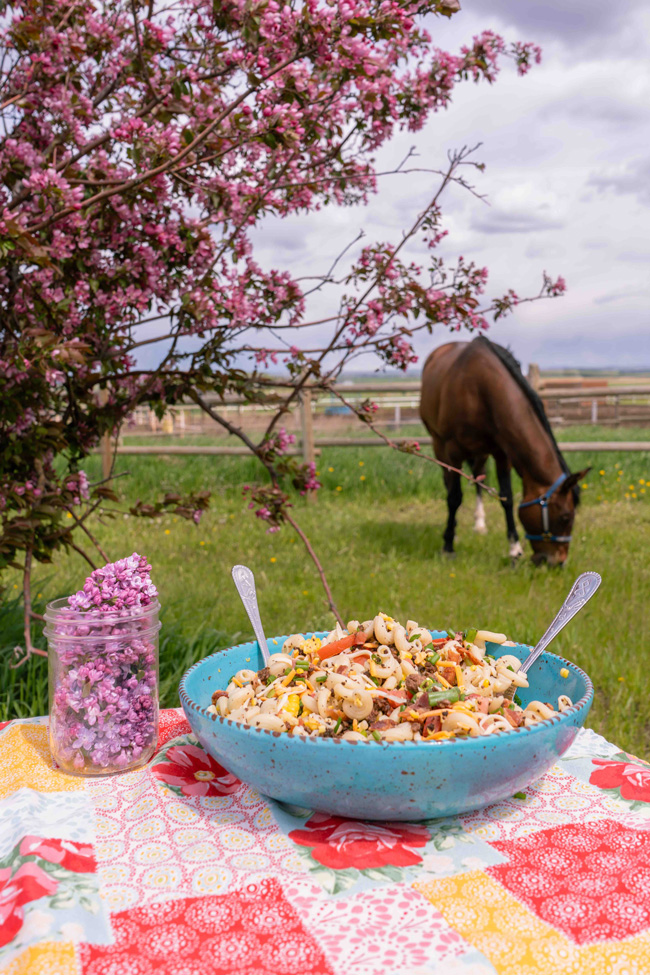
This is a salad even the “All Carnivores” in your life will love!
This recipe can be made as a side dish, or as a complete meal. It fits perfectly into a summer theme, is hearty and can be comprised ahead of time. With meat, carbs and vegetables, this plat du jour is excellent for a tailgate gathering, a quick living-quarters dinner or any kind of potluck offering. Best served immediately after being assembled.
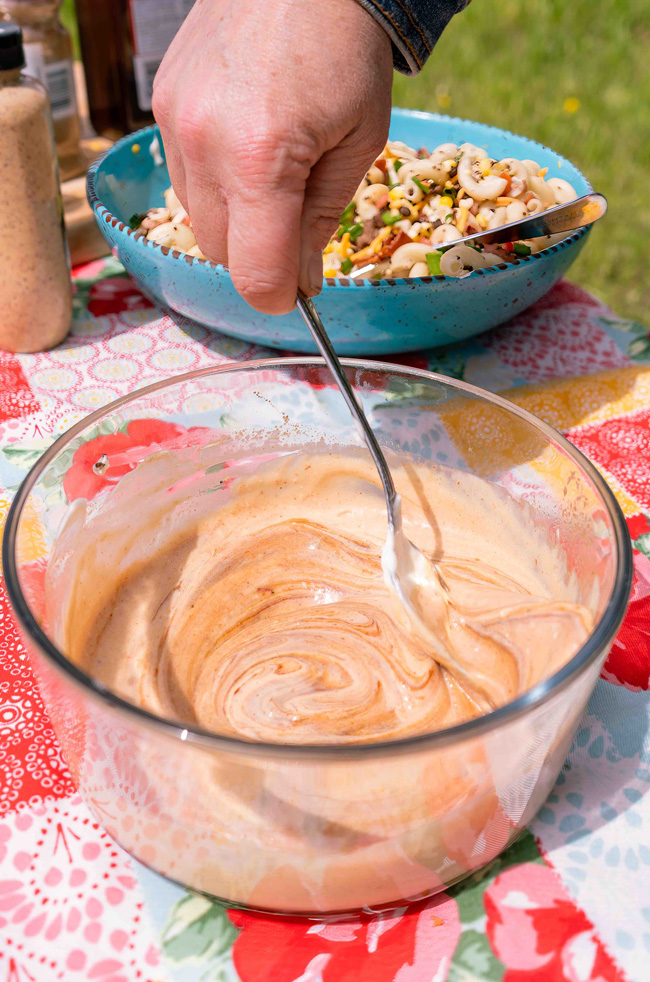
Mix all the dressing ingredients together and store in the fridge until ready to use. Just remember, this recipe contains mayonnaise which means it will only keep a short while!
DRESSING
1 Cup Mayonnaise
1/4 Cup Barbecue Sauce
2 Tbsp. Dijon Mustard
2 Tbsp. Worcestershire or Soya Sauce
1 Tsp. Cumin
1 Tbsp. Lemon Juice
Salt & Pepper to Taste
Mix all together in a separate bowl and set aside in the fridge.
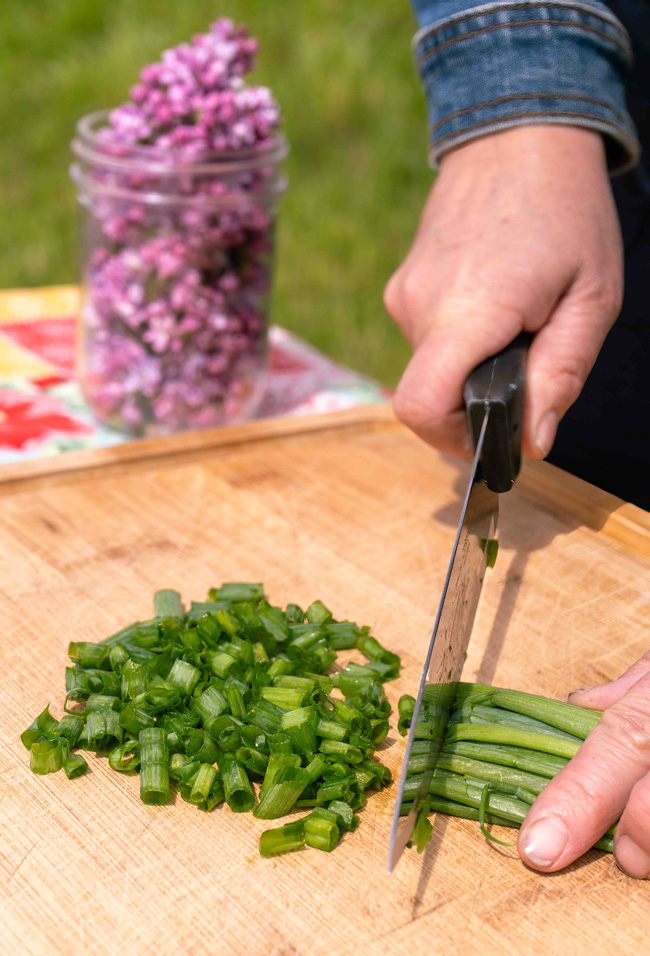
Dice up the chives as thinly as possible.
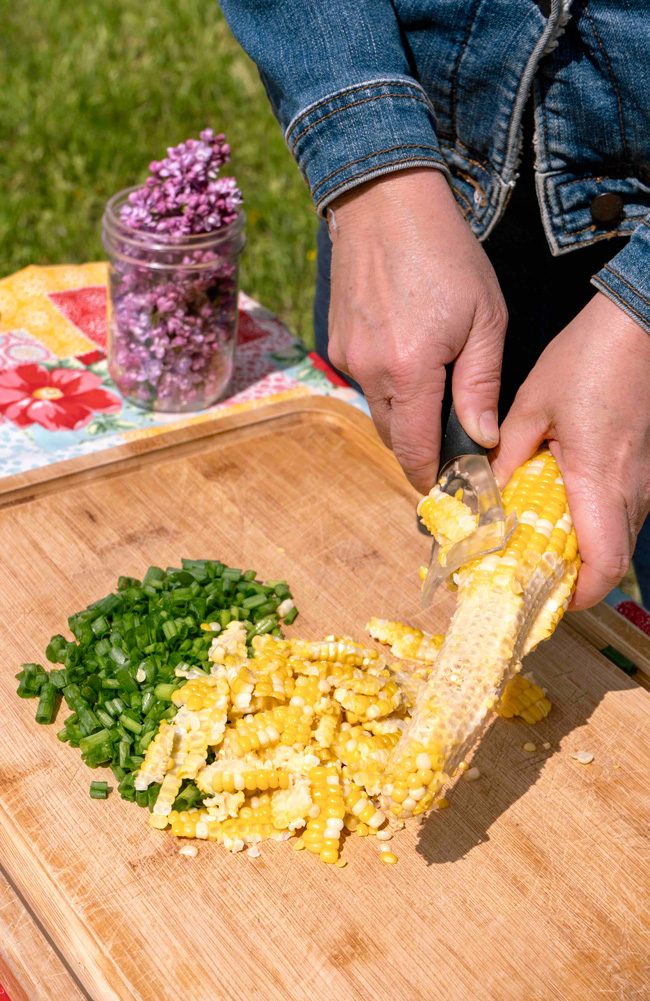
Cutting the kernels of corn off the cob with a Pampered Chef Kernel Cutter.
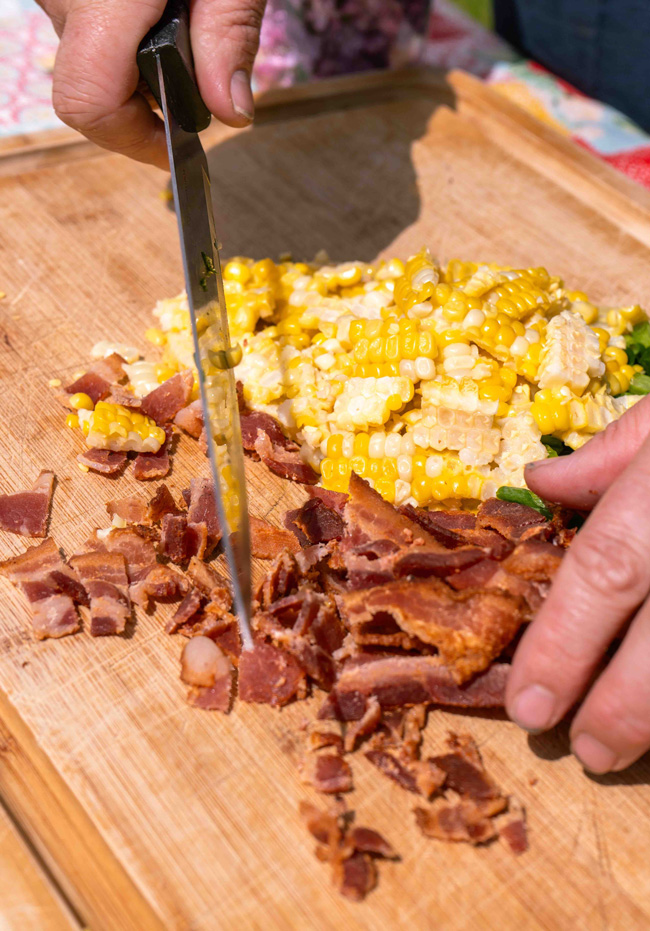
Chopping up cooked bacon pieces.
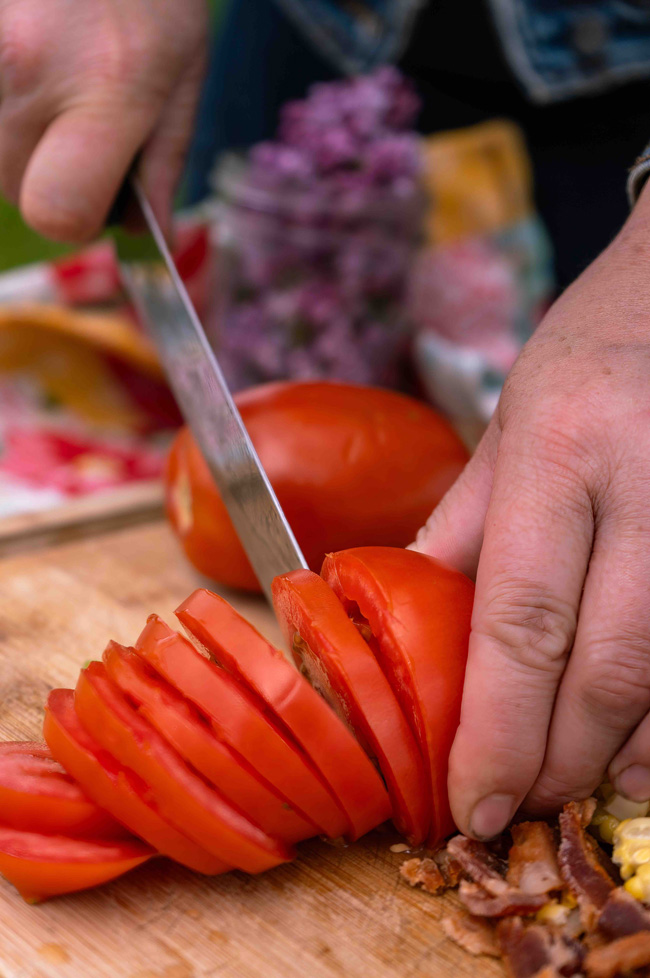
Dicing up the tomatoes.
PASTA SALAD
350 g Corkscrew Pasta, Cooked and Drained1/2 Package of Cooked Bacon (Based on 375 g Package), Chopped
350 g Lean Ground Beef, Browned
2 Fresh Roma Tomatoes, Diced
1 Cup Shredded Cheddar Cheese
5 Chive Stalks (Approximately)
2 Cooked Cobs of Corn, Husked
METHOD
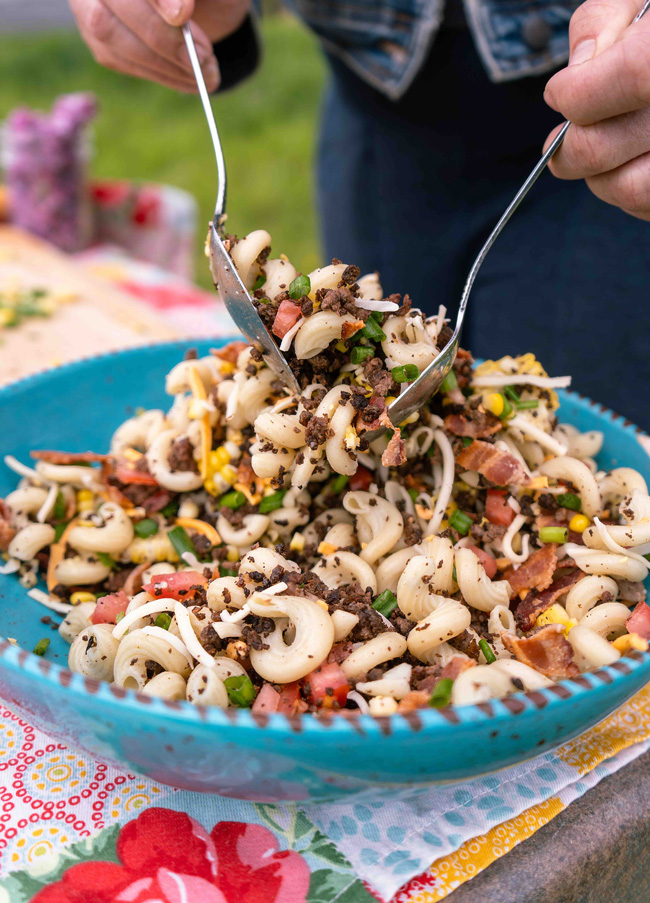
Take your cooked, prepared pasta and line the bottom of a salad bowl with it, as the dish’s foundation.
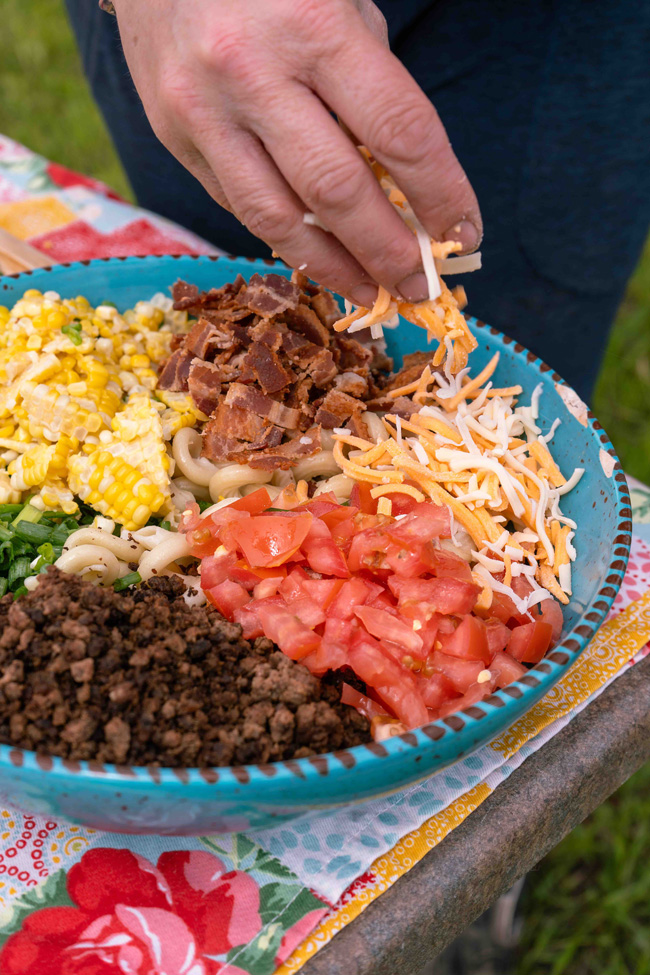
In almost triangular segments (think of a Trivial Pursuit “cheese triangle,”) drop in the salad ingredients. You want the overall appearance to represent a “wagon wheel.” This includes ground beef, bacon, tomatoes, chives, shredded cheese and kernels of corn husked from the cobs.
To save time, use pre-cooked bacon bits or canned corn (cooked, prior to use). For this recipe, we husked the kernels of corn off of freshly cooked cobs, with a Pampered Chef Kernel Cutter product.
Add a dollop of dressing to the salad and mix ingredients together completely. Add more dressing if desired, but be careful not to add too much! It is possible to have dressing left over and the amount used in the salad truly depends on an individual’s tastes. Store in the fridge until ready to eat. This salad can be consumed the next day too, however, the tomatoes may not be as crisp. Do not keep beyond a day after preparation!
Here’s how anyone can bring the western culture into your life, without ever owning a horse.
The North American West is synonymous with the cowboy and the culture of the cowboy, but you don’t need to own a horse to embrace its rich heritage. According to renowned western photographer Nadine Levin, one doesn’t even have to call the West home. “If you can’t live in the West, you can surround yourself with the West. The West is in your heart, a code you live by. It’s not where you hang your hat.”
The Poolesville, Maryland, USA, home of Nadine and her husband, Alan is filled with great Western art. The couple are especially enamored with the functional works of art crafted by the members of the Traditional Cowboy Arts Association (TCAA). The TCAA offers an authentic connection to the West through the traditional cowboy crafts. In this way, the Levins are living the West. Like the Levins, people throughout the world want a part of the culture in their lives. Living the West is about embodying values such as honesty, integrity and hard work. The TCAA exemplifies these principles while preserving the traditional Cowboy arts and educating future generations.
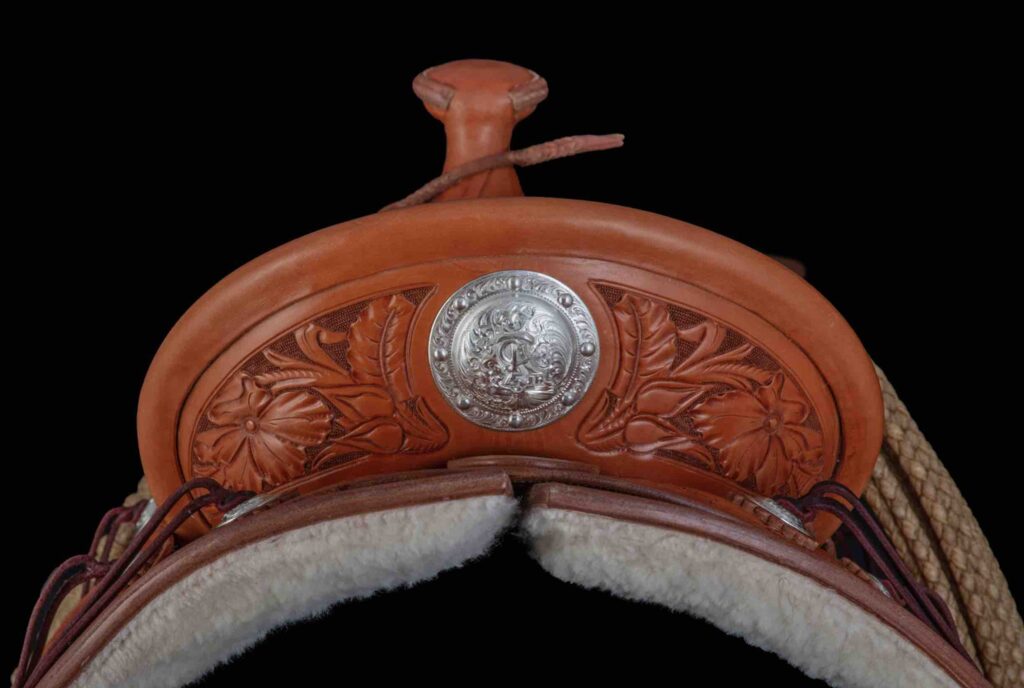
The TCAA focuses on four main disciplines: saddle making, bit and spur making, silversmithing, and rawhide braiding. These crafts are not just about creating functional items for horseback riding and work; they are also about preserving a way of life –embracing the values, culture, and traditions of the cowboy way.
“The California Rose.” In celebration of the 25th anniversary of the TCAA’s first exhibition held at the National Cowboy Museum in 1999, the group auctioned a project called “The California Rose” in which all 13 active TCAA members, plus one emeritus member, took part.
Twenty-seven years ago, a core group of celebrated cowboy craftsmen – concerned that the traditional cowboy crafts were fading into oblivion, only to be replaced by soulless objects of mass production – came together. Ken Townsend, President of the National Cowboy and Western Heritage Museum, and Curator Don Reeves believed in their mission and facilitated their annual sale and exhibition starting in 1999. The partnership with the museum, gave the TCAA members the opportunity to raise the level of their craft to art each year. After a quarter of a century, the TCAA has continued year in and year out to astonish the public with their artistic works.
Thus, the journey of helping all of us live the West began through working gear as art in museums and our homes. Each piece created by the TCAA artisans tells a story of dedication, skill, and a deep connection to the land and its history. After all, each member of the TCAA is also a working cowboy.
“I feel fortunate to have spent my life in the rural areas of the West,” says Ernie Marsh, a TCAA bit and spur maker. “It’s been the vast open country, combined with our horse and cattle culture that have provided many years of inspiration. I hope that patrons acquiring my work can enjoy living the West knowing that my art truly depicts the working cowboy.”
Through their work, the TCAA embodies the code of the West, and this code is based not on myth, but on the reality of life on the open range. Granted, most folks who don’t physically live in the West may not know of the code, but they are drawn to it through great writings and art.
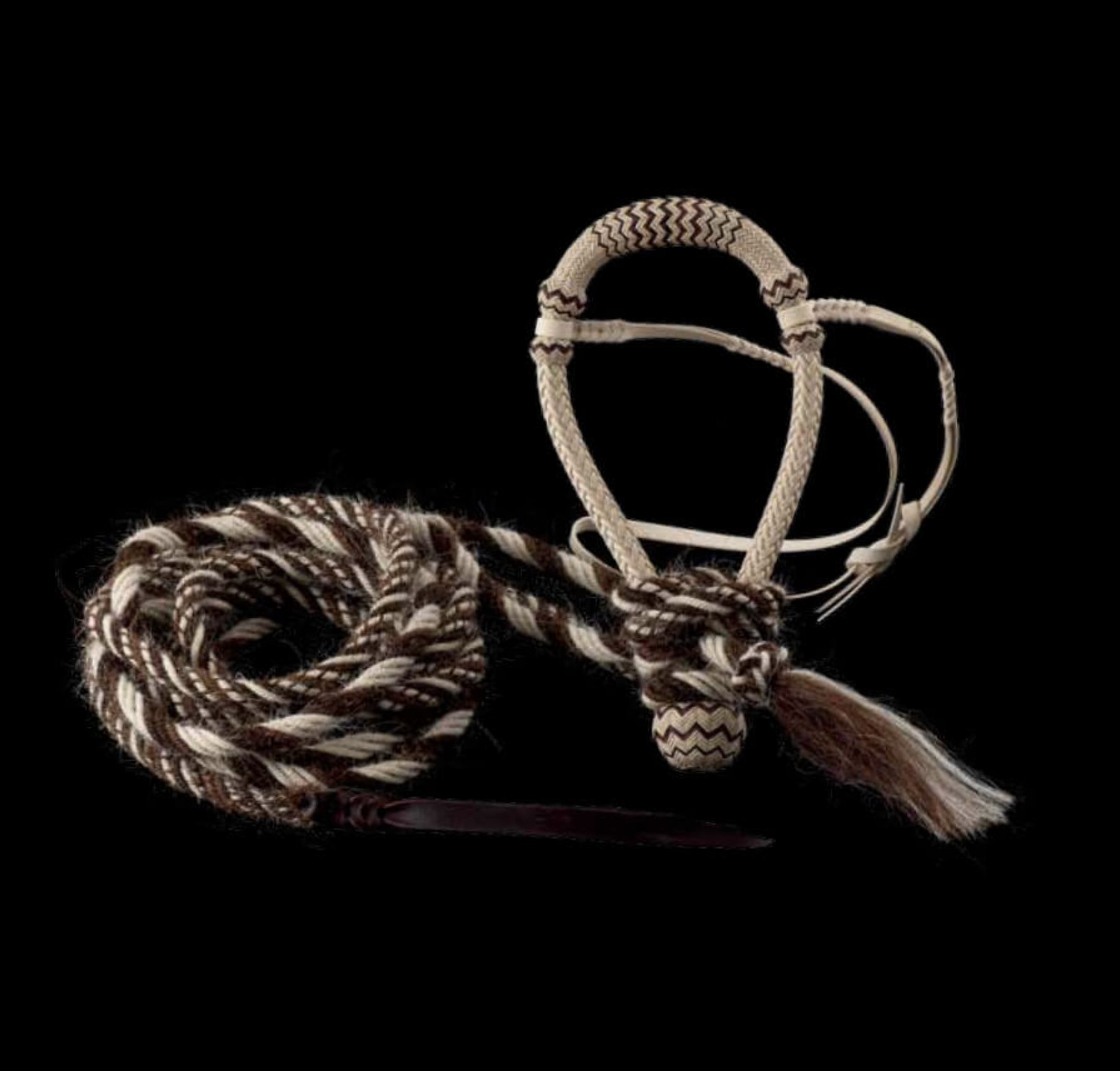
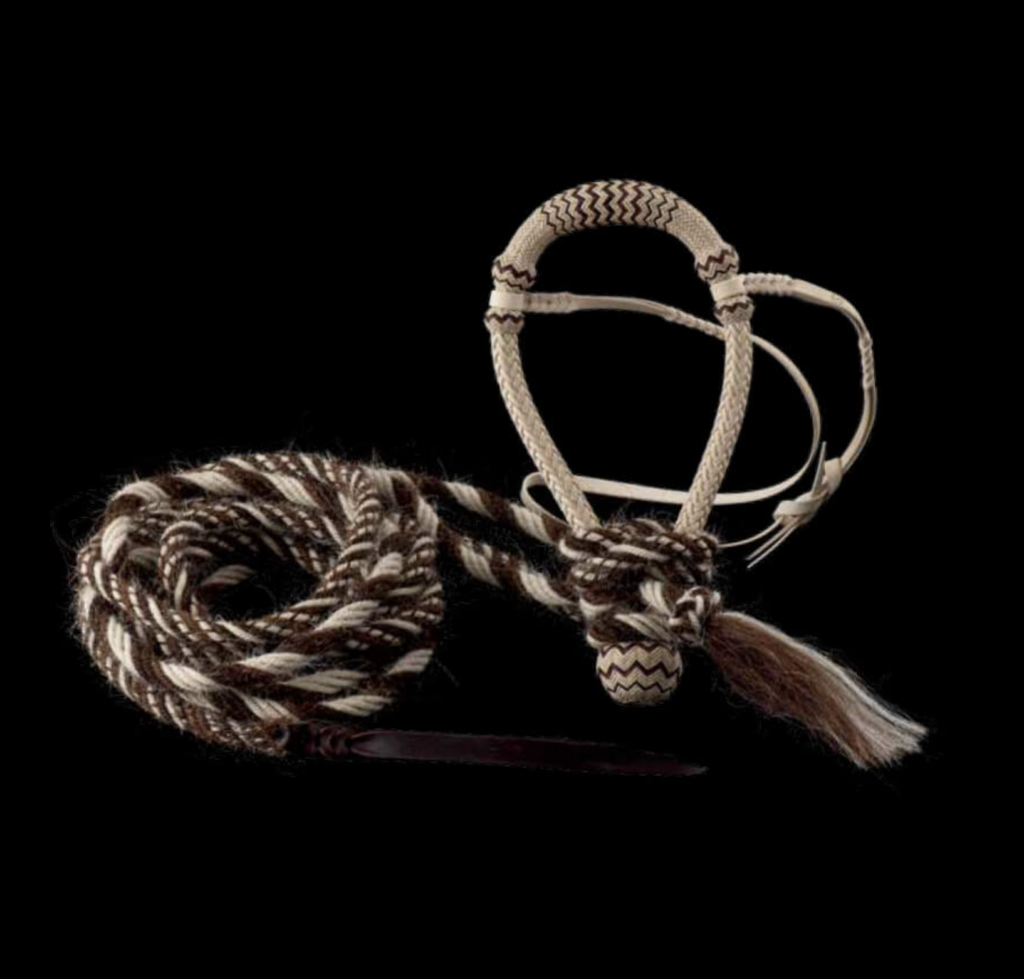
“Mecate” – By Nate Wald.
Lance Benham, a friend and Western art collector, has witnessed firsthand, the way the TCAA works impacts others.
“Over the years and having attended many of the TCAA exhibitions and sales, [my wife] Linda and I have a number of pieces that are quite meaningful to our family. When we began our purchases, we did so because the work was so stunning and we couldn’t say ‘no!’” he states.
“As our collection grew and we began to arrange pieces alongside our other western artwork, we noticed that our family and visitors saw something we hadn’t intended. Many told us our collection is more than art… that the pieces spoke to the real West. As folks experience our paintings and sculptures many are stunned to see hand-braided reins, hand-made saddles, and hand-stamped silver work that complement the rooms. When we explain the TCAA organization and speak to the small number of artisans from the ‘Americas’ who comprise it, people are stunned to learn how the pieces are actually made,” Benham relays.
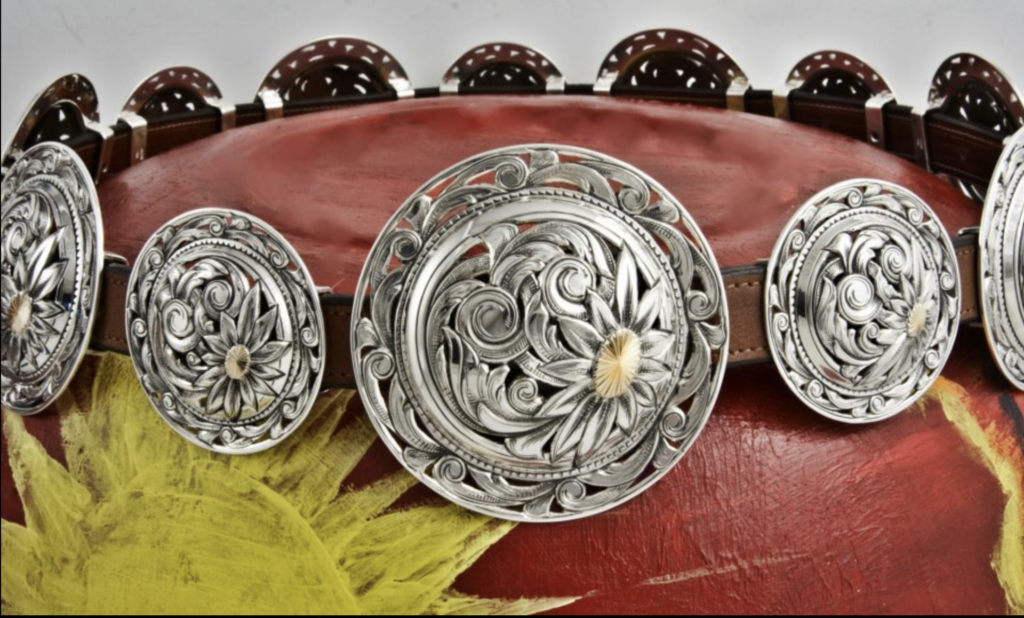
Belt by Alberta artisan, Scott Hardy.
“By honoring the methods of the past in their creative efforts, the TCAA artists bring not only mastery of their western craftsmanship to our home, but also provide a celebration of the West through the simple, elegant, and practical presentation of pieces that fit naturally among our paintings and sculptures.”
Indeed, seeing a pair of spurs on the mantle above a fireplace or a saddle in a board room makes the West come alive immediately. Simply touching these pieces ignites an excitement. The energy of the artist is transfused in all of us. Stories of survival and endurance and courage are no longer just on the movie screen, but come to life with their presence.
“These pieces transcend their functional origins, becoming art forms that deserve appreciation and a place of prominence. It is a true art to display them in a way that honours their craftsmanship while enriching the surrounding space,” says San Diego, CA, USA interior designer Rebecca Welch.
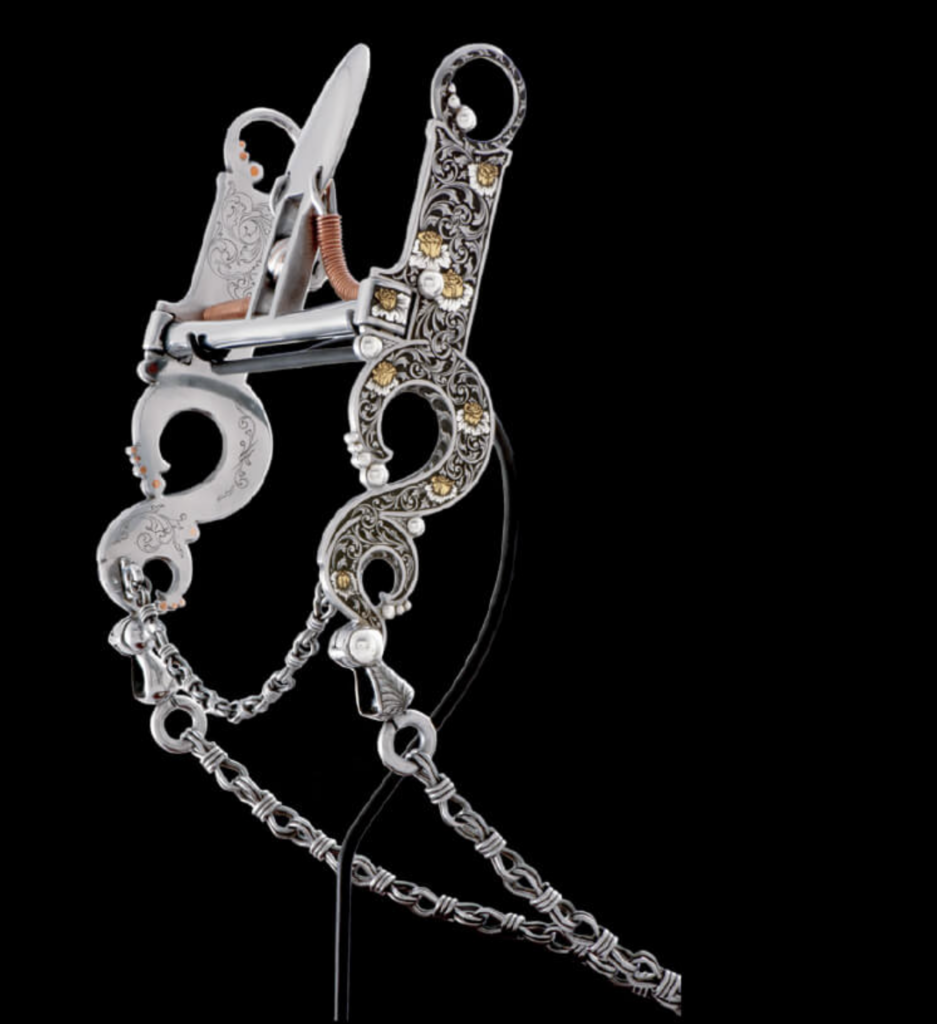
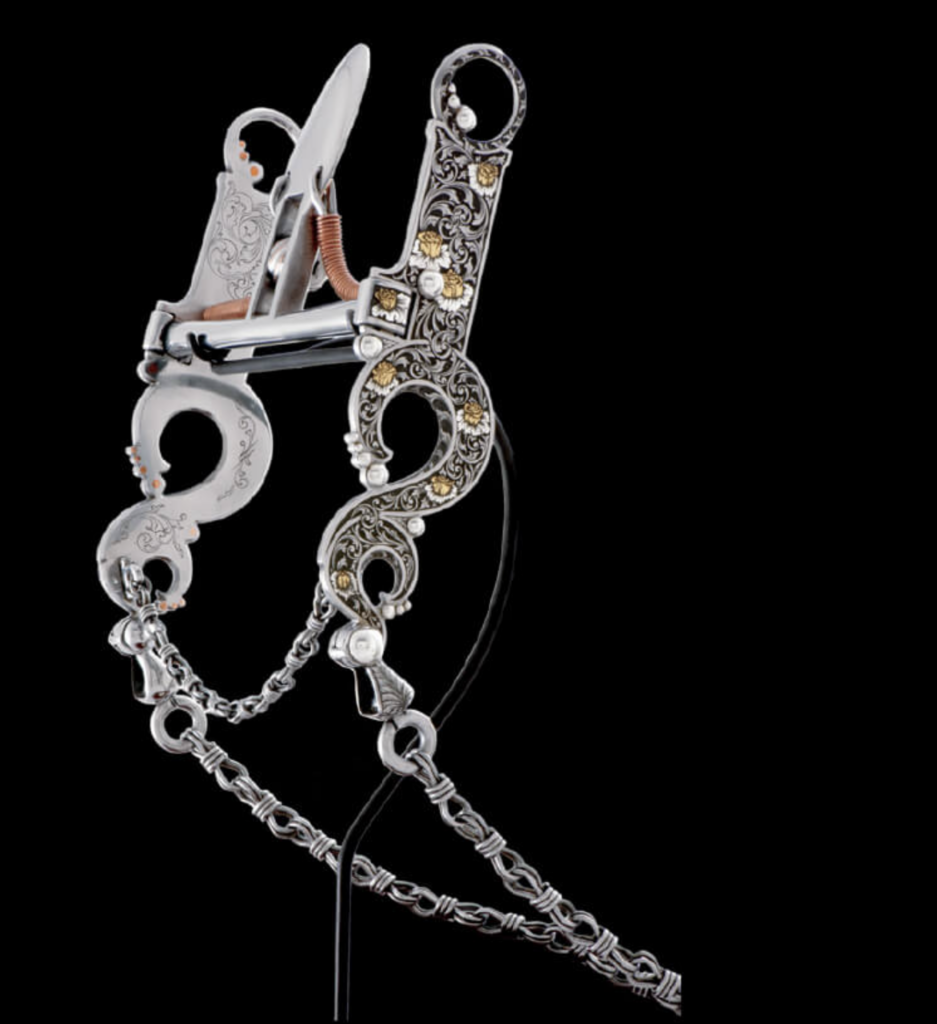
Bit by Wilson Capron.
“Educating clients about how these extraordinary works of art – whether handcrafted leather goods, saddles, or other heritage pieces – can seamlessly integrate into any style of home, is essential. Supporting the talented western artisans of the Traditional Cowboy Arts Association is a cause close to my heart.”
At the TCAA Exhibit and Sale every year, each of the artists work to exceed their efforts of the previous year. There is a two-fold reason for this. Firstly, they don’t want to disappoint or let down their fellow artists. For instance, Wilson Capron, a renowned bit and spur maker, will certainly be looking at the quality of the silver work Canadian artisan Scott Hardy creates. Secondly, these artists take personal, deep-down pride in their work.
Living the West doesn’t require owning a horse. Through the Traditional Cowboy Arts Association, individuals and families can immerse themselves in cowboy culture. By embracing this functional cowboy art, anyone can bring the spirit of the West into their life, no matter where you live.
The 26th annual sale and exhibit returns to the National Cowboy and Western Heritage Museum in Oklahoma City, OK, USA on September 26-27, 2025. For more information, visit: www.tcowboyarts.org
Butter, cheese, flip, flambé then douse the flames out with lemon!
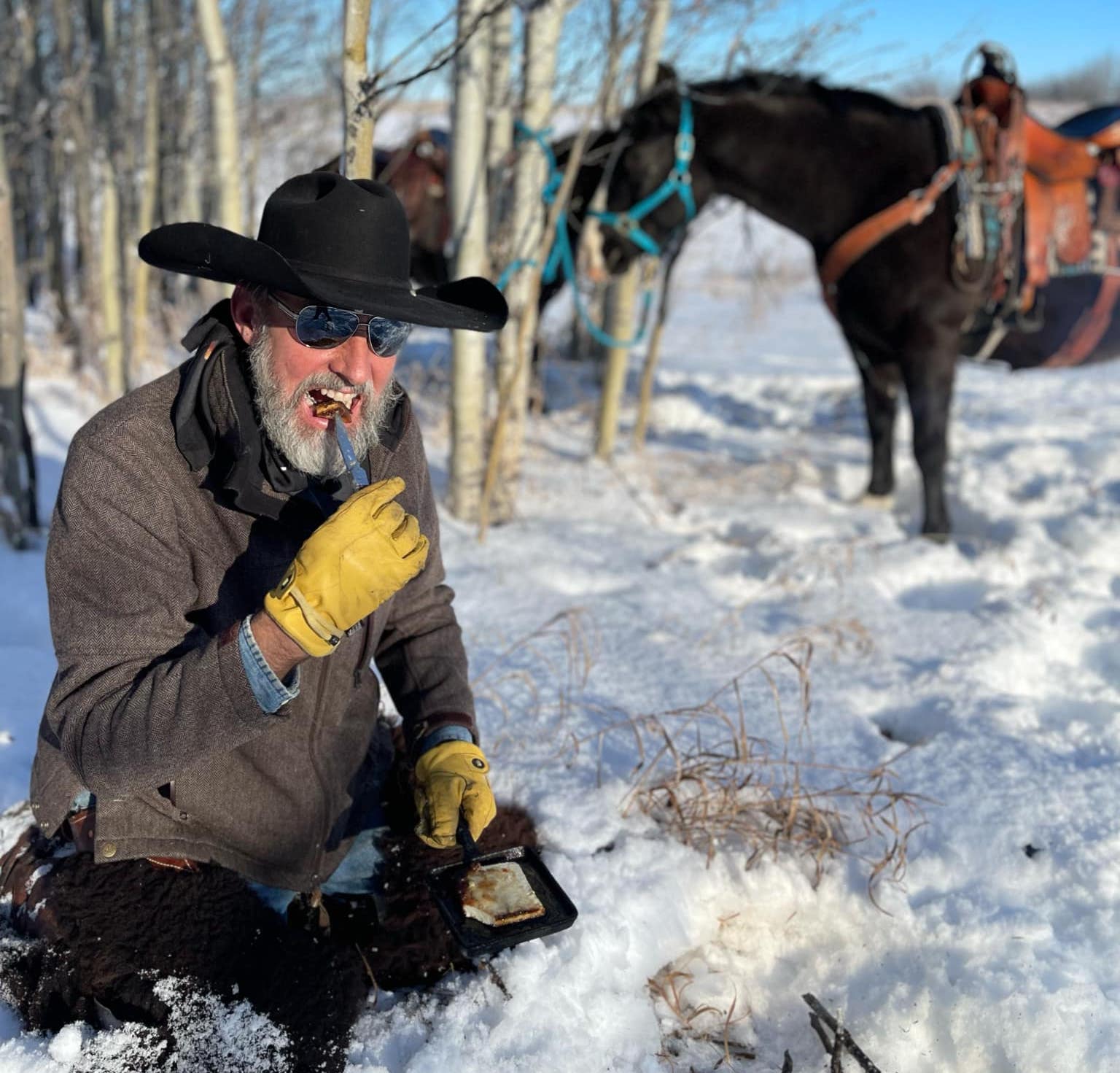
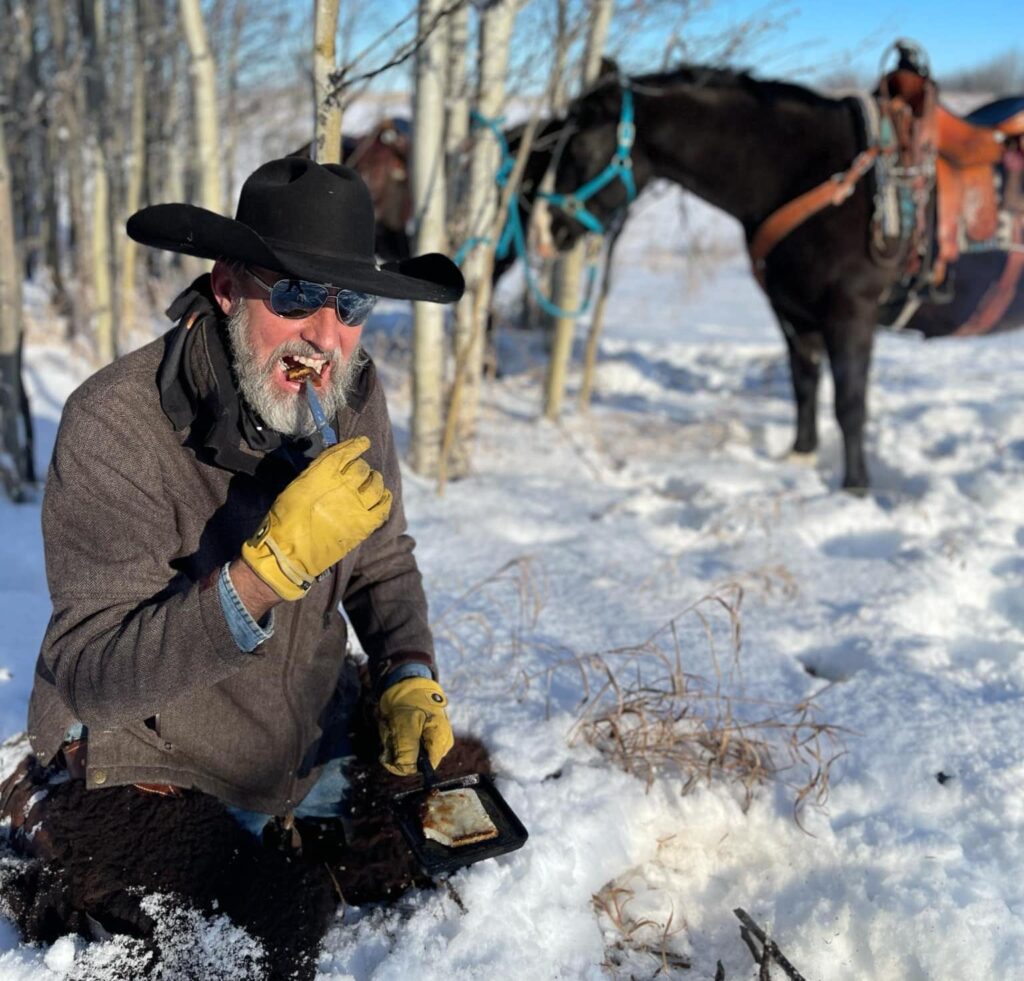
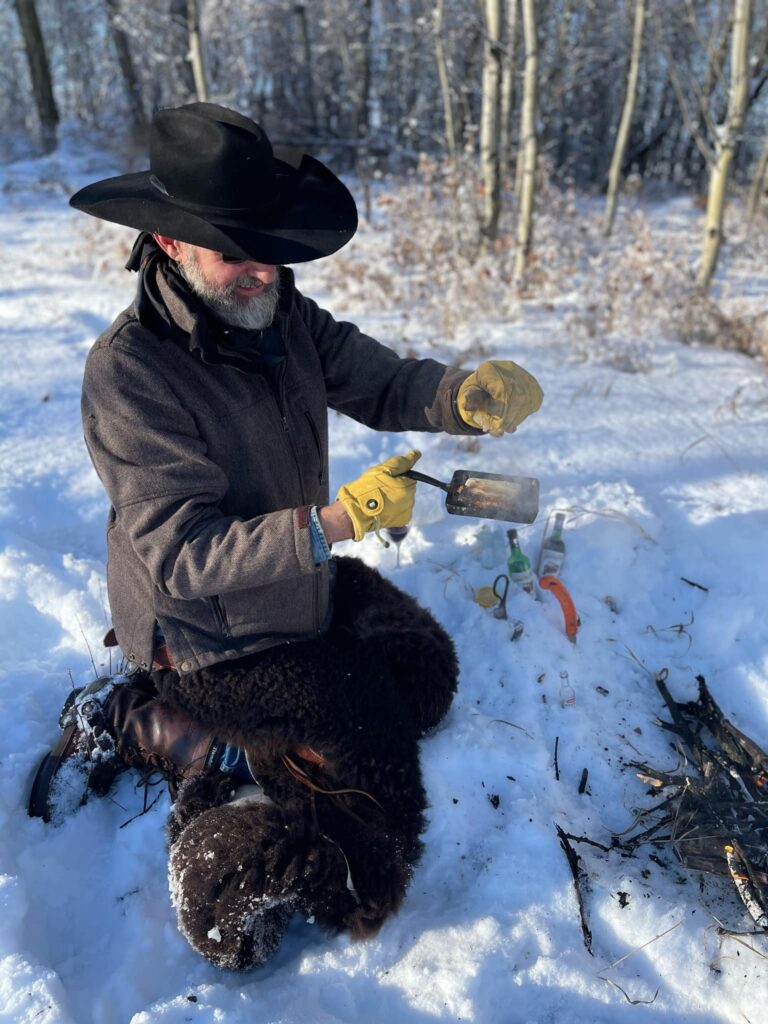
Saganaki is a Greek dish, one of many cooked in a small pan. The pan is actually how this appetizer got it’s name – traditionally a small, heavy pan with two handles, that originated from the Turkish word “sahan” or “sagani.” Tim Hiller put his own spin on this recipe by crafting a pan out of mild steel, which is small enough to fit into his saddle bag.
The secret in the perfect Saganaki is choosing the right cheese. Graviera, Kefalograviera and Kefalotyri are all traditional options used in Greece. However, there is a specific “Saganaki” cheese that can purchased in North America which is labelled as such. Typically, the cheese is made from cow or goat milk.
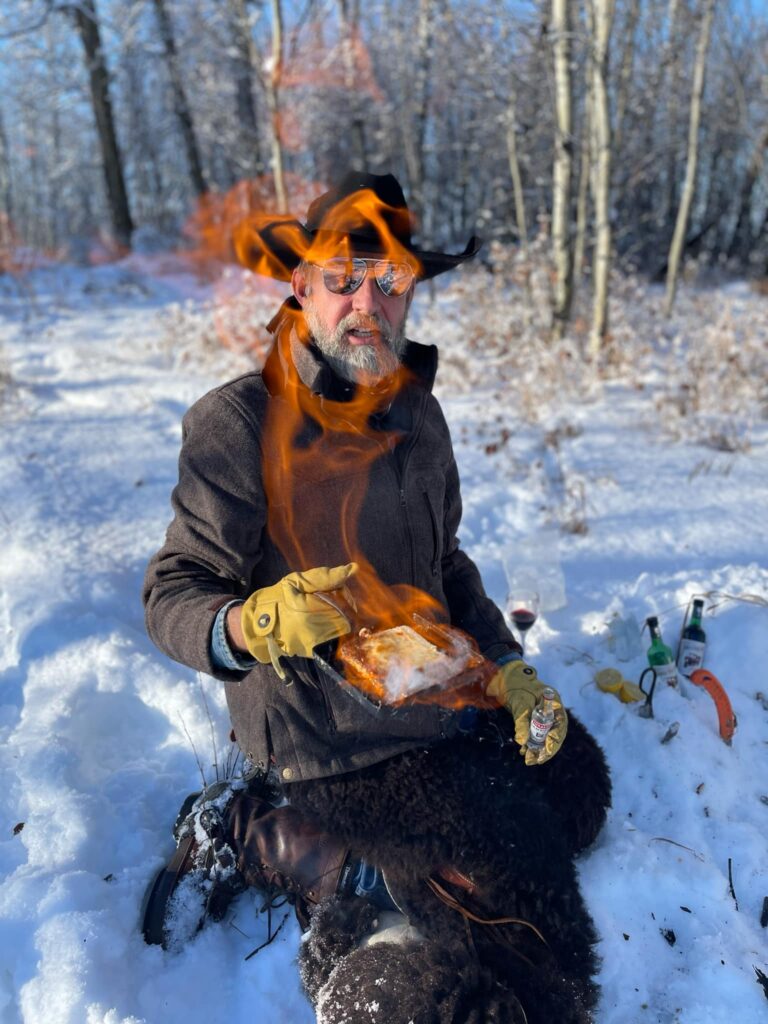
When the dish is prepared it can be a show-stopper recipe, as it’s often flambéed table-side. This involves frying the cheese first, pouring Ouzo, Brandy or Sambuca overtop, lighting the whole thing on fire and finally, extinguishing the flames with lemon juice.
However, the flaming dish is actually frowned upon in Greece, as the flambé originated from a restaurant in Chicago in the 1960s. In its traditional form, the juice of a lemon is squeezed overtop of the fried cheese only.
The dish can be eaten alone (as a starter), or mixed in with other ingredients for a main dish like prawn saganaki. Still, whichever way you prefer to eat it, we like Hiller’s Trail Ride version the best!
INGREDIENTS
1 Block Saganaki Cheese
Egg White
1 Cup Flour
1 Tbsp Butter
1 Small Shooter Bottle Sambuca
1 Small Ziplock Bag
1 Lemon
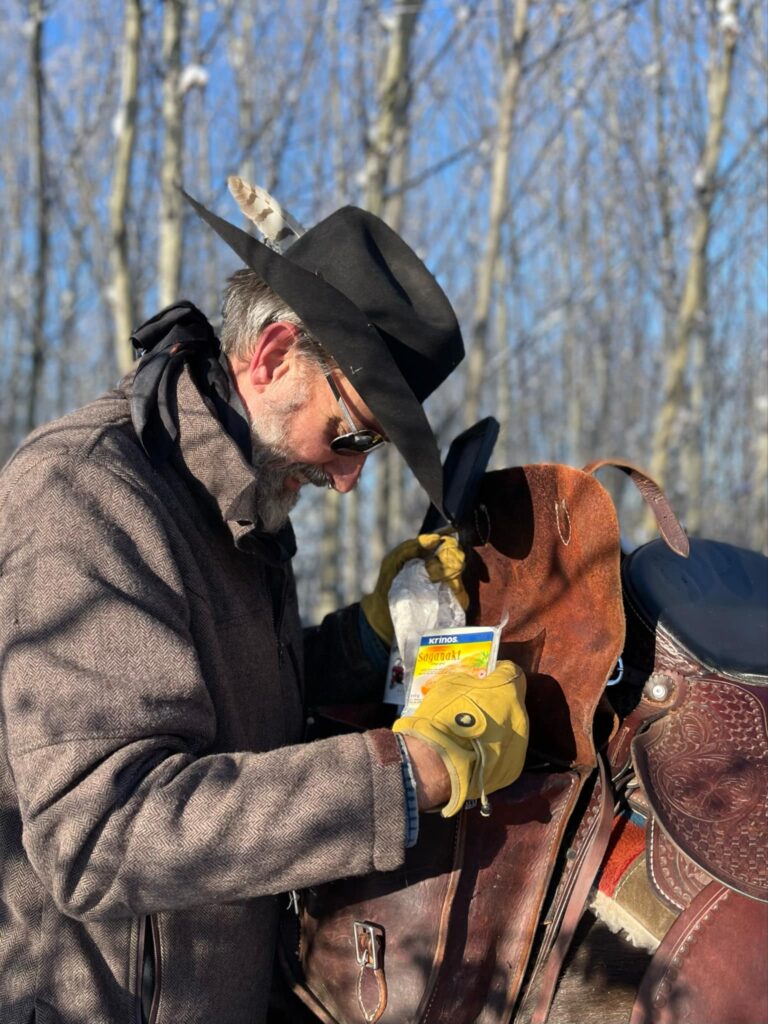
Hiller, packing the ingredients up into his saddle bags.
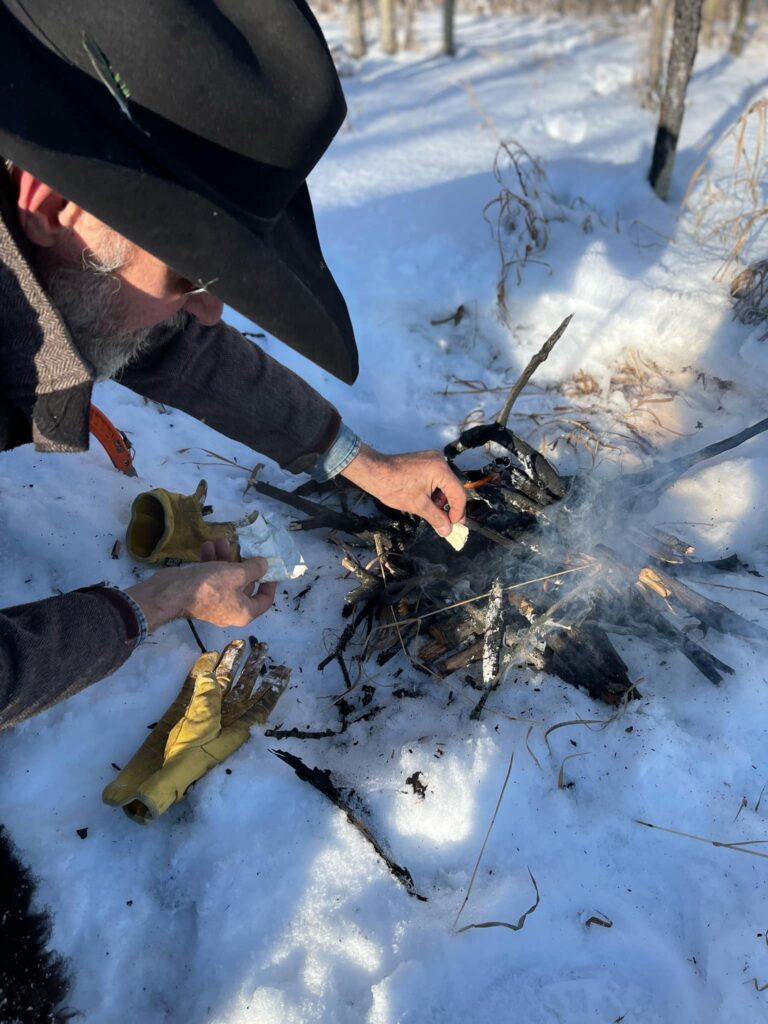
For cooking, you will need a small cast iron or steel pan that fits the cheese and don’t forget the matches! If you are preparing this dish on the trail, pre-dip the cheese in egg and close it in a Ziplock baggie with flour, before you pack it into your saddle bags.
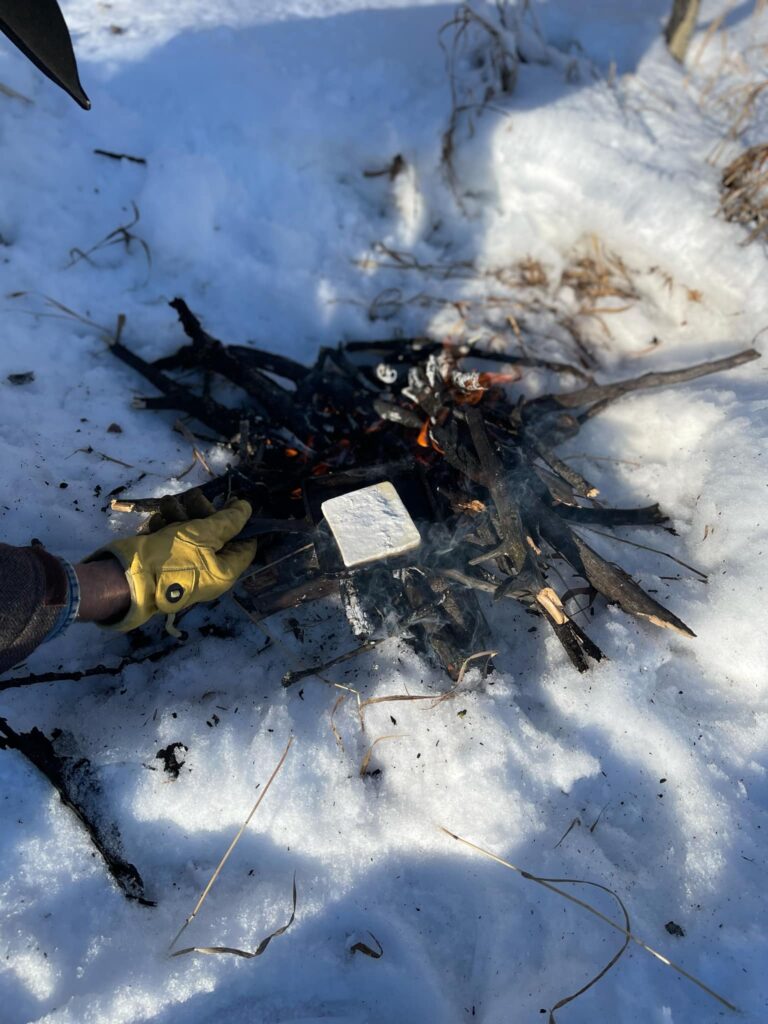
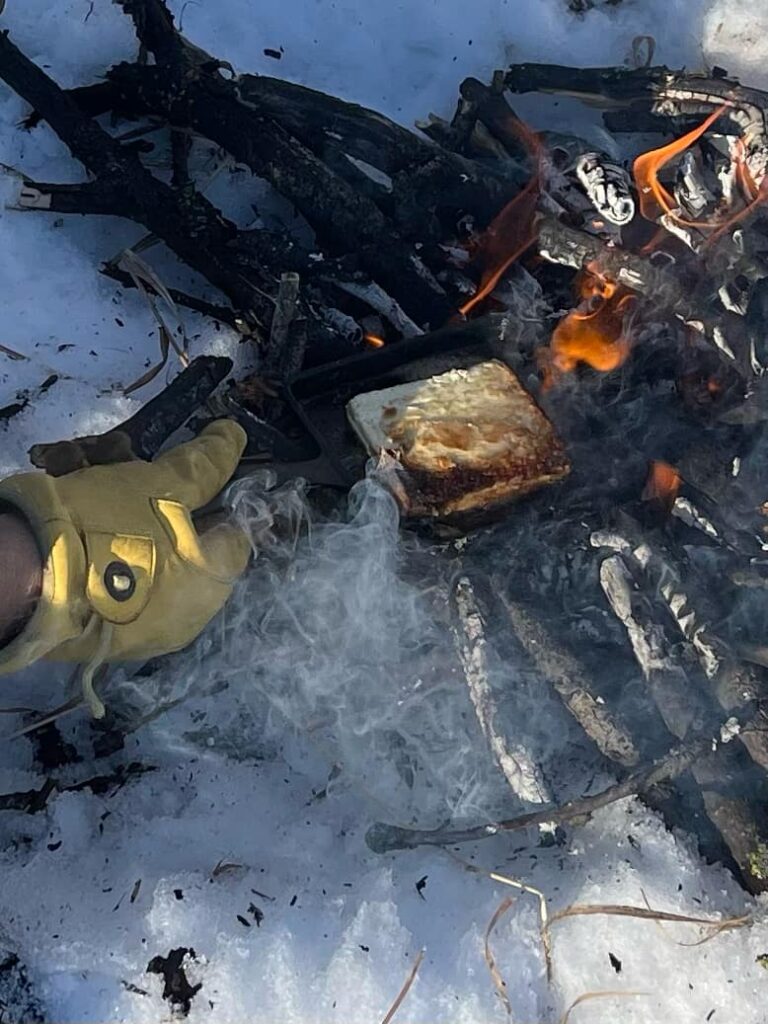
Otherwise, dip the entire piece of cheese in egg white then dredge in flour. Preheat your pan over a fire. Melt the butter but do not brown it! Carefully set the cheese into the pan, avoiding any splashing of the butter. Brown both sides and remove your pan from the fire.
Butter going into the pan.The cheese before being fried, going into the fire.
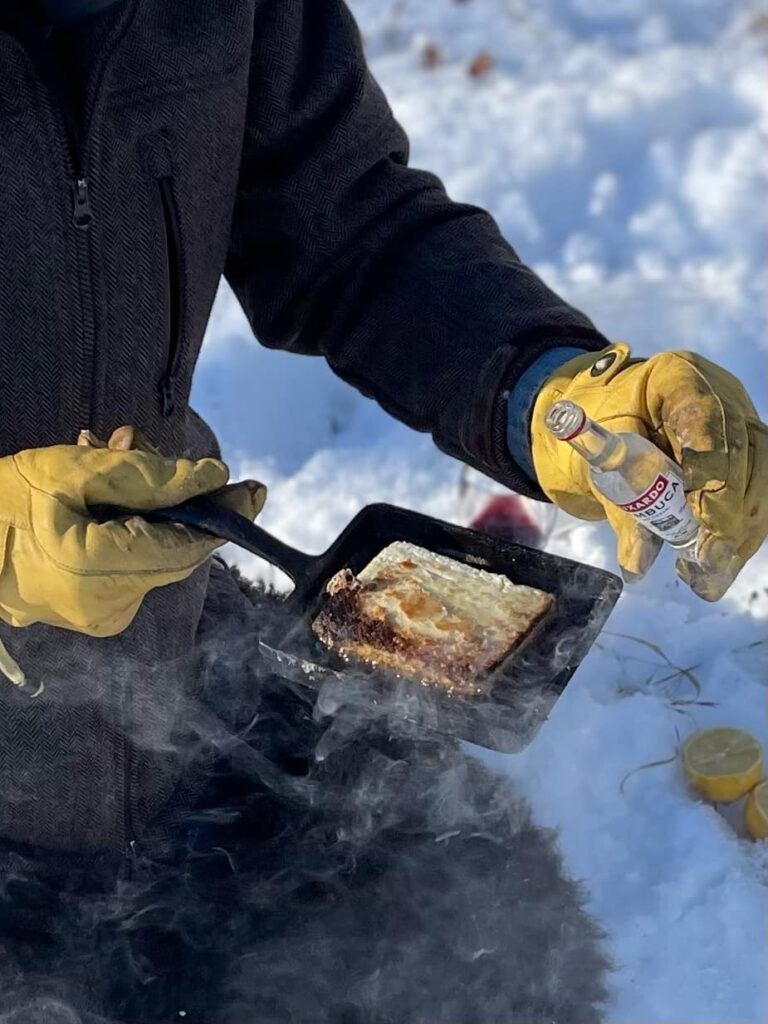
Now you can pour a quarter ounce of Sambuca over the cheese and light the flambé. Do so by simply returning the pan to the fire to ignite the flames, or use a long barbecue match. Once the flames started to die down, squeeze your halved lemon overtop of the cheese. The longer you leave the alcohol to burn, the more flavour will remain. Or as the Greeks do, leave out the flambé and use only the lemon juice.
The Saganaki as it begins to fry.Sambuca poured onto the cheese, prior to being lit up.Extinguishing the flames with lemon.
From performance support to pasture problems (and a little Western charm in between,) this great gear blog is built for real life in and around the barn.
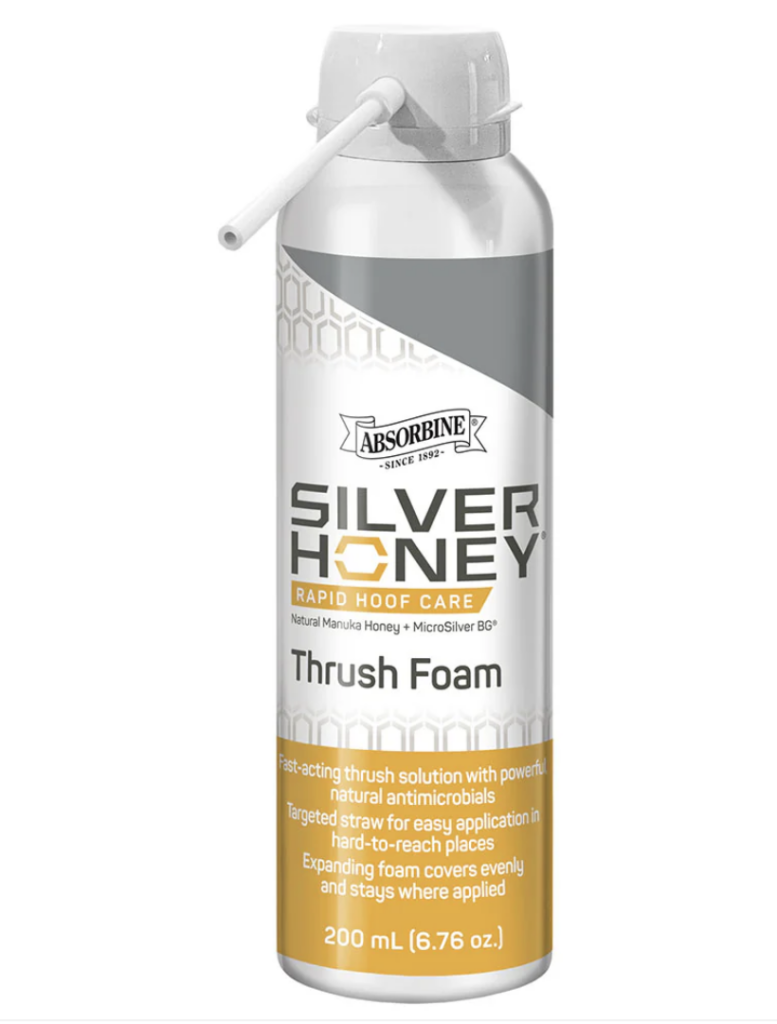
Silver Honey® Rapid Hoof Care Thrush Foam
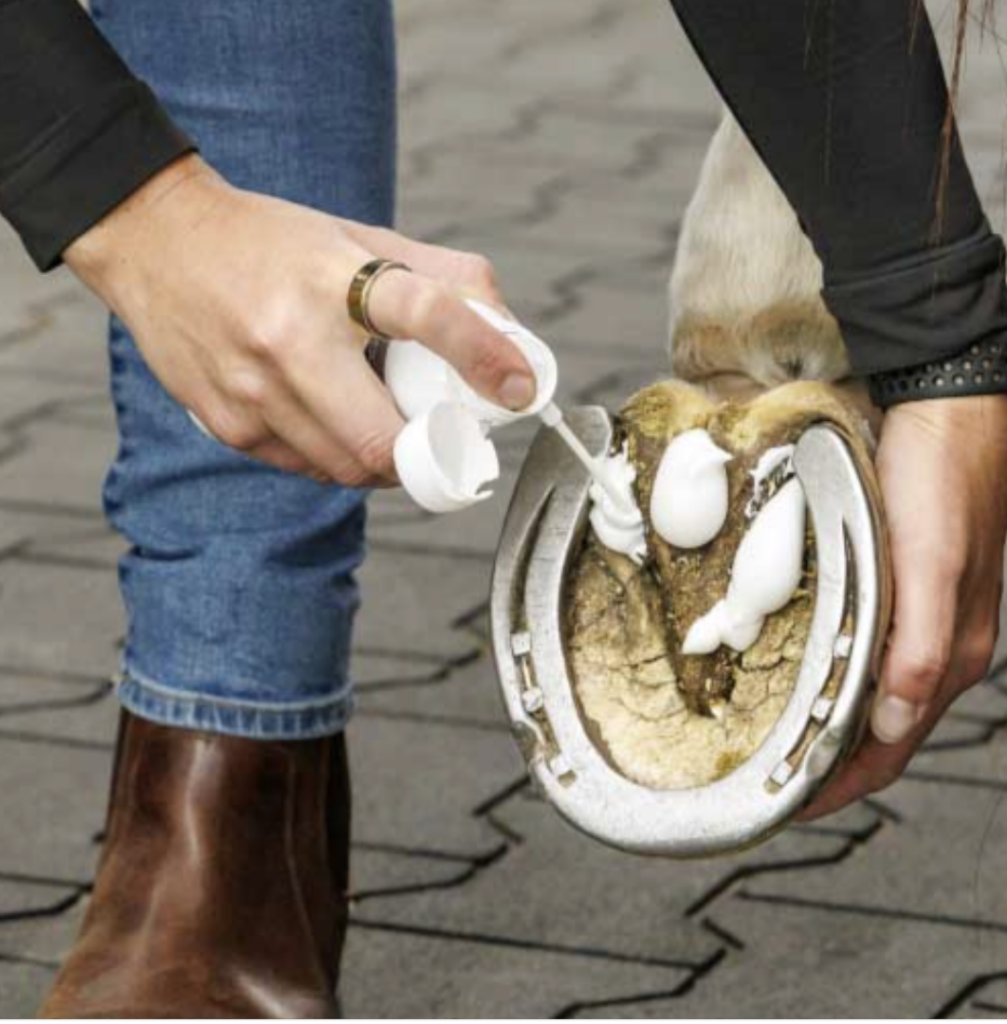
This product is brought to you by the trusted folks at ABSORBINE and is the only thrush treatment with Manuka Honey and MicroSilver® BG for powerful, natural antimicrobial relief. It’s expanding foam penetrates deep into frog and hoof crevices for complete, even coverage and its straw applicator ensures precise, mess-free application in tight, hard-to-reach areas. This unique formula stays in place to actively fight infection without runoff or staining and treats thrush without caustic chemicals.
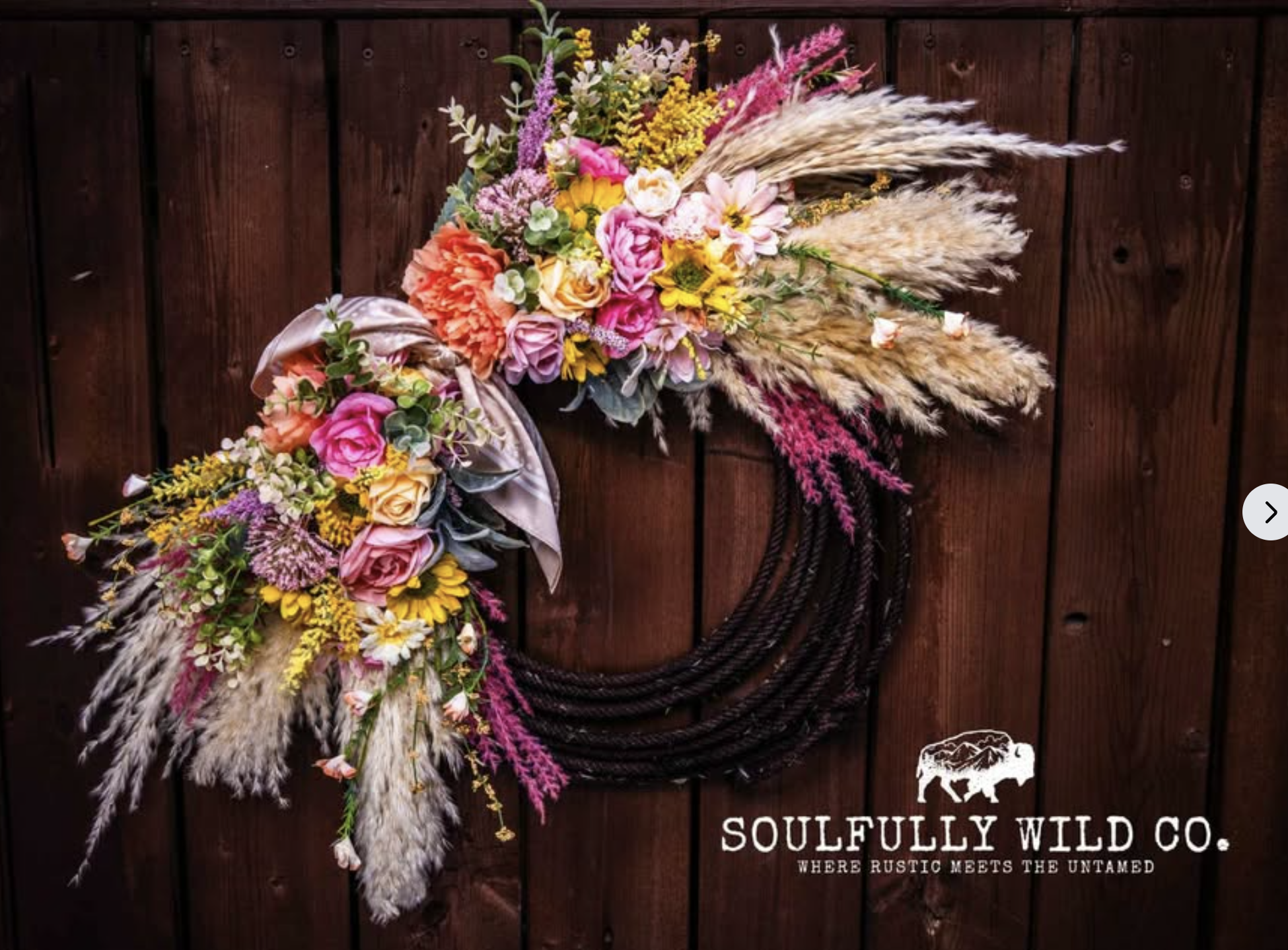
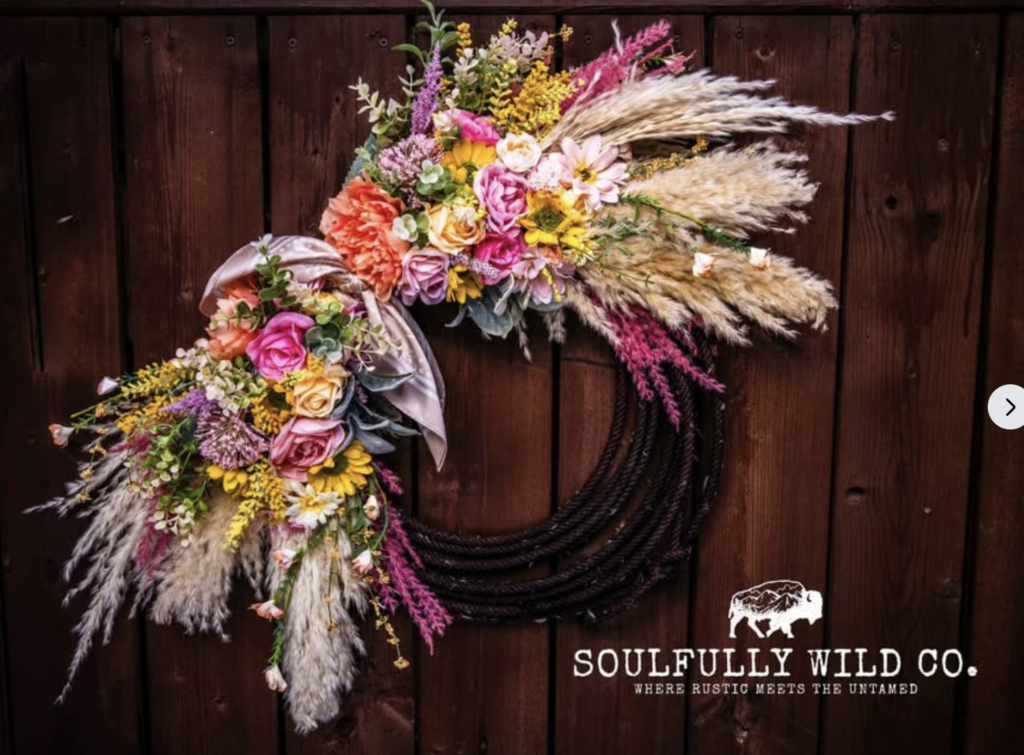
Need a thoughtful western gift for someone? Each of these one-of-a-kind wreaths begins with a rope once held by Alberta cowgirls and cowboys and is handcrafted by Soulfully Wild Co. into a luxurious wall hanging. Adorned with high-end faux florals, western-inspired décor, and silk scarves, no two pieces are alike.
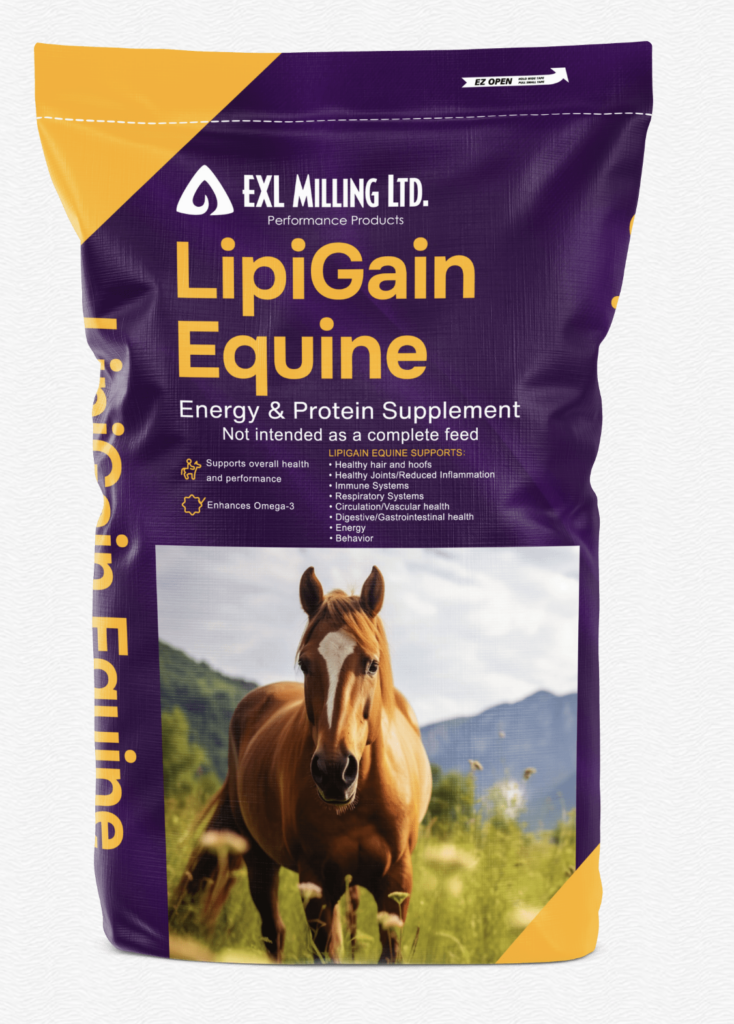
Improve your horse’s health with this expertly formulated, rich blend of Omega-3 fatty acids, essential proteins and natural vitamins. With its stable, free-flowing granular form, LipiGain Equine is highly palatable and suitable for all types of feed applications – making it an ideal choice for young and adult horses alike.
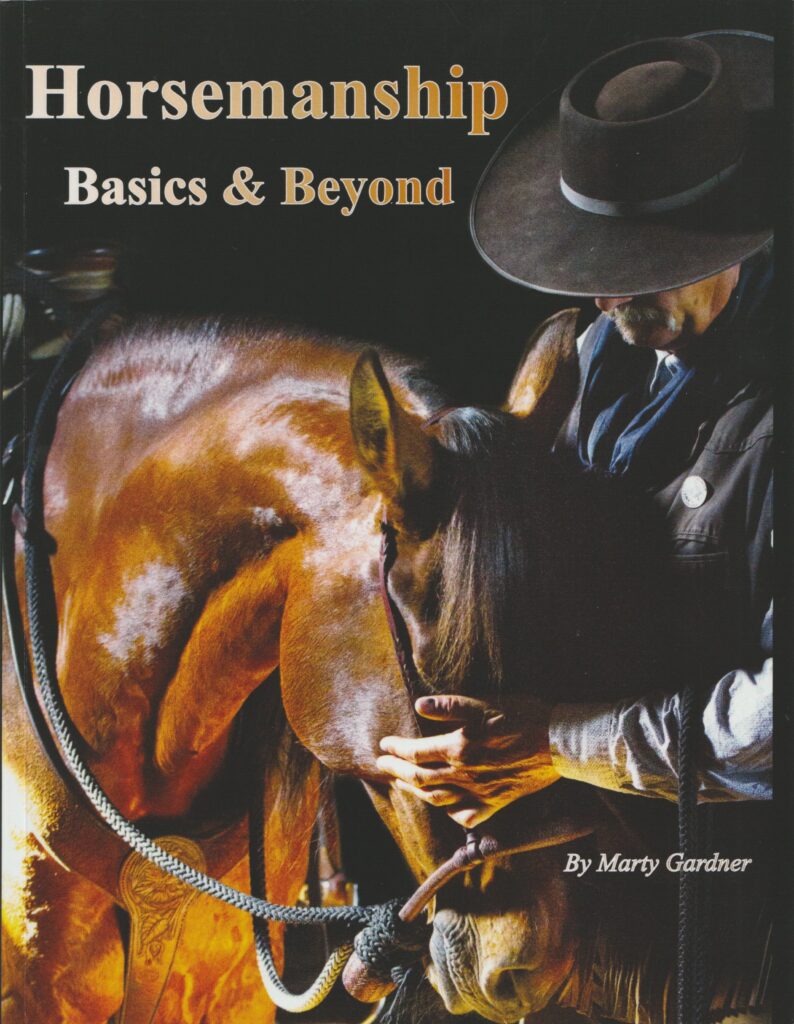
First-time author and respected Alberta horseman, Marty Gardner, is proud to release his debut book, Horsemanship Basics and Beyond. This essential new guide offers a fresh and thoughtful perspective on foundational horsemanship – rooted in real-world experience and taught in a way that’s easy to grasp, yet deeply insightful.
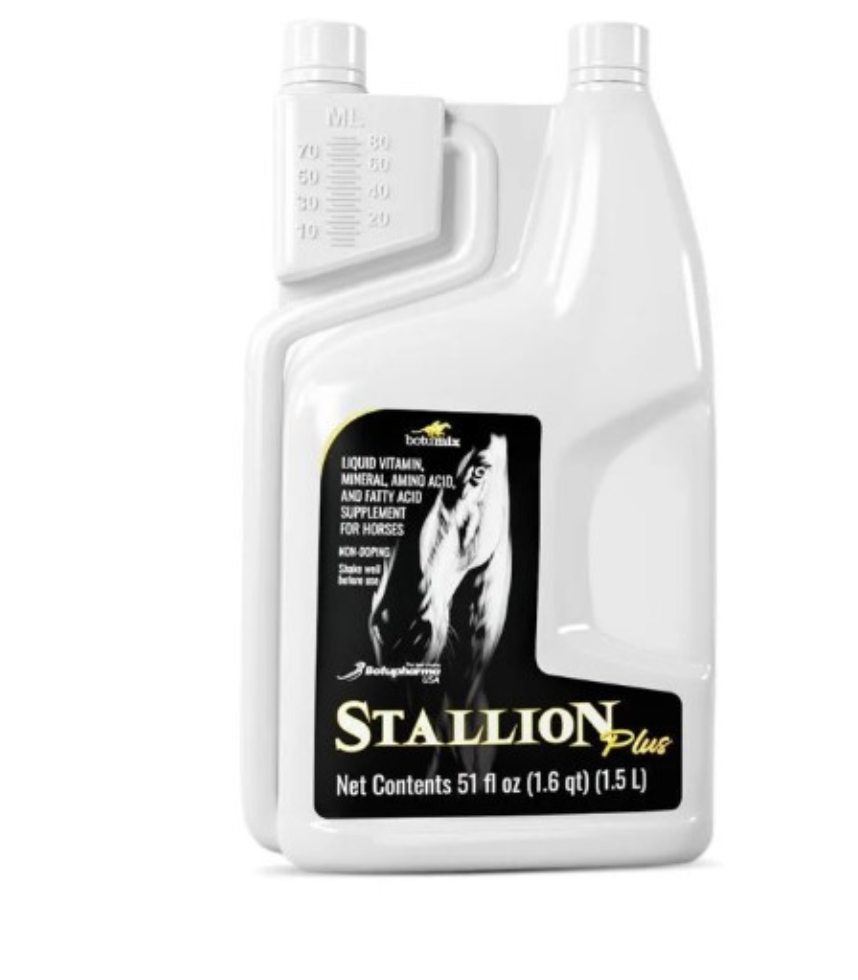
This liquid supplement is designed to maximize reproductive efficiency and sperm production in breeding stallions. Its key ingredients include high levels of L-Carnitine (for sperm energy metabolism) and Omega-3 fatty acids (to protect sperm membranes, especially against low temperatures). Recommended for supporting sperm motility and protecting against oxidative stress during the breeding season.
Katie Rochon and Natalie Kowalenko of Calgary, AB, had their minds made up that day in June, 2020. They had a truck with a full tank of gas, a trailer and they were not leaving the Beaver Hill Auction Services Ltd. in Tofield, AB, without something in tow. The ladies had come to find an equine prospect that potentially, had a new lease on life.
It was a long battle, but they found such a prospect in a grey horse who had dropped off by owners around 1:30 pm that day, along with two other stable mates. It was late in the auction and the group of three horses had missed the opportunity to be sold as “trained horses,” or horses with potential – with an according, discerning buyer. As the grey came through the ring near the end of the sale many of the day’s buyers had already left, having already spent their budgets or finding what they needed.
“By this point it was really only the “wildies,” untouched, young stock, unhealthy or feral types that were remaining,” relays Natalie Kowalenko of Calgary, AB.
“It was very busy and I remember people saying they couldn’t believe the turnout – but it was also one of the first big horse sales after Covid had started. Horses are supposed to be good in health to go to auction but there’s only so many brand inspectors in Alberta, so it’s hard to police that, I guess,” Kowalenko says.
While most Alberta auction houses state that they rely on the honesty of sellers and have a zero tolerance policy for sellers who misrepresent their consignments, the fact remains that it still happens. And what is an auction house to do if horses are literally dropped off in their yard, without a previous owner to speak for them?
Around this time, Beaver Hill Auction Services Ltd. had posted a note on their website stating they would no longer be conducting horse sales at their facility “from this day forward.” They are now the only auction market solely dedicated to the sheep and goat industry.
Focusing back on that day in June 2020, Kowalenko and Rochon were determined to come home with something, but for some reason they kept missing out on bids. The girls had been advised by a spokesperson at the Horse Heroes AB Community who the “meat buyers” in the audience were and were dead-set against bidding against other family buyers in the audience who may provide good homes for anything coming through the sale.
“Therefore, we got into a bidding war with a meat buyer and finally were the winning bid on the grey at almost the end of the day. He was $550 on my debit card and the weirdest experience of my life!” Kowalenko states.
Kowalenko and Rochon brought the big grey back to Calgary and began training and taking care of him. Fast forward to 2024 and the horse blossomed into a kind and talented English prospect. The girls named him, Out Of The Blue (“Blue” for short,) as he literally appeared into their lives in an unexpected and abrupt manner.
“It just seemed like an appropriate name for him,” Kowalenko laughs.
“Our trainer told us this year that he could probably be sold now for $10,000. But it was never about the money for us. We just wanted to find a horse that could use a good home.”
At the barn where Kowalenko and Rochon board, they met a 13-year-old girl by the name of Sienna Goldau. With time, Goldau wore Blue’s owners down and began riding, then half-leasing Blue. She had grown as fond of the grey as Kowalenko and Rochon were.
“Over time we realized Blue would be a perfect horse for Sienna.”
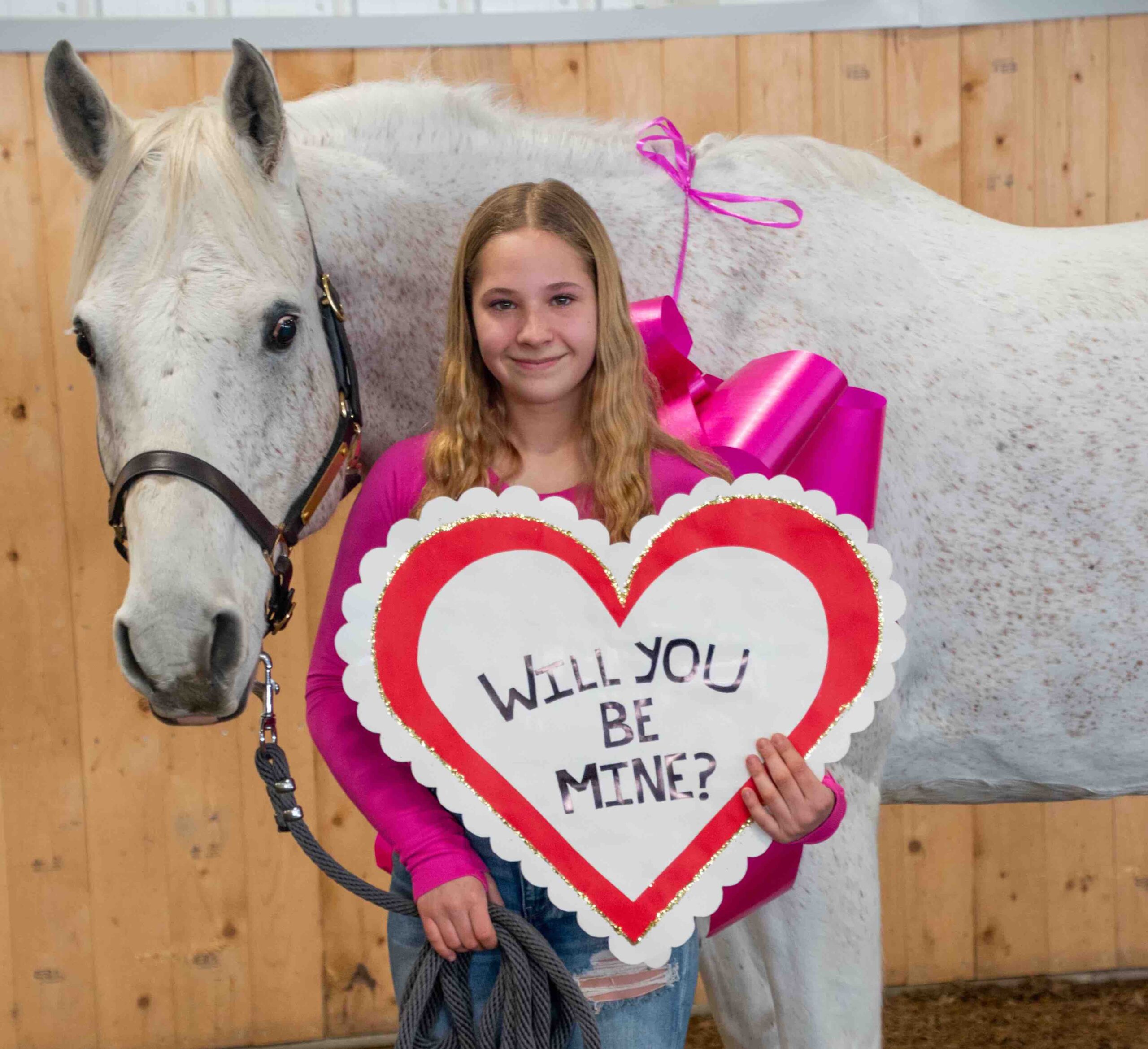
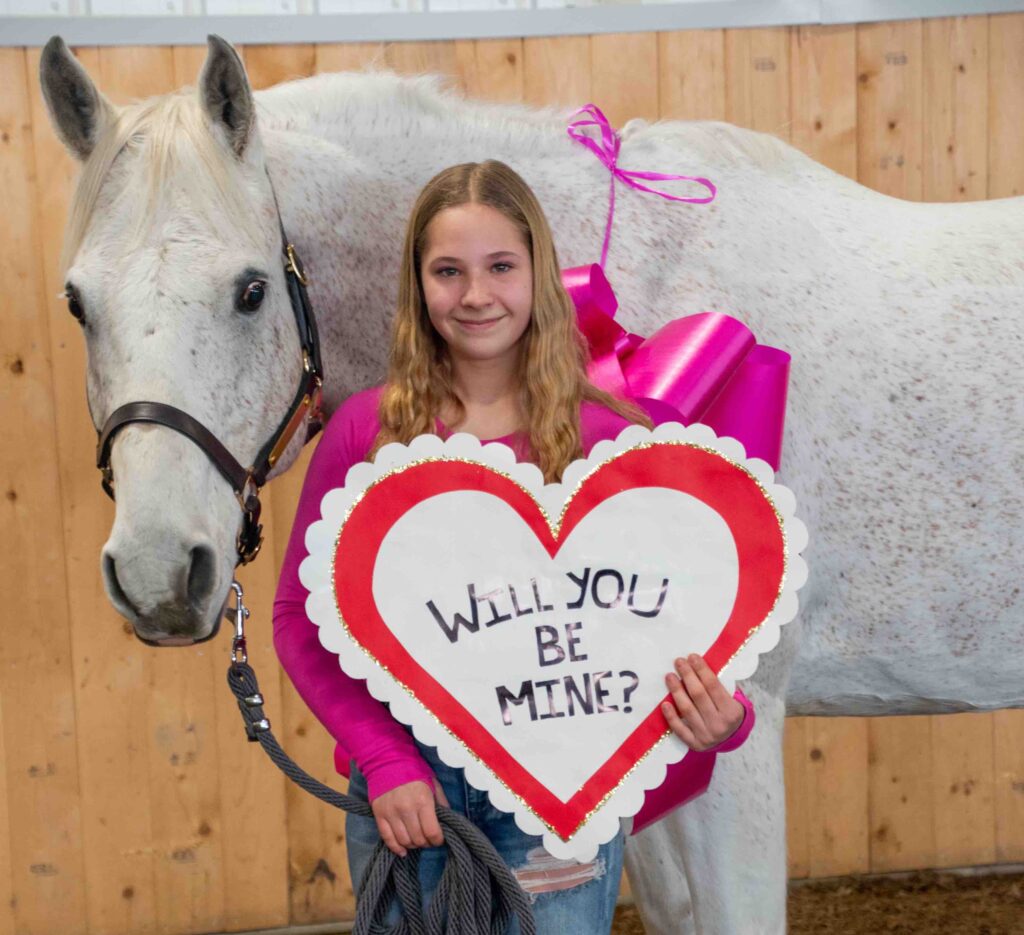
Kowalenko and Rochon hatched a plan to “gift” Blue to Sienna this Valentine’s Day, with permission from her family, of course.
“Sienna is a great little rider and we know Blue will have a great home with them. Like I said, it was never about the money. The whole purpose was to give Blue a second chance at life,” Kowalenko explains.
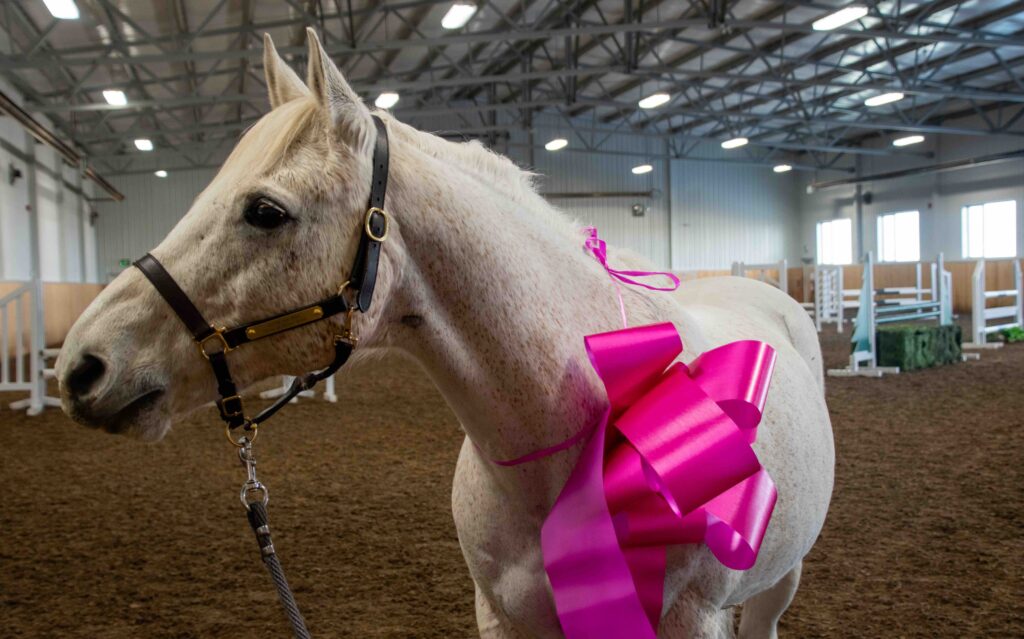
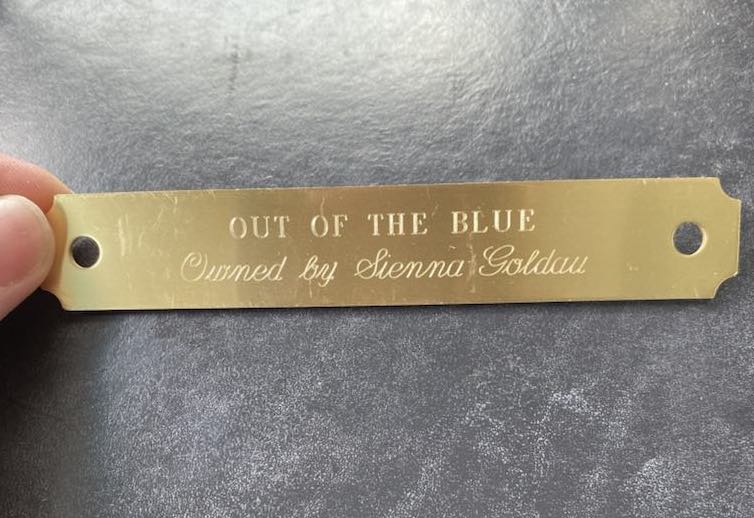
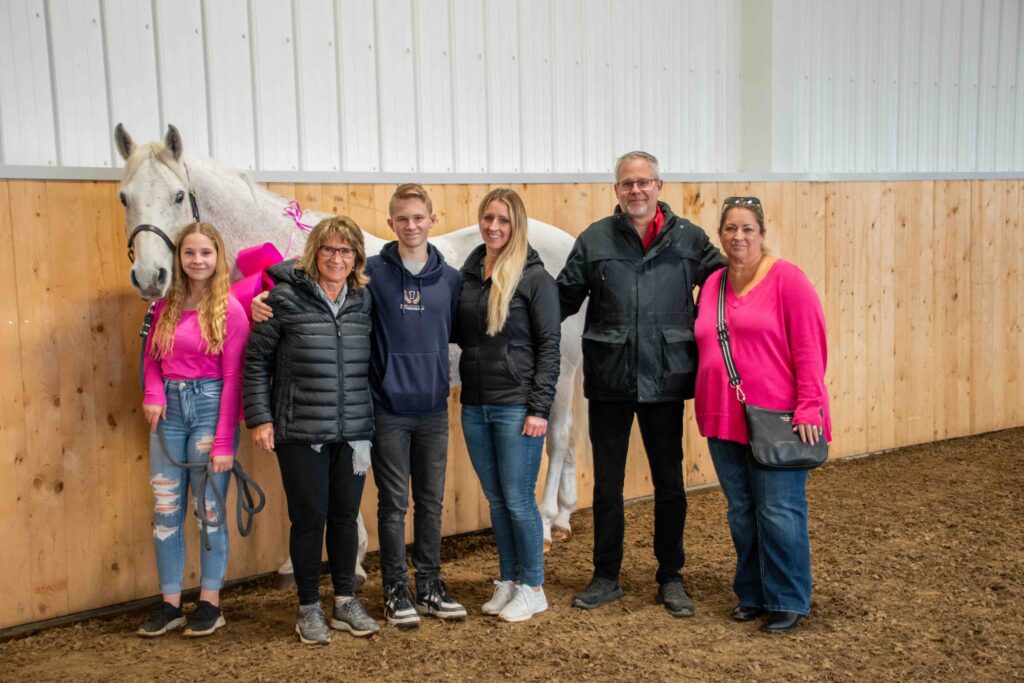
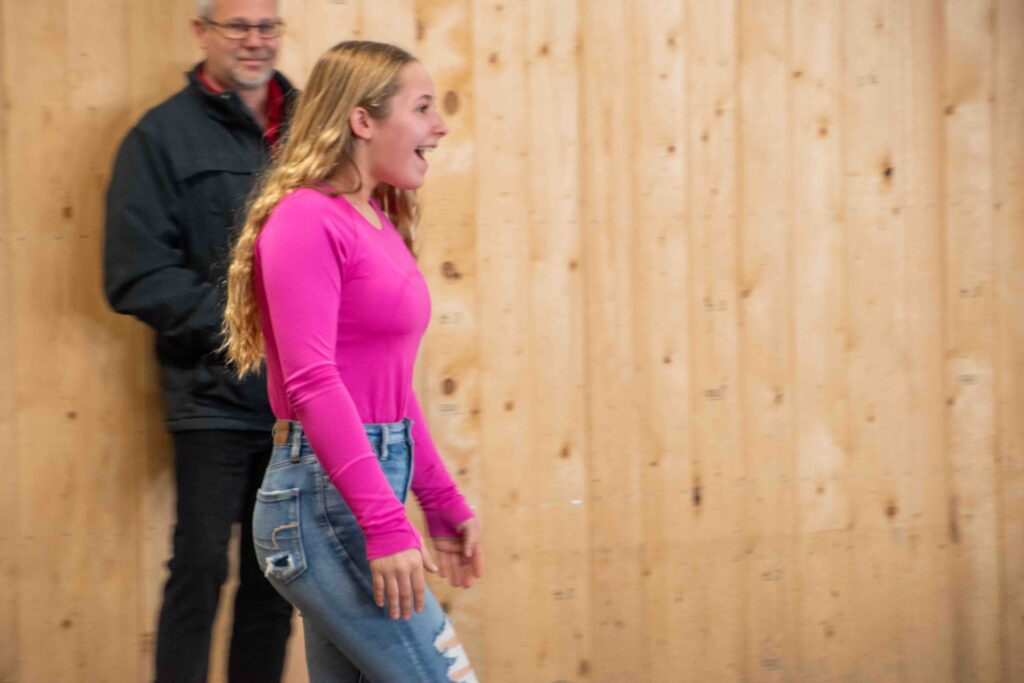
Earlier today, Blue’s auction saviours gifted the horse to Sienna in a surprise gathering. Wearing a bright pink bow and a newly engraved name-plate on his halter, Kowalenko and Rochon handed Blue’s halter shank over to his new owner.
If that’s not a feel-good story for you, we don’t know what is.